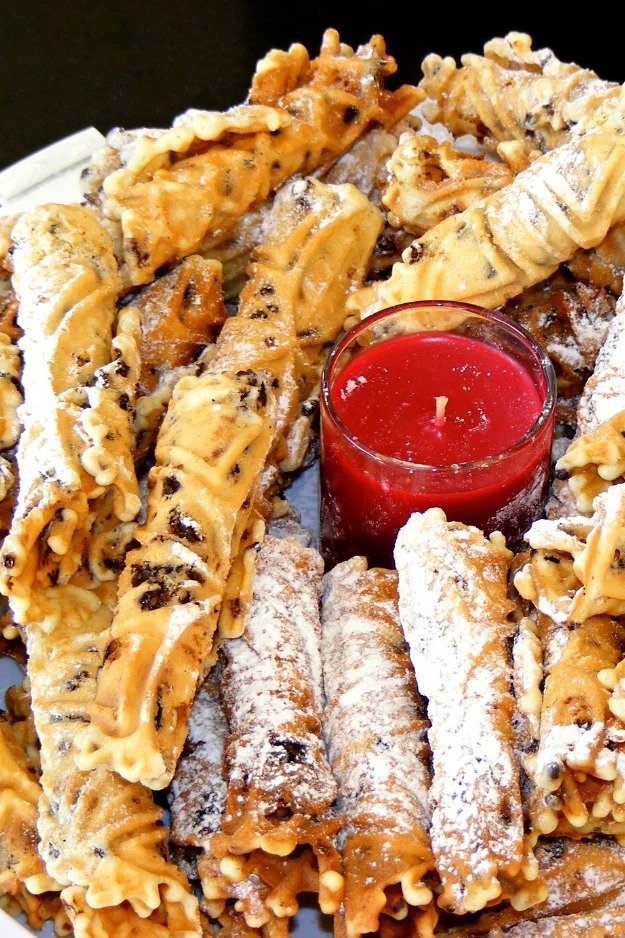
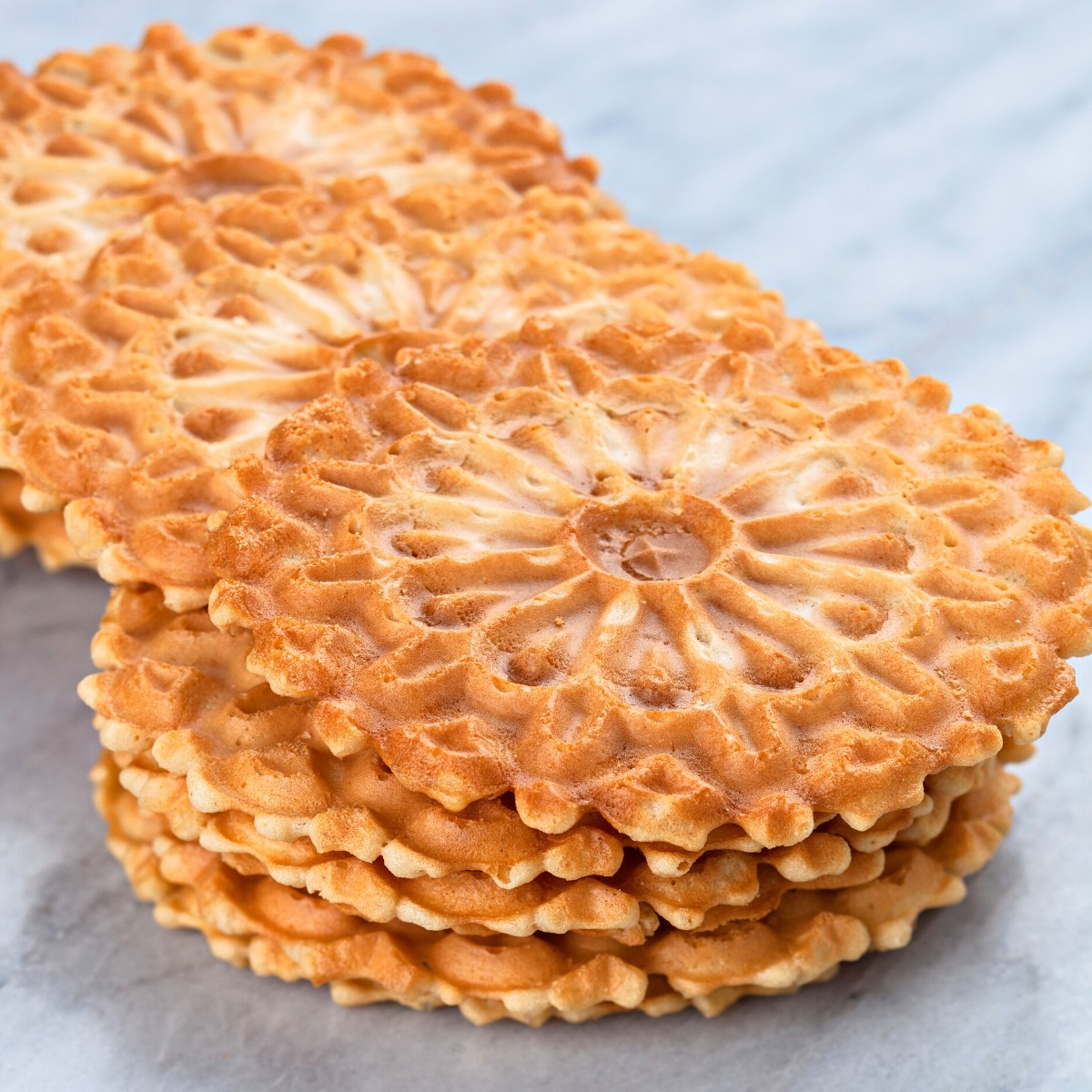
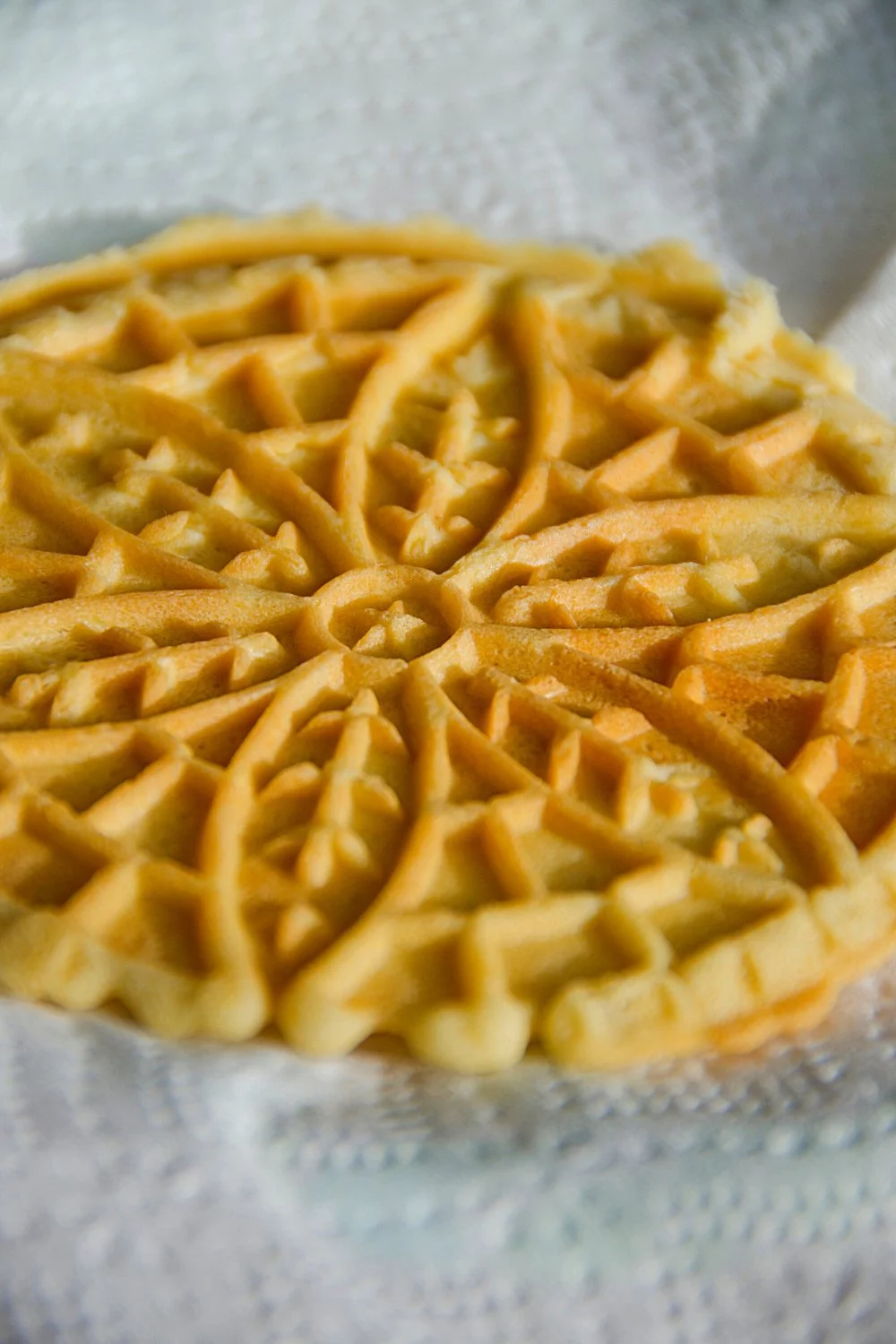
These Italian pizzelle are thin, crisp waffle cookies made with eggs, butter, vanilla, and a touch of anise. They cook in a pizzelle iron in less than a minute and firm up as they cool, giving them their characteristic delicate snap and patterned surface.
The batter should be thick enough to scoop rather than pour. Start with about a heaping tablespoon for each cookie and adjust after the first batch, since pizzelle irons vary in size. The cookies will still feel soft when you lift them from the iron, so transfer them directly to a wire rack and let them cool flat before deciding whether they need more cooking time.
Anise gives pizzelle their traditional aromatic flavor, but vanilla keeps it balanced. If you don’t enjoy anise, you can leave it out and use vanilla alone.
What Are Pizzelle?
Pizzelle are thin Italian waffle cookies cooked between the patterned plates of a special pizzelle iron. They are especially associated with the Abruzzo region of Italy and are often made for holidays, weddings, and family celebrations.
Depending on the recipe, pizzelle can be flavored with anise, vanilla, lemon, or other aromatics. Fresh from the iron they’re soft and flexible, but they become crisp as they cool.
The Pizzelle Iron (Pizzelle maker)
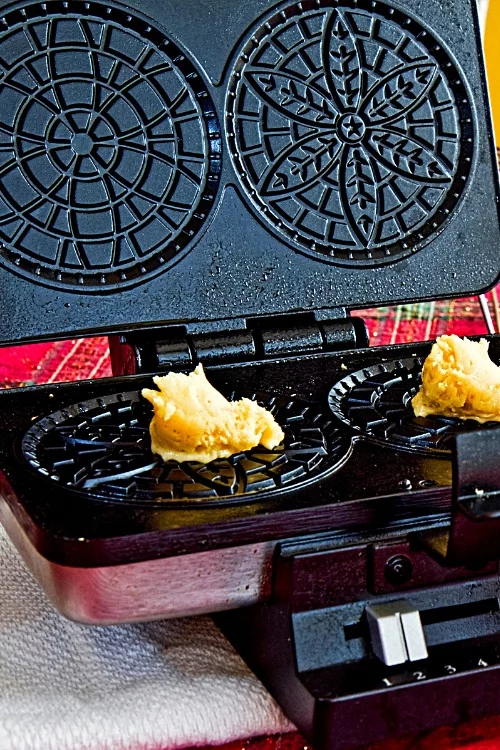
The Pizzelle Iron: The pizzelle iron, which looks like a small waffle iron but has shallower grooves, is an important part of making these delicious Italian cookies. These irons are very cheap, especially if you buy them well before Christmas. They also last a very long time. In fact, many people have had their pizzelle irons for more than ten years, and they still work great.
This versatile tool can be used to make tasty pizzelles, but it can also be used to make homemade ice cream cones and cannoli shells, giving you even more delicious dessert options and making the most of its use in your kitchen.
Ingredients
- 4 large eggs, room temperature
- ¾ cup (150 g) granulated sugar
- 2 teaspoons vanilla extract
- ½ teaspoon anise extract, or 2–3 drops food-grade anise oil
- 8 tablespoons (113 g) unsalted butter, melted and cooled slightly
- 2 cups (250 g) all-purpose flour
- 2 teaspoons baking powder
- ¼ teaspoon kosher salt
- Powdered sugar, for dusting, optional
Instructions
- Mix the Wet Ingredients: In a large bowl, whisk the eggs and sugar for about 1–2 minutes, until the mixture looks slightly lighter and the sugar is mostly dissolved. Whisk in the vanilla and anise.
- Add the Butter: Slowly whisk in the melted butter until completely combined. Make sure the butter is warm, not hot, so it doesn’t cook the eggs.
- Add the Dry Ingredients: In a separate bowl, whisk together the flour, baking powder, and salt. Add the dry ingredients to the egg mixture and stir just until no dry flour remains. The batter should be thick and spoonable, not runny. Avoid overmixing.
- Heat the Pizzelle Iron: Preheat the pizzelle maker according to the manufacturer’s instructions. Lightly grease it only if your model requires it.
- Cook the Pizzelles: Place about 1 heaping tablespoon of batter slightly behind the center of each pizzelle pattern. Close the iron and cook until the pizzelles are lightly golden, usually 30–60 seconds, depending on your machine.
- Cool Until Crisp: Carefully remove the pizzelles with a thin spatula and transfer them immediately to a wire rack. They will be soft when hot but become crisp as they cool.
- Repeat: Continue with the remaining batter, adjusting the amount if the batter spreads beyond the edges of your pizzelle iron.
- Finish: Let the pizzelles cool completely, then dust lightly with powdered sugar before serving, if desired.
A Short History of Pizzelle
Pizzelle are closely associated with Abruzzo in central Italy, where similar cookies are also known as ferratelle, neole, and other regional names.
Decorative iron-baked cookies in Abruzzo can be traced to at least the 1700s. Some traditional irons were made with family crests, initials, or dates pressed into their plates, turning each cookie into a distinctive family design.
Today, pizzelle are commonly served for holidays and celebrations and can be eaten plain, dusted with powdered sugar, or paired with sweet fillings.
Pizzelle Variations
This classic pizzelle cookie recipe calls for anise extract, which gives the cookies their traditional anise flavor. But if you don’t have anise on hand or want to try different flavors, we’ve put together a list of delicious alternatives so you can make pizzelles that suit your tastes. The following ingredients can be used in the same amounts as the anise extract:
- Lemon pizzelle: Use lemon extract for a zesty, citrusy twist.
- Vanilla pizzelle: Swap in vanilla extract for a softly sweet aroma and taste.
- Almond pizzelle: Replace with almond extract for a wonderful nutty flavor.
- Chocolate pizzelle: Add chocolate flavor or chocolate extract for a rich, indulgent touch.
How to Serve Pizzelle Cookies
With just a little bit of powdered sugar on them, pizzelle cookies are tasty on their own. But there are many different ways to enjoy these tasty treats. Here are some suggestions:
Rolled: Pizzelles that have just been cooked are soft and can be rolled into shapes like cannoli shells.
S’mores Twist: For a fun twist on the classic campfire treats, combine pizzelle, marshmallows, and chocolate.
Ice Cream Cone: If you want to serve ice cream in a unique and tasty way, try rolling pizzelle into the shape of a cone.
Ice Cream Topping: As a topping for ice cream, crumble pizzelle on top to add texture and flavor.
Sandwich: Spread Nutella, peanut butter, or caramel on pizzelle to make a sandwich (similar to a stroopwafel). To keep them from getting soggy, add them just before serving.
Fruit-filled: To make a light and refreshing pizzelle dessert, add a dollop of whipped cream and your favorite fresh fruit.
Layered Pizzelle Cake: To make an elegant, layered dessert, stack pizzelles with layers of sweetened mascarpone or cream cheese frosting in between.
Chocolate-Dipped: For a chocolatey touch, dip half of the pizzelles in melted chocolate and let them cool on parchment paper.
Pizzelle Tiramisu: Use pizzelles as a clever alternative for ladyfingers in a traditional tiramisu recipe.
Mini Pizzelle Cups: While the pizzelles are still flexible, press them into a mini muffin tin to make small cups that can be filled with mousse, custard, or fruit for a bite-sized dessert.