
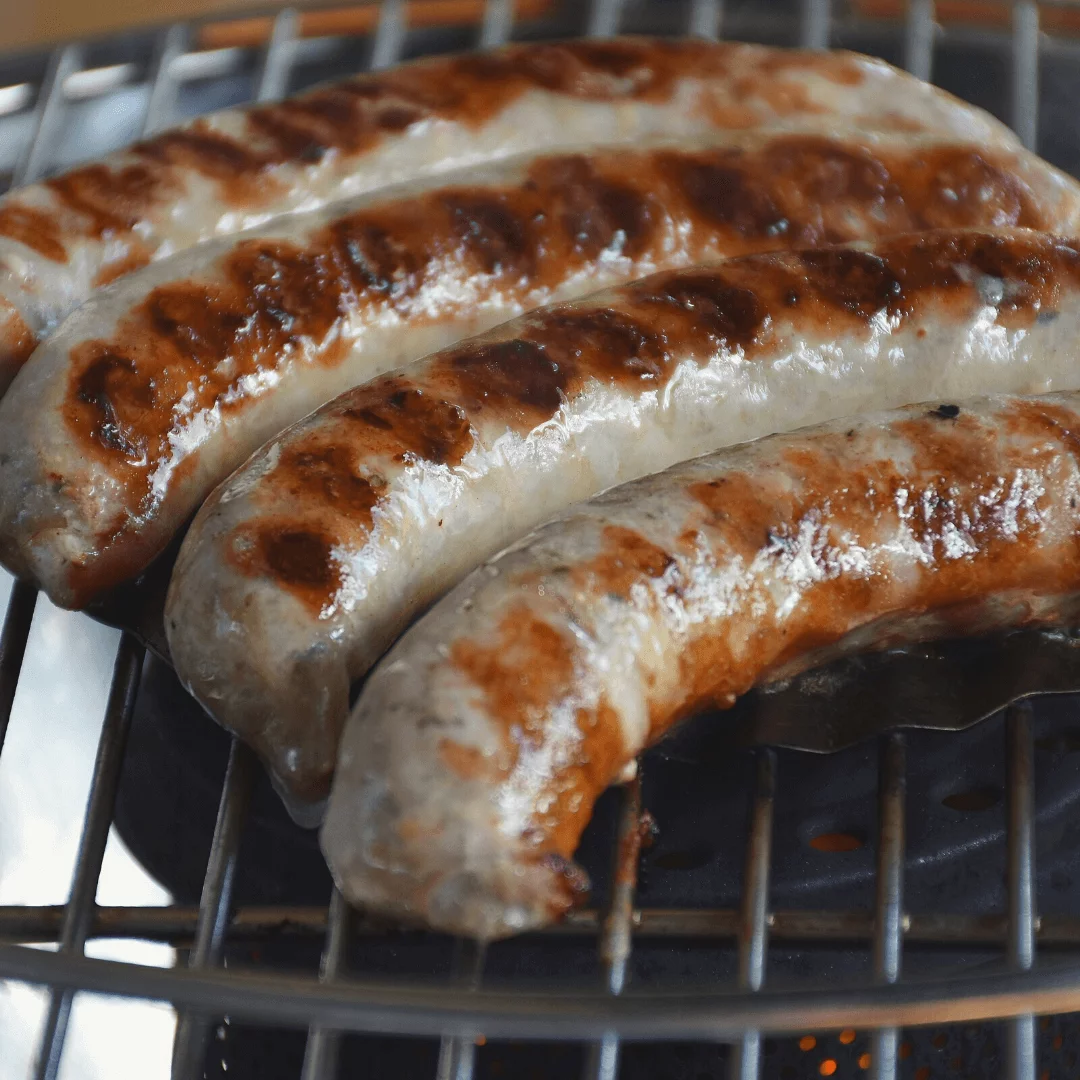
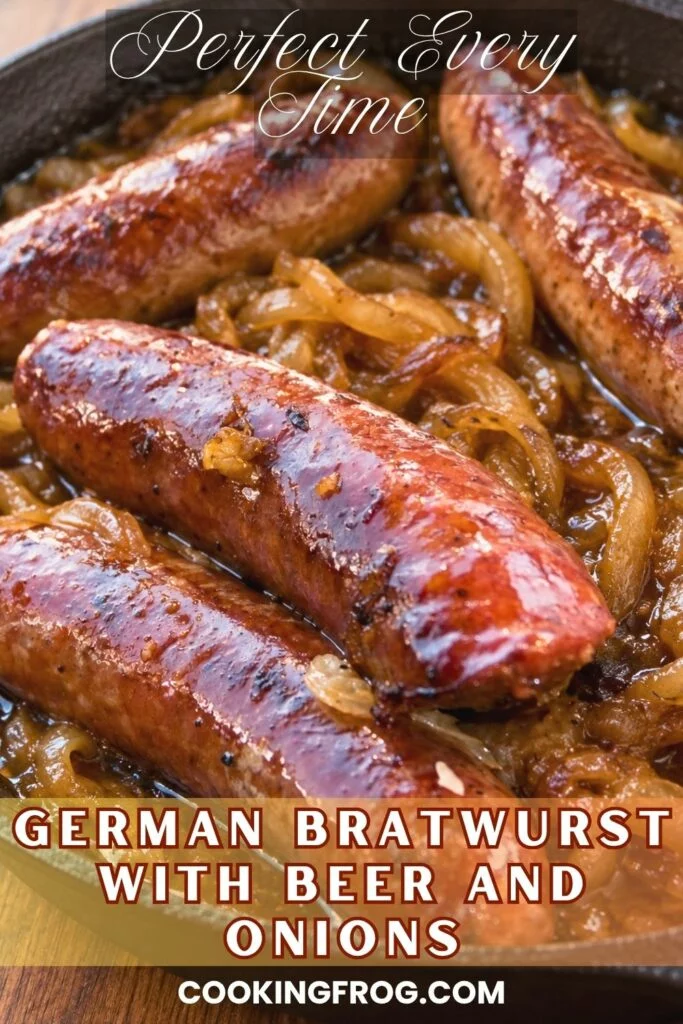
This bratwurst recipe starts with a gentle simmer in amber ale, onions, and caraway, followed by a quick skillet or grill finish for a browned casing. The onions soften in the beer while the sausages cook. Serve them in warm buns with grainy mustard, draining off excess cooking liquid so the bread holds together.
Ingredients
- 2 tablespoons (28 g) butter
- 1½ medium yellow onions, sliced about ¼ inch thick
- 1 tablespoon caraway seeds
- ½ teaspoon kosher salt
- 6 fresh, uncooked pork bratwurst links, thawed if frozen
- 1 bottle (12 fl oz / 355 ml) amber ale
- 6 bratwurst buns, warmed
- 1–2 teaspoons neutral oil, if needed for the skillet finish
- Grainy mustard and drained sauerkraut, optional, for serving
Instructions
- Soften the onions. Melt the butter in a large, heavy skillet over medium heat. Choose a skillet wide enough to hold the sausages in one layer. Add the onions, caraway seeds, and salt. Cook for 5–7 minutes, stirring occasionally, until the onions begin to soften. They do not need to be browned.
- Gently simmer the bratwurst. Nestle the bratwurst among the onions and pour in the beer. Bring to a gentle simmer, then reduce the heat and cover. Keep the liquid barely bubbling and turn the sausages occasionally. Start checking their temperature after about 15 minutes, and continue cooking until the center reaches 160°F (71°C). Insert an instant-read thermometer from the end of a link toward its center. Cooking time varies with the thickness of the sausages; use the temperature rather than the clock to judge doneness.
- Remove the brats and check the onions. Transfer the cooked sausages to a plate. If the onions are still firm, simmer them a little longer until tender. If there is more broth than you want, simmer uncovered to reduce it slightly, leaving enough to keep the onions moist. Choose one of the following finishes.
- Finish in a skillet OR on the grill.
- Skillet: Transfer the onions and cooking liquid to a heatproof bowl. Carefully pat the sausages dry. Return the empty skillet to medium heat and add the optional oil if the pan needs it. Brown the brats for about 4–6 minutes total, turning with tongs until browned on several sides.
- Grill: While the brats simmer, preheat the grill to medium heat. Drain the cooked sausages well, then grill for about 4–6 minutes total, turning frequently until browned. Move them away from any flare-ups.
- Serve. Place a bratwurst in each warm bun. Lift the onions from the cooking liquid with tongs or a slotted spoon and spoon them over the sausages. Add grainy mustard and sauerkraut, if using, and serve immediately.
Tips and Ingredient Notes
- Keep the simmer gentle. A hard boil can split the casings. If the pan starts to dry out, add a small splash of water and lower the heat.
- Use tongs to turn the brats. Avoid pricking them with a fork or cutting them open to check doneness. Use a thermometer instead.
- Choose the beer for its flavor. Amber ale gives the onions a malty flavor. A mild lager also works. Strongly bitter beers can make the cooking liquid taste bitter, especially as it reduces.
- Adjust caraway to your preference. The original tablespoon gives a pronounced caraway flavor. For a milder version, use 1–2 teaspoons.
- Expect soft, beer-braised onions. These onions become tender in the cooking liquid; this method does not produce deeply caramelized onions.
Can You Make Bratwurst Without Beer?
Replace the beer with 1½ cups (355 ml) low-sodium chicken or vegetable broth and follow the same method. The flavor will be different, but you will still have tender onions and cooking liquid for reheating.
Apple juice or cider makes the onions noticeably sweeter, so broth is the more suitable substitute when you want a savory result.
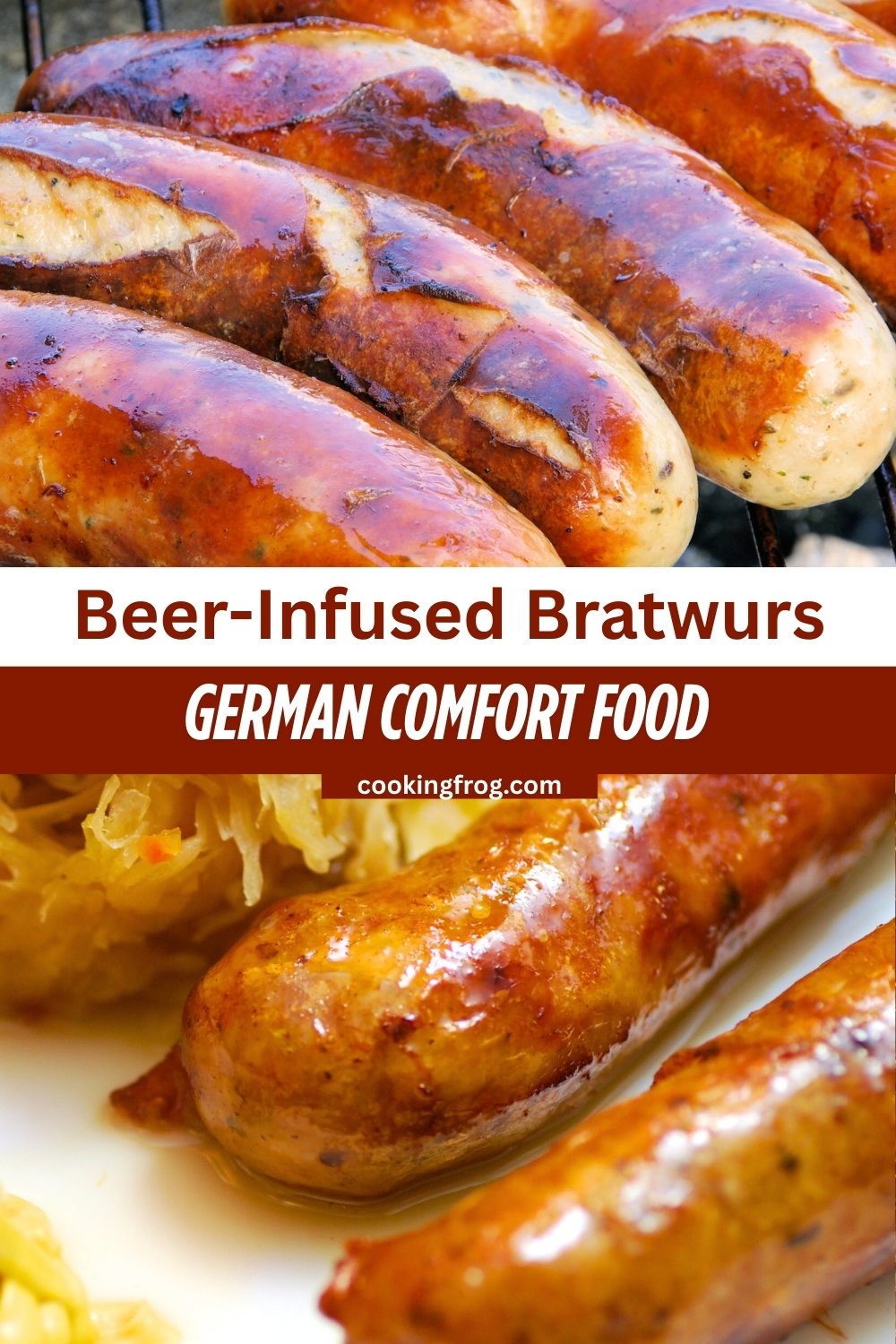
Pin the image below if you like this Bratwurst Recipe!
Make Ahead, Storage, and Reheating
Make ahead: Simmer the brats until fully cooked before chilling them with the onions and some cooking liquid. Do not partially cook them for finishing another day. Reheat as directed below, then briefly brown in a skillet or on the grill.
Refrigerate: Divide the brats, onions, and cooking liquid among shallow containers and refrigerate within 2 hours of cooking, or within 1 hour if the surrounding temperature is above 90°F (32°C). There is no need to wait until everything is completely cold. Use within 3–4 days and store the buns separately.
Freeze: Once chilled, pack the brats and onions with a little cooking liquid in airtight freezer containers or freezer bags. Freeze for up to 3 months for best quality. Thaw overnight in the refrigerator.
Reheat: Place the brats and onions in a covered skillet with some reserved cooking liquid or a splash of water. Heat gently, turning occasionally, until the sausages reach 165°F (74°C). If desired, drain and briefly brown them afterward.
These storage and reheating recommendations follow USDA guidance for leftovers.
Serving Ideas and Other Bratwurst Recipes
Serve the brats in buns with the onions and mustard, or plate them with potato salad and sauerkraut. If serving a crowd, keep the fully cooked brats and onions hot at 140°F (60°C) or above until serving.
For other cooking methods, try air-fryer brats or smoked brats.

Hello
I would love actual recipes on sour kraut & polish. Got any?
I’ll se what i can do, thanks for the suggestions.
Just a comment about your description. Actually, the terms “wurst” and “sausage” are quite different in Germany. The difference there is the German Purity Laws. “Wurst” is made from meat, fat, and spices only. “Sausage” can contain fillers and other chemicals (preservatives, etc). Butchers are well respected in Germany not only for their meats, but also for their respect for the traditions of those laws, many of which date back to the 16th century.
The Purity Laws cover many foods and beverages like beer and wine.
Thank you Don. I knew about the Purity Law for beer but I was surprised, pleasantly, to learn that the Germans extended the idea to food items as well.
Confused about your comment. Sausage is not a German word. If you think there is an alterative to Wurst in German, what is it? Not sausage.