
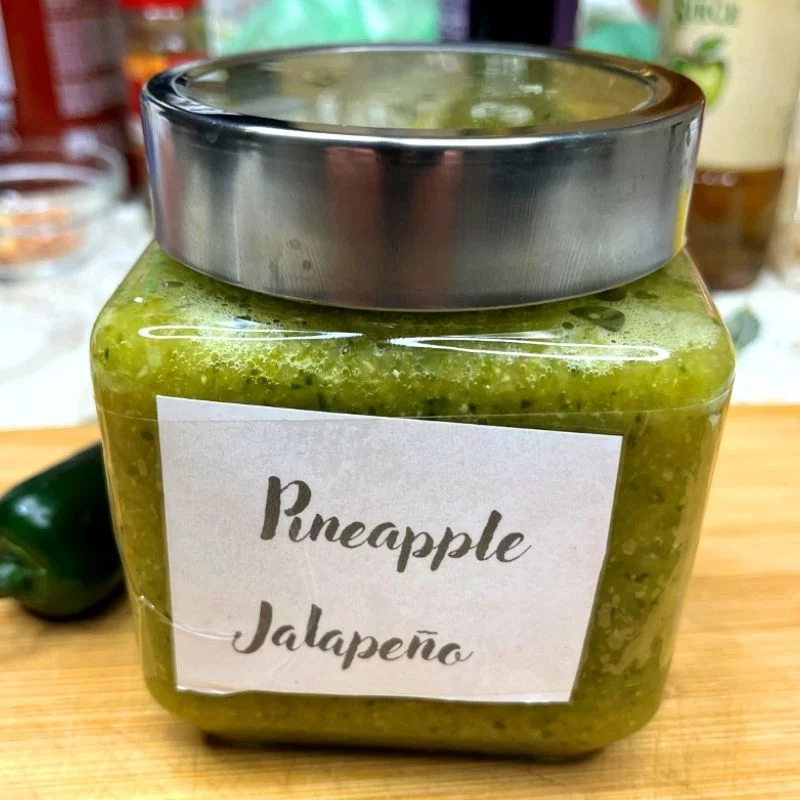
Fermented pineapple jalapeño hot sauce sounds a little fancy, but it’s actually one of the easiest ways to make a small-batch, homemade hot sauce with big flavor. Fresh pineapple, garlic, onion, and jalapeños sit in a simple salt brine for a few days, pick up that tangy fermented kick, and then get blended into a smooth, bright green-gold sauce that’s both spicy and slightly sweet.
This fermented pineapple jalapeño hot sauce is great if you want something hotter than salsa but more interesting than plain sauce. The ferment does most of the work for you – you mix a brine, pack a jar, let it bubble on the counter, then blend with lime, vinegar, and warm spices. The result keeps beautifully in the fridge and tastes even better after a day or two.
Drizzle it over tacos, grilled chicken, shrimp, burgers, eggs, or pizza, or use it as a fiery dip for chips. Once you make a batch, it’s hard to go back to store-bought hot sauce.
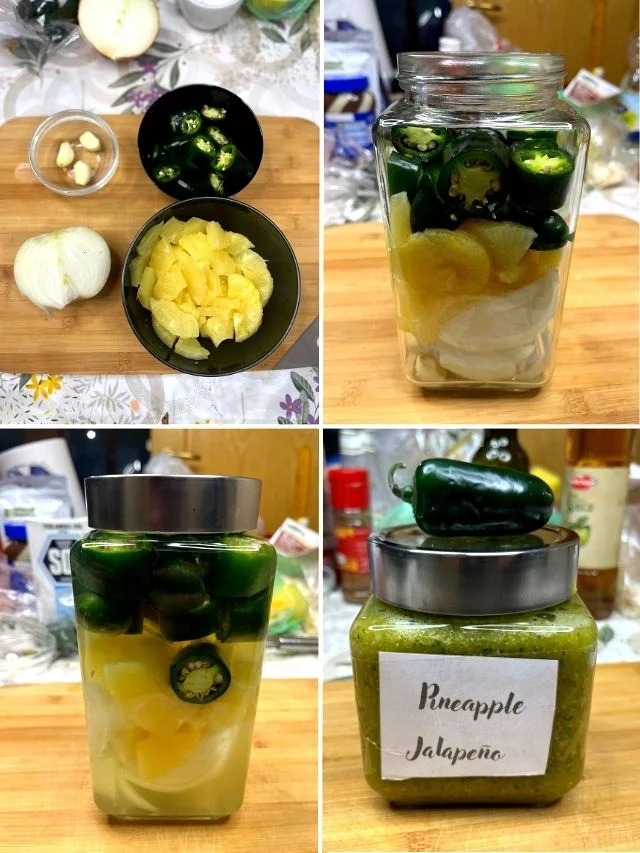
Yields: about 2–2½ cups (500–600 ml) of sauce
Servings: 30–40
Fermenting jar: 1 quart / 1 liter glass jar
Storage jars: 2 x 250 ml bottles or small glass jars (see bottling step)
Ingredients
Brine
-
2 cups unchlorinated water (bottled, spring, or filtered) – 473 ml
-
1 tbsp kosher salt, sea salt, or pickling salt – 17 g
Fermentation Ingredients
-
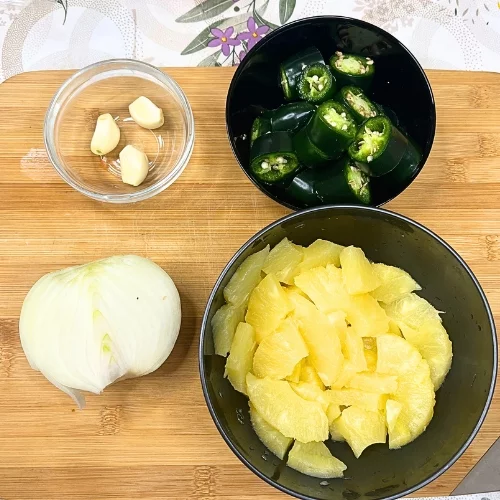
2–3 garlic cloves, peeled
-
½ white onion
-
1 cup fresh pineapple, cut into chunks
-
4–5 fresh jalapeño peppers, stems removed, cut into chunks
After Fermentation
-
2 tbsp white vinegar
-
1 tbsp lime juice
-
½ tsp ground cumin
-
½ tsp ground coriander
Instructions
1. Make the brine
-
Add the water and salt to a jug or bowl.
-
Whisk until the salt is completely dissolved and the liquid looks clear.
-
Use non-iodized salt (kosher, sea, or pickling) so it doesn’t interfere with fermentation.
-
2. Pack the fermenting jar
-
Use a clean 1 quart / 1 liter glass jar.
-
Place the garlic cloves and the half onion at the bottom.
-
Add the pineapple and jalapeño chunks on top, packing them down gently with a spoon.
-
Leave about 1–1½ inches (2.5–4 cm) of empty space at the top (headspace).
3. Weigh everything down & add brine
-
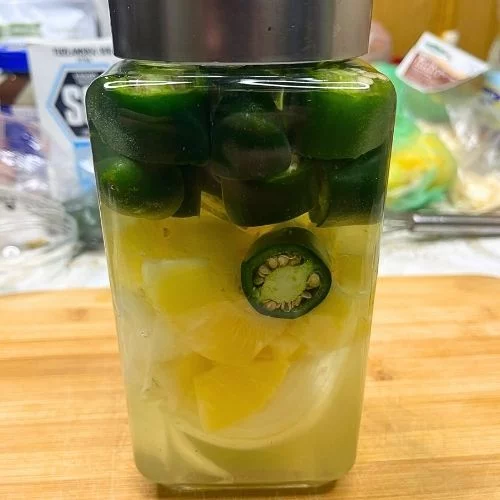
Place a fermentation weight on top of the vegetables and fruit to keep them under the liquid.
-
If you don’t have one, use a small clean glass or a zip-top bag filled with a bit of brine.
-
-
Pour the brine into the jar until everything is fully covered.
-
Tap the jar lightly on the counter to release air bubbles.
-
Make sure all solids are under the brine; add a little more brine if needed and discard any extra.
4. Ferment the mixture (3–5 days)
-
Close the jar with a fermenting lid or a regular lid screwed on lightly so gas can escape.
-
Set the jar at room temperature, away from direct sunlight.
-
Ferment for 3–5 days:
-
The brine may turn cloudy and you might see small bubbles – this is normal.
-
Start tasting a small piece on day 3. When it tastes pleasantly tangy and slightly sour, it’s ready.
-
5. Strain and reserve the brine
-
Place a fine mesh strainer over a bowl.
-
Pour the contents of the jar through the strainer.
-
Keep the brine in the bowl – you’ll use a little of it to adjust the sauce thickness.
-
Transfer the solids (pineapple, jalapeños, onion, garlic) to a blender.
6. Blend the hot sauce
-
Add the vinegar, lime juice, cumin, and coriander to the blender.
-
Blend until smooth.
-
Check the texture:
-
If it’s too thick, add 1–2 tablespoons of reserved brine and blend again.
-
If you like it thinner, keep adding brine a spoonful at a time until you’re happy.
-
-
Taste and adjust:
-
More tang: add a splash of vinegar or lime juice.
-
Slightly more salt: add a teaspoon of brine and blend again.
-
7. Bottle and store
-
Pour the finished sauce into clean glass bottles or jars –
-
2 × 250 ml bottles or a similar total of small jars (about 500–600 ml).
-
Woozy hot sauce bottles, small mason jars, or swing-top bottles all work well.
-
-
Seal tightly and refrigerate.
-
Use within 2–3 weeks for the best flavor and quality.
The flavor will usually improve after sitting in the fridge overnight.
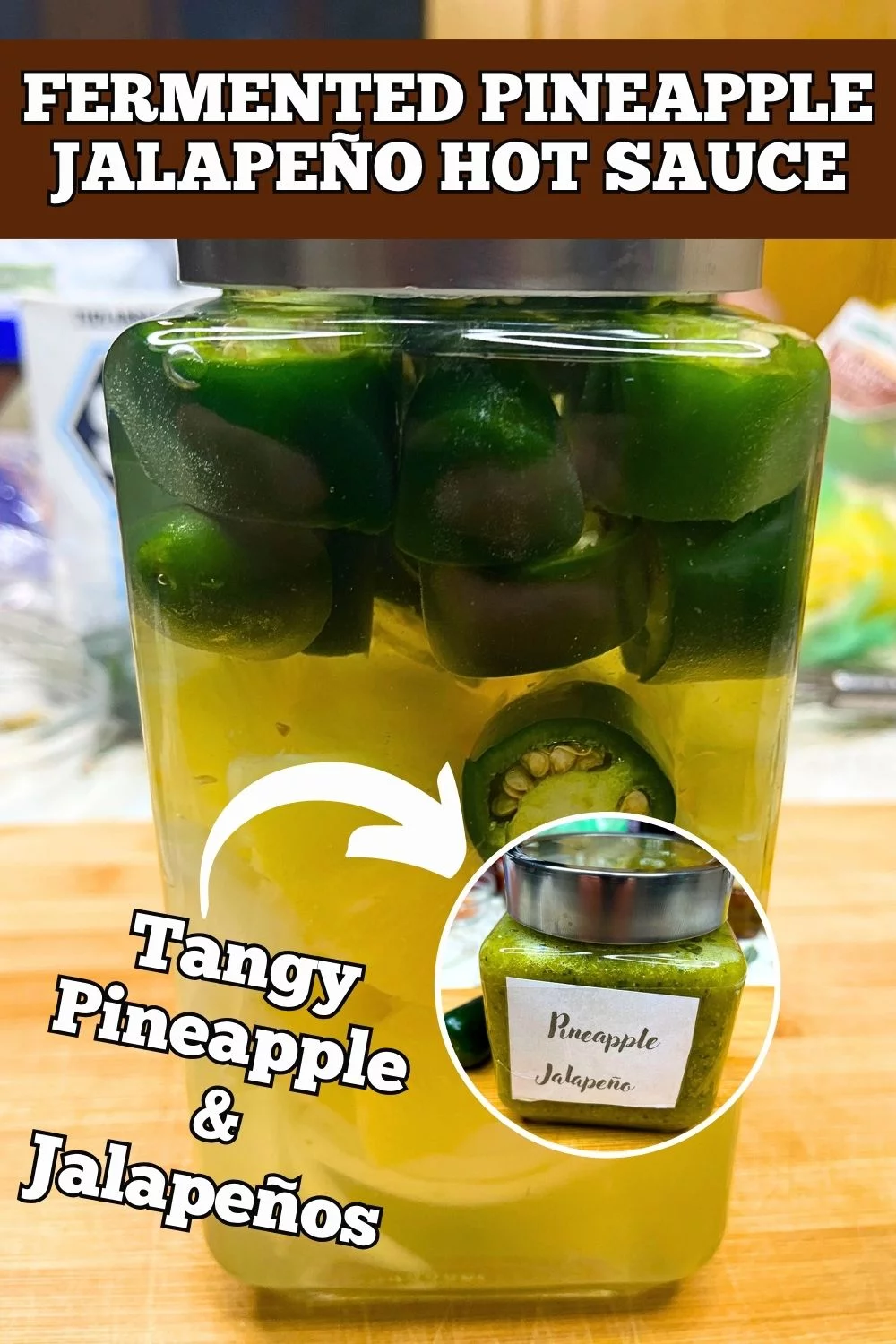
If this becomes one of your go-to sauces, share the image below to your Pinterest board so it’s always easy to get back to.
Video Recipe
FAQ for Fermented Pineapple Jalapeño Hot Sauce
How long should I ferment the jalapeños and pineapple?
Most of the time, 3–5 days at room temperature is enough. By day 3 you should see some bubbles, the brine may look a bit cloudy, and the veggies will smell pleasantly sour and tangy. If you want a deeper, funkier flavor, let it go a day or two longer and taste as you go.
Does the jar need to go in the fridge while it ferments?
No. The jar should stay at room temperature during fermentation. The fridge is too cold and slows everything down. Once you’ve blended the sauce and bottled it, then it goes in the fridge for storage.
What kind of salt and water should I use?
Use non-iodized salt like kosher, sea, or pickling salt. Iodized table salt can interfere with fermentation and add off flavors. For the water, stick to filtered, bottled, or spring water so you’re not dealing with chlorine, which can also slow things down.
Is it normal for the brine to turn cloudy or for things to float?
Yes. A cloudy brine and a few bubbles are both good signs that fermentation is happening. Some pieces might try to float—this is why a weight is helpful. As long as everything stays mostly under the brine and you don’t see fuzzy mold, you’re on the right track.
How spicy is this hot sauce?
It has a medium heat with a nice balance of sweet pineapple and tangy ferment. Using 4–5 jalapeños keeps it lively but not extreme. For extra heat, leave in more seeds and membranes or add an extra pepper. For a milder batch, remove most of the seeds before fermenting.
Can I use canned pineapple instead of fresh?
Fresh pineapple gives the brightest, cleanest flavor, but canned pineapple in juice can work in a pinch. If you use canned, drain it well and choose one without added syrup so the sauce doesn’t turn overly sweet.
How long will the finished sauce last in the fridge?
Once blended and bottled, the hot sauce keeps well for about 2–3 weeks in the refrigerator. Always use a clean spoon or shake straight from a squeeze bottle, and if anything ever smells off or looks strange, it’s better to toss it and make a new batch.
Can I make the sauce thicker or creamier?
Yes. For a thicker sauce, start with very little brine when blending, then add it one spoonful at a time until you like the texture. Blending a bit longer also helps it turn smoother and more velvety. You can mention a “creamier version” in the notes if you’d like to give your readers that option.
What can I put this hot sauce on?
It’s great on tacos, grilled chicken, shrimp, burgers, eggs, rice bowls, and pizza. You can also stir a spoonful into mayo or sour cream to make a quick spicy dip or drizzle for fries and roasted veggies. Once it’s in your fridge, it tends to end up on just about everything.