
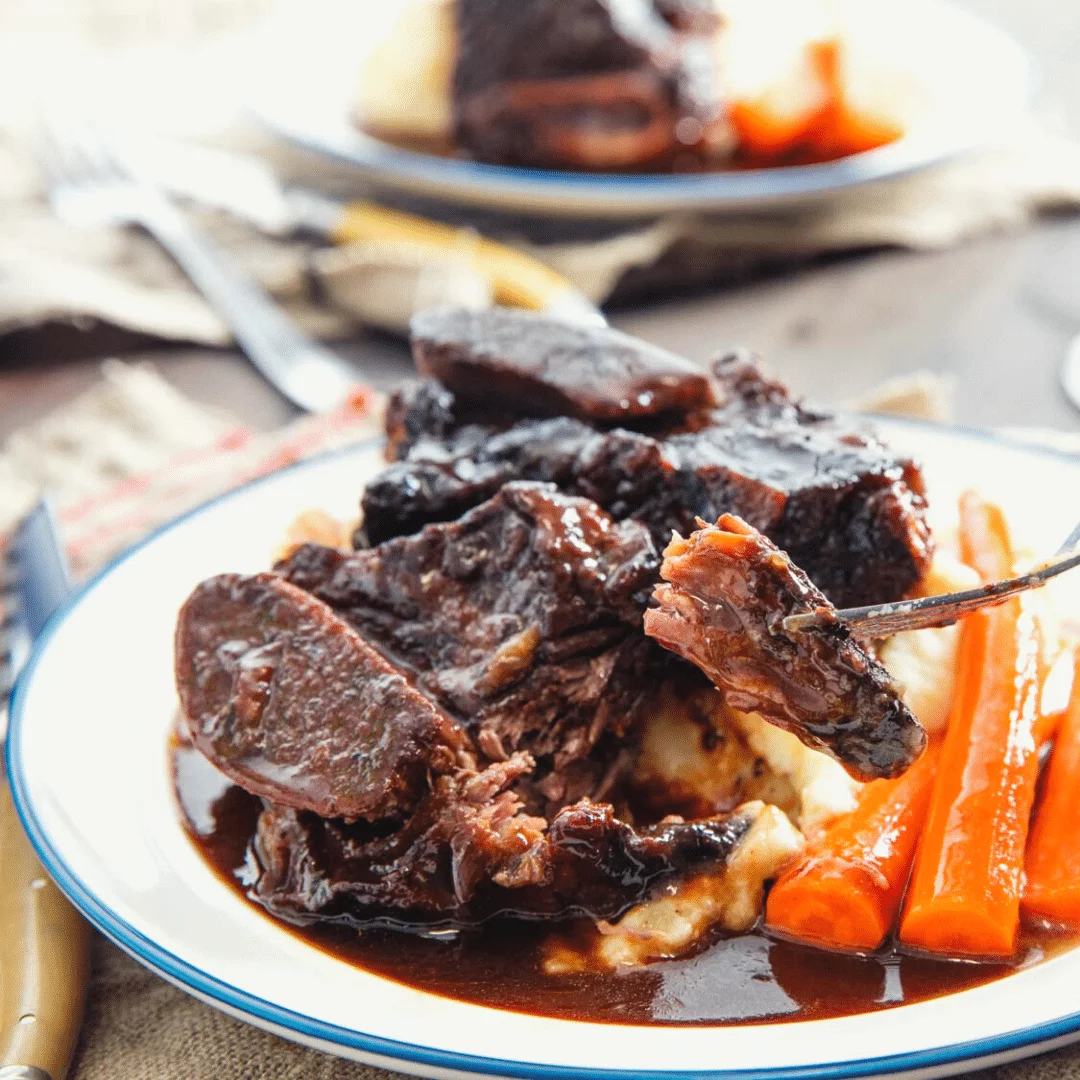
These Dr Pepper short ribs braise slowly with carrots, pepperoncini, and cloves in a sweet-savory sauce. Searing the beef first adds browned flavor, while the covered oven braise makes it tender enough to pull apart with a fork. Once the ribs are ready, skim the cooking liquid and reduce it separately if needed so the beef doesn’t keep cooking while the sauce thickens.
Ingredients
- 1 lb (454 g) boneless beef short ribs, preferably thick, well-marbled pieces
- ¼ teaspoon kosher salt, plus more to taste after cooking
- 1 teaspoon ground black pepper
- 2 tablespoons (30 ml) grapeseed oil or another neutral high-heat oil
- 1 medium red onion, diced
- 4 garlic cloves, minced
- 2 medium carrots, cut into ½-inch pieces
- ¼ cup sliced pepperoncini peppers, drained
- 2 tablespoons (32 g) tomato paste
- 1 tablespoon (20 g) molasses
- ¼ cup (60 ml) reduced-sodium soy sauce
- 2 whole cloves
- ¼ teaspoon ground cloves
- 1 teaspoon paprika
- 1 cup (240 ml) regular Dr Pepper
- 1 cup (240 ml) unsalted beef stock
Instructions
- Heat the oven. Preheat the oven to 300°F (150°C). Use a Dutch oven or heavy oven-safe pot with a tight-fitting lid, preferably about 3–4 quarts, that holds the ribs snugly in one layer.
- Season and sear the beef. Pat the short ribs dry and season with the ¼ teaspoon salt and the black pepper. Heat the oil in the pot over medium-high heat. Add the ribs and sear for about 2–3 minutes per side, until well browned. Work in batches if needed. Transfer the beef to a plate.
- Cook the vegetables. Reduce the heat to medium. If the beef has released a lot of fat, spoon off the excess, leaving about 1 tablespoon in the pot. Add the onion, carrots, and drained pepperoncini. Cook for 4–5 minutes, stirring occasionally, until the onion starts to soften. Add the garlic and cook for 30 seconds.
- Build the braising liquid. Stir in the tomato paste and cook for about 1 minute, stirring so it doesn’t burn. Add the paprika and ground cloves, then immediately stir in the Dr Pepper, beef stock, soy sauce, and molasses. Scrape up the browned bits from the bottom of the pot. Add the 2 whole cloves.
- Braise until tender. Return the ribs and any collected juices to the pot. Bring the liquid to a gentle simmer, cover tightly, and transfer to the oven. Allow approximately 2½–4 hours, checking the beef after 2 hours. Turn the pieces when checking and continue in 20–30-minute intervals as needed. The ribs are ready when a fork slides in easily and the meat separates with little pressure. If the liquid drops below about halfway up the meat, add a small splash of water and check that the lid fits tightly.
- Finish the sauce. Carefully transfer the tender ribs to a plate and loosely cover. Find and discard both whole cloves. Spoon excess fat from the surface of the sauce. If the liquid is thinner than you want, simmer it uncovered on the stovetop for 5–10 minutes, stirring occasionally. Taste as it reduces and stop before it becomes overly salty or sweet. The sauce should remain spoonable rather than becoming a thick glaze.
- Serve. Taste the finished sauce before adding any more salt. Return the ribs to the pot just long enough to coat them and warm through. Serve in pieces or gently pull apart with forks, then spoon the carrots, onions, and sauce over the beef.
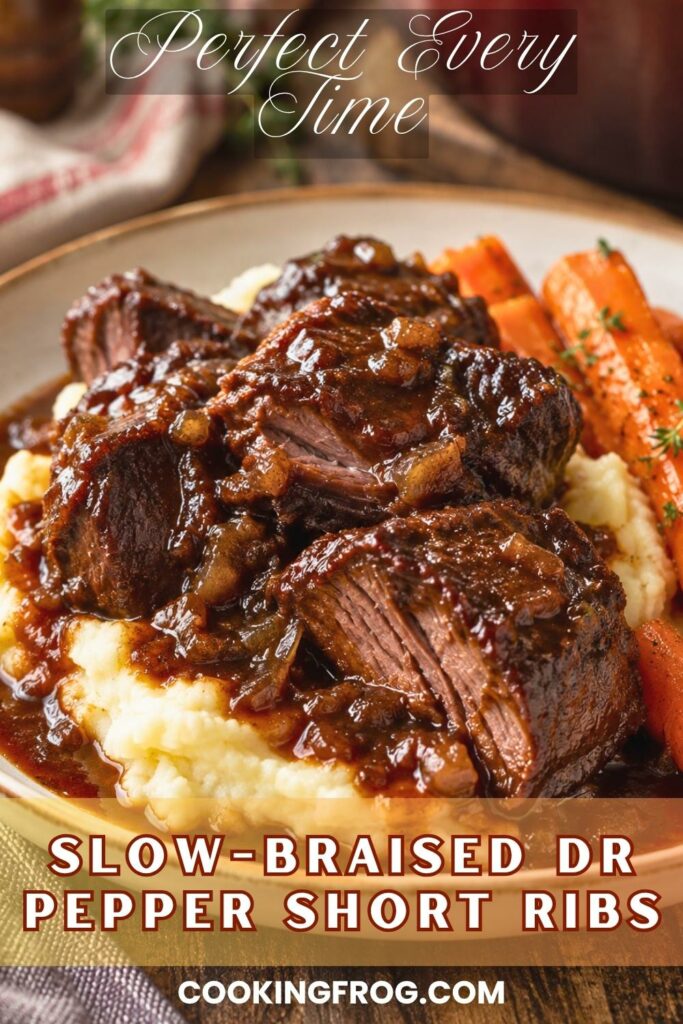
Tips for Tender Short Ribs
- Choose thick pieces. Thinly sliced boneless short ribs cook differently and can dry out during a long braise. Look for substantial pieces with visible marbling.
- Judge tenderness, not just time. A piece that is still firm and resists a fork usually needs more covered cooking. Stop once it is tender; leaving it in the oven longer can make the meat dry and stringy.
- Keep the lid snug. Too much evaporation can leave the meat exposed and concentrate the sauce before the ribs are ready.
- Watch the seasoning. Soy sauce and pickled peppers already contribute salt. Reduced-sodium soy sauce and unsalted stock leave more room to adjust the finished sauce.
- Expect soft carrots. The carrots cook with the beef and become very tender, helping give the braising liquid some body.
💡 Tip: Freeze in individual portions for quick single-serve meals, perfect for lunches or busy weeknights.
Why Use Dr Pepper?
Dr Pepper contributes sweetness and flavor to the braising liquid. Soy sauce adds savory depth, while pepperoncini brings tang and mild heat. The slow, moist cooking is what makes the beef tender.
Regular Dr Pepper is the intended choice for this recipe. Flat soda works because the method doesn’t depend on carbonation. Diet and zero-sugar versions have a different sweetener profile, so they aren’t a like-for-like flavor substitute.
Make Ahead, Storage, and Reheating
Make ahead: Cook the ribs until tender, then refrigerate them with the vegetables and sauce using the cooling instructions below. Once chilled, lift off the solidified fat before reheating. If the sauce needs reducing, do that after reheating and removing the beef.
Refrigerate: Divide the beef and sauce among shallow containers and refrigerate within 2 hours of cooking, or within 1 hour if the surrounding temperature is above 90°F (32°C). Don’t leave the whole pot on the counter to cool completely. Keep refrigerated for 3–4 days.
Freeze: Once chilled, pack the ribs with their sauce in airtight freezer containers or freezer bags. Freeze for up to 3 months for best quality. Thaw overnight in the refrigerator.
Reheat: Warm the ribs with their sauce in a covered saucepan over low heat or a covered oven-safe dish at 300°F (150°C). Add a splash of water if the sauce has thickened. Heat until the center of the beef reaches 165°F (74°C).
These cooling and reheating instructions follow USDA guidance for leftovers.
What to Serve with Dr Pepper Short Ribs
Mashed potatoes, creamy polenta, or plain rice give the sauce somewhere to go. A simply dressed green salad or steamed green vegetables balances the richness without adding another sweet component.
For a different short-rib preparation without soda, try these oven-braised Costco short ribs. If you enjoy slow-cooked beef with onions, there’s also onion-braised beef brisket.
The amount of Dr Pepper wasn’t listed in the ingredients. Can you share that with me?