
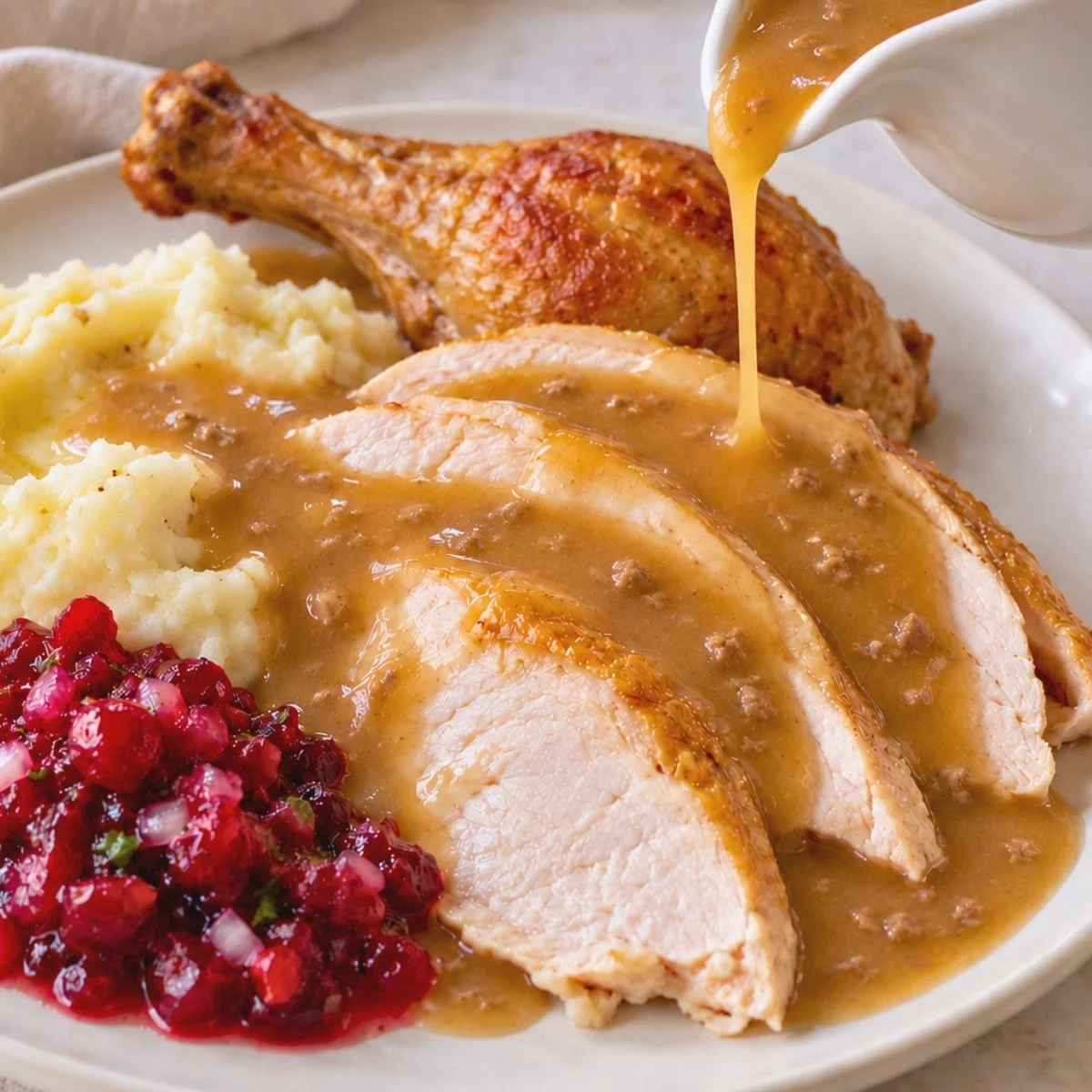
This turkey gravy recipe turns whatever is left in the roasting pan into a glossy sauce in the fifteen minutes your bird rests, and it does more for a holiday plate than anything else on the table. The whole thing runs on one technique: a roux of equal parts turkey fat and flour, cooked until it smells nutty, then loosened with warm stock. Get the roux right and the gravy comes out silky, so you can spoon it over maple-glazed roast turkey, pool it beside creamy mashed potatoes and cornbread dressing, and watch the plate come together.
Ingredients
- Pan drippings from one roasted turkey, strained (about 2 cups of fat and juices combined)
- 3 tablespoons reserved turkey fat, topped up with butter if the bird was lean
- 3 tablespoons all-purpose flour
- 3 to 4 cups warm turkey or chicken stock
- 1 tablespoon unsalted butter (only if the drippings were lean)
- ¼ teaspoon freshly ground black pepper, plus more to taste
- Kosher salt, added only after tasting
- 1 tablespoon dry sherry or dry white wine (optional)
- Turkey giblets and neck, simmered and finely chopped (optional)
Instructions
- Separate the drippings: As soon as the turkey comes out of the oven, pour everything left in the pan through a fine-mesh strainer into a fat separator or a tall measuring cup. Let it sit for 5 minutes so the fat rises and the darker juices settle below. Spoon the clear fat off the top and measure it, since you want about 3 tablespoons of fat to build the roux.
- Simmer the giblets: If you’re making giblet gravy, cover the neck, heart, and gizzard with water in a small saucepan and simmer for about an hour until the meat is tender. Pull the meat off the neck, chop everything fine, and strain the cooking liquid to use later for thinning. Leave the liver out, because it turns the gravy bitter and gray.
- Build the roux: Put the reserved turkey fat and the butter, if using, into a wide saucepan over medium heat. When it shimmers, sprinkle in the flour and whisk constantly for 2 to 3 minutes, until the paste smells nutty and turns pale gold. Cooking the flour this far is what keeps the finished gravy from tasting like raw paste.
- Add the liquid slowly: Pour in the warm stock and the strained pan juices a ladle at a time, whisking hard after each addition. The roux stays thin at first and then thickens all at once, so keep the whisk moving to leave no lumps behind. Stop at 3 cups for a pourable gravy, or keep going with the fourth cup for a looser one.
- Simmer and season: Bring the gravy to a gentle boil, then lower the heat and simmer for 5 minutes, whisking now and then while it smooths out. Stir in the chopped giblets if you’re using them, the sherry, and the black pepper. Taste before you add any salt, because turkey drippings and commercial stock are already salty.
- Check the consistency and serve: The gravy is ready when it coats the back of a spoon and a line drawn through it holds for a second. If it’s too thick, whisk in warm stock a splash at a time; if it’s too thin, simmer a few more minutes to reduce it. Strain it for a silky finish, pour it into a warm gravy boat, and serve it right away.
Ways to change up this gravy
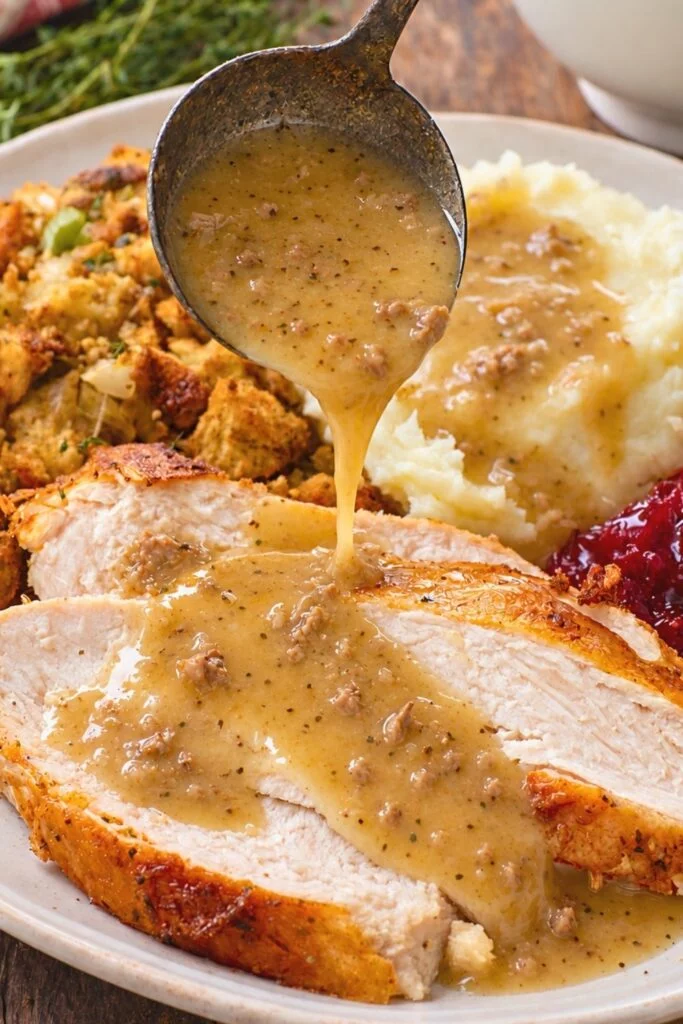
- Giblet gravy: simmer the neck, heart, and gizzard in water for about an hour, chop the meat fine, and stir it in at the end for texture and a deeper turkey flavor. Skip the liver, which turns the whole pan bitter.
- Gluten-free: swap the flour for an equal amount of cornstarch or a gluten-free all-purpose blend. Cornstarch thickens faster and sets clearer, so whisk it into a little cold stock first and add that slurry near the end instead of cooking a roux.
- Richer finish: a tablespoon of cream or a knob of cold butter whisked in off the heat gives the gravy gloss and softens the salty edge without thinning it.
- More flavor: a splash of dry sherry or white wine, a sprig of fresh thyme, or a pinch of dried sage all belong here. Add the alcohol while the gravy simmers so the raw bite cooks off.
- Lean bird, no drippings: melt 3 tablespoons of butter, whisk in 3 tablespoons of flour, and build the gravy on warm stock, then add a splash of soy sauce or Worcestershire to stand in for the roasted depth.
- Make it ahead: the gravy can be made up to 2 days out, cooled, and refrigerated. Reheat it gently with a splash of stock, since it tightens as it sits.
What to serve this gravy with
- The plate it’s built for: a maple-glazed roast turkey or a juicy slow cooker turkey breast, both of which leave drippings worth saving.
- Potatoes are the real destination. Pour it over creamy mashed potatoes, or spoon it across scalloped potatoes for a side that soaks it up.
- It ties the savory side together, running into cornbread dressing and a classic green bean casserole.
- Give the plate something to mop with, like warm copycat Texas Roadhouse rolls or a pan of crispy roast potatoes.
- Leftovers earn their own meal the next day, ladled over a hot turkey sandwich or loosened with stock for a biscuits and gravy breakfast.
Storage
Turkey gravy keeps in an airtight container in the refrigerator for up to 3 days. To make it two days ahead, cool it completely, refrigerate it, and reheat it gently on the stove, thinning with a splash of warm stock because it sets up thicker once cold. It freezes well for up to 2 months; thaw it overnight in the fridge and whisk it over low heat. Because gravy is a moist, stock-based sauce, don’t leave it out at room temperature for more than two hours, and reheat leftovers until they’re steaming hot.
FAQ
How do I fix lumpy turkey gravy?
Whisk hard and fast, or run an immersion blender through the pan for a few seconds to break the lumps up. If they’re stubborn, pour the gravy through a fine-mesh strainer and press them out. Next time, warm the stock before it goes in and add it in a slow stream while whisking, since cold liquid hitting a hot roux is what makes it seize into lumps.
Why did my turkey gravy turn out too thick or gluey?
Gravy keeps thickening as it cools, so pull it off the heat while it still looks a little looser than you want on the plate. If it’s already past that point, whisk in warm stock or drippings a splash at a time until it flows again. A gluey, pasty texture usually means too much flour, and the fix is more liquid rather than more cooking.
Do I need to add salt to turkey gravy?
Taste it first. Pan drippings and most store-bought stock are already salty, so season at the very end and only if it needs it. If the gravy turns out too salty, whisk in a little more unsalted stock or a splash of cream to dilute the seasoning without losing the body.
Can I use butter instead of turkey fat?
Yes, butter works well and tastes clean. Use the same amount the recipe calls for, and if you only have a little turkey fat, top it up with butter to reach the full 3 tablespoons. Keeping the fat and flour in equal amounts is what holds the roux together, so don’t skimp on one and overload the other.
Can you make turkey gravy without pan drippings?
You can, and it still beats a packet. Melt 3 tablespoons of butter, whisk in 3 tablespoons of flour, and pour in 3 to 4 cups of warm turkey or chicken stock. Add a splash of soy sauce or Worcestershire and a pinch of poultry seasoning to replace some of the roasted flavor the drippings would have brought, then taste and season. Give the finished sauce a few extra minutes of simmering so the flavors settle together.
Should I strain turkey gravy before serving?
Straining is optional but it’s the easiest way to get the silky texture in the title. Pour the finished gravy through a fine-mesh strainer into your serving vessel to catch any stray flour lumps, browned bits, or giblet pieces that would break up the surface. If you like a little texture from the giblets and pan bits, skip the strainer and just whisk the gravy smooth before it goes to the table.