
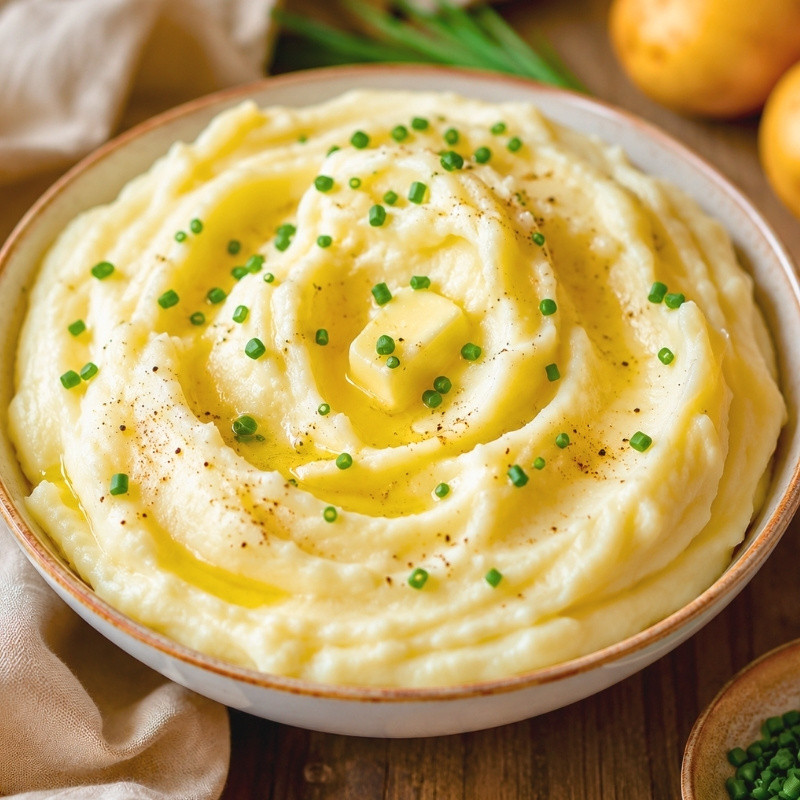
This mashed potatoes recipe sticks to a handful of basics: russet potatoes, real butter, warm milk, and enough patience to drain them properly. Skip the stand mixer here, since it turns starchy potatoes gluey fast, no matter how good your ingredients are. A hand masher or a ricer gets you the light, fluffy texture you’re actually after, without the gummy pot you get from over-mixing. It’s the kind of side dish that doesn’t need a special occasion to earn a spot on the plate.
Russet potatoes work best for this because they’re high in starch and low in moisture, which is exactly what makes the difference between a fluffy result and something dense and wet. Yukon Golds are a solid substitute if you want a creamier, more buttery bite and don’t mind a slightly less fluffy texture. Either way, cut the potatoes into even pieces before boiling. Uneven chunks cook unevenly, and you’ll end up mashing some pieces that are still a little hard in the middle while others turn to mush. The butter-to-milk ratio here leans generous on purpose, since a side dish this simple lives or dies by how rich it tastes. There’s no sauce or topping to hide behind, so the potatoes have to carry the plate on their own.
Serve this alongside Salisbury Steak with Mushroom Gravy, Beef Stroganoff with Mushrooms and Sour Cream, or a plate of Meatloaf with a Tangy Ketchup Glaze. It’s also the classic partner for Classic Green Bean Casserole on a holiday table, or spoon extra gravy from Mississippi-Style Pot Roast right over the top. Any of them turn this into a full plate instead of just a side.
Ingredients
- 3 lbs (1.4 kg) russet potatoes, peeled and cut into 1½-inch chunks
- ½ cup (1 stick / 113 g) unsalted butter, cut into pieces
- 1 cup whole milk, warmed
- 2 cloves garlic, minced (optional)
- 1½ teaspoons salt, plus more for the cooking water
- ¼ teaspoon black pepper
Instructions
- Cut and boil the potatoes: Peel the potatoes and cut them into even 1½-inch chunks so they cook at the same rate. Place them in a large pot, cover with cold water by about an inch, and add a generous tablespoon of salt to the water. Bring to a boil over high heat, then reduce to a steady simmer and cook for 15 to 18 minutes, until a fork slides into a chunk with almost no resistance.
- Drain and dry them out: Drain the potatoes in a colander, then return them to the hot, empty pot and set it back over low heat for 1 to 2 minutes, shaking gently. This cooks off the extra surface water clinging to the potatoes, which is what keeps mashed potatoes from turning watery once the butter and milk go in.
- Warm the butter and milk: While the potatoes drain, add the butter pieces and milk to a small saucepan over low heat, or microwave in a heatproof bowl in 20-second bursts, until the butter is melted and the milk is warm but not boiling. Stir in the garlic here if you’re using it, so it mellows slightly instead of tasting raw.
- Mash until smooth: Mash the dried potatoes with a hand masher, or pass them through a ricer back into the pot. Fold in the warm butter and milk mixture in two additions, stirring gently with a spatula or wooden spoon rather than an electric mixer, which overworks the starch and turns the potatoes gluey.
- Season and serve: Stir in the salt and pepper, then taste and adjust. If the potatoes seem thick, add a splash more warm milk, a tablespoon at a time, until they hold a soft peak on the spoon but still fall easily when tilted. Serve immediately while everything is still hot.
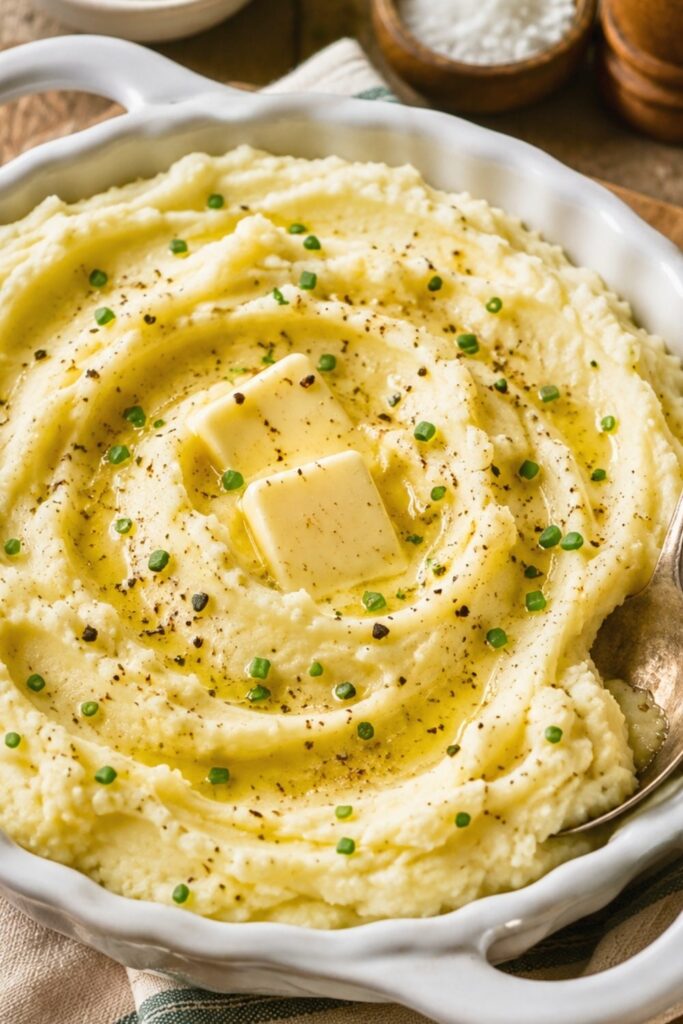
Tips for the Best Creamy Mashed Potatoes with Butter and Milk
- Don’t skip drying the potatoes over low heat after draining. Even a minute of extra steam cooking off is the difference between fluffy potatoes and a watery pot, and it costs you nothing extra.
- Warm the butter and milk before you add them. Cold dairy shocks the starch and cools the potatoes down fast, and you’ll end up over-mashing just to compensate for the temperature drop.
- Use a ricer instead of a hand masher if you want restaurant-smooth potatoes with almost no lumps. It takes an extra two minutes, and it’s worth it for a holiday table where people are actually looking at the food.
- If you’re making these ahead, keep them slightly looser than you want the final texture to be. They thicken as they sit in the fridge, and a splash of warm milk brings them right back on reheating.
- Swap half the milk for heavy cream if you want a richer side dish, or boil the potatoes in chicken broth instead of water for more savory depth without adding extra fat.
- Salt the cooking water generously, not just the finished potatoes. Potatoes absorb seasoning as they boil, and that’s where a good chunk of the flavor actually comes from, not just what you add at the end.
Storage
Let the mashed potatoes cool to close to room temperature before you box them up, then refrigerate in an airtight container. The USDA guideline for cooked leftovers like this is 3 to 4 days in the fridge, so plan to use them up within that window rather than pushing it further. For longer storage, portion the potatoes into freezer-safe bags or containers, press out as much air as you can, and freeze for up to 3 months. The texture turns a little grainier after thawing since potatoes lose moisture in the freezer, but a good stir while reheating brings most of it back. Reheat gently on the stovetop over low heat, or in the microwave in short bursts, stirring in a splash of warm milk every minute or two until the potatoes loosen back up and turn creamy again.
FAQ
Can you freeze mashed potatoes?
Yes, though the texture changes a little once thawed. Portion cooled mashed potatoes into airtight freezer bags or containers, press out the excess air, and freeze for up to 3 months. Thaw overnight in the fridge, then reheat slowly with a splash of milk to smooth them back out. Avoid microwaving straight from frozen, since the edges overheat before the center even thaws.
Why do mashed potatoes turn out gluey?
Gluey potatoes almost always come from overworking the starch, usually with a stand mixer or food processor, or from potatoes that soaked up too much water while boiling. Stick to a hand masher or a ricer, dry the potatoes briefly over heat after draining, and stir in the butter and milk gently instead of beating them. Starchy potatoes like russets are more prone to this than waxier varieties, so the mixing method matters even more with them.
Can you make mashed potatoes ahead of time?
Yes. Make them up to a day ahead, slightly looser than you want the final texture, and refrigerate in an airtight container. Reheat covered in a 325°F oven for about 30 minutes, or on the stovetop with a splash of milk, stirring occasionally until hot and smooth again. Either method works fine as long as you don’t rush the reheating.
What’s the best potato for mashed potatoes?
Russet potatoes are the classic choice because their high starch content breaks down into a light, fluffy texture once cooked. Yukon Gold potatoes are a close second if you want a creamier, more buttery result with a bit less peeling. Waxy potatoes like red potatoes hold their shape too well and tend to turn dense or gummy when mashed. If you only keep one variety around for cooking, russets are the more versatile pick.