
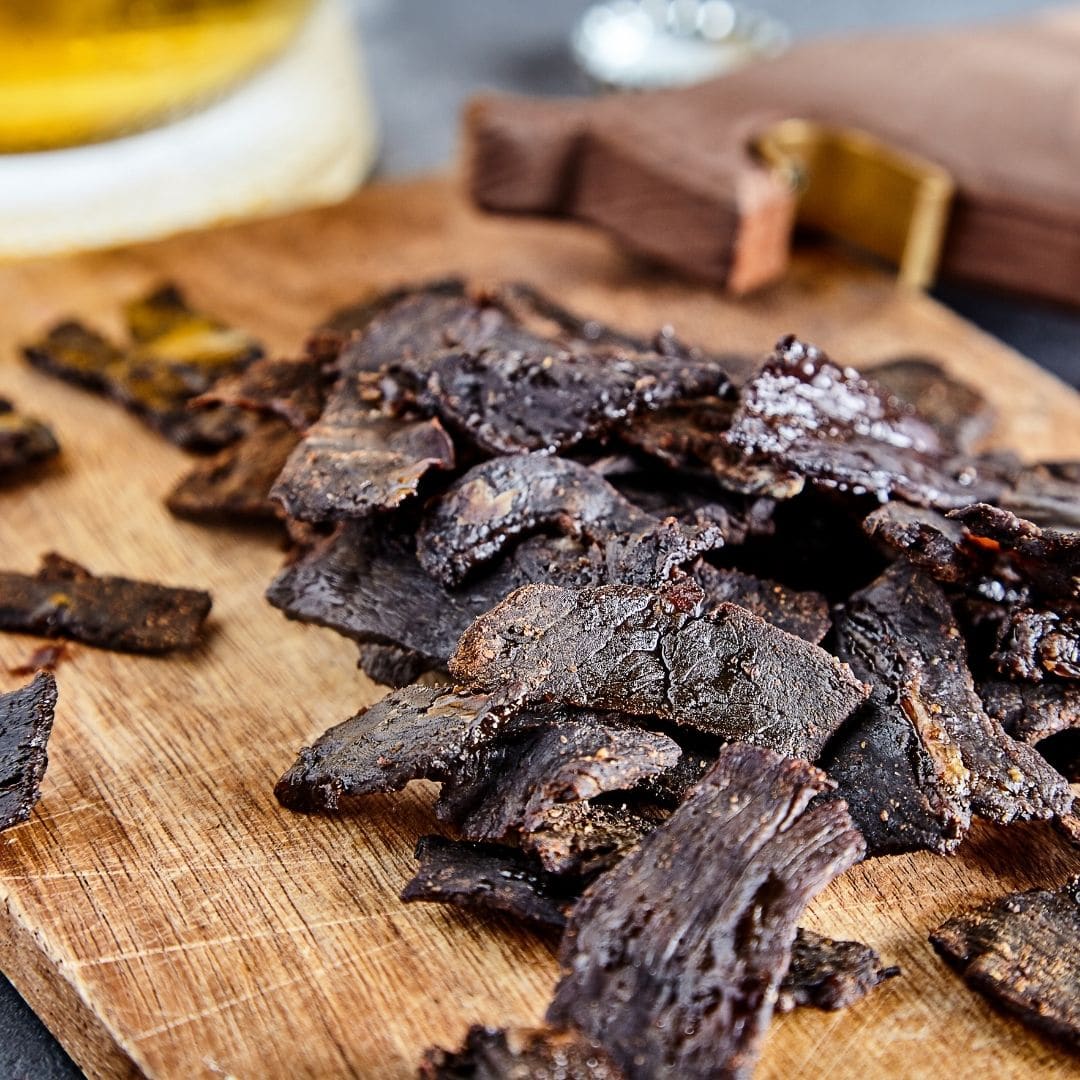
This oven-baked beef jerky is made with thin slices of lean beef marinated in soy sauce, Worcestershire, liquid smoke, garlic, onion, ancho chile, and smoked paprika. The result is savory, smoky, and slightly spicy, with a firm chew rather than a brittle texture.
The two steps that make the biggest difference are trimming away as much visible fat as possible and partially freezing the beef before slicing. Cold, firm meat is much easier to cut into thin, even strips, which helps the jerky dry at the same rate instead of leaving some pieces tough and others overly dry.
For food safety, I heat the marinated beef to 160°F (71°C) before continuing the low-temperature drying process. After that, the jerky is ready when a cooled test piece bends and cracks slightly without snapping in half.
What Is Beef Jerky?
Beef jerky is lean beef that is sliced thin, seasoned or marinated, then dried until most of its moisture has been removed.
For this recipe, top round, flank steak, or sirloin all work well as long as excess fat is trimmed away. Slice against the grain for a more tender bite or with the grain if you prefer chewier jerky.
Homemade Beef Jerky Recipe
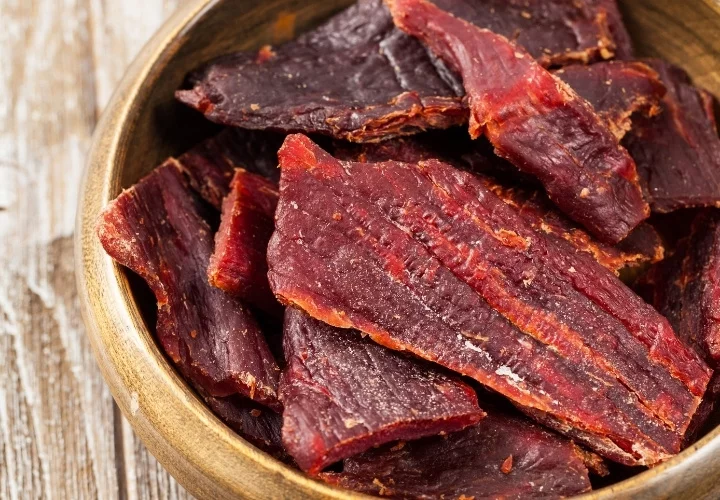
This beef jerky is smoky, savory, and full of bold flavors — and you can make it right in your oven with no dehydrator required.
Ingredients
-
3 lbs beef of your choice (top round, flank steak, or sirloin work best)
-
¾ cup gluten-free soy sauce
-
¼ cup Worcestershire sauce
-
1 ½ tsp salt
-
2 tsp ground black pepper
-
1 ½ tsp liquid smoke
-
1 ½ tsp garlic powder
-
1 ½ tsp onion powder
-
1 ½ tsp ancho chile powder
-
1 ½ tsp smoked paprika
-
1 tbsp dried oregano
Instructions
- Prep the Beef: Trim away as much visible fat as possible. Place the beef in the freezer for 30–45 minutes, until firm around the edges but still easy to cut.
- Slice the Beef: Cut into even strips about ⅛–3/16 inch thick. Slice against the grain for more tender jerky or with the grain for a chewier texture.
- Marinate: Place the beef in a large zip-top bag or covered container. Add the soy sauce, Worcestershire sauce, liquid smoke, garlic powder, onion powder, ancho chile powder, smoked paprika, oregano, and black pepper. Massage the bag so every strip is coated, then refrigerate for 8–16 hours.
- Prepare for Baking: Preheat the oven to 325°F (165°C). Line 2–3 baking sheets with foil and set wire racks on top. Remove the beef from the marinade, discard the leftover marinade, and lightly blot the strips with paper towels. Arrange them on the racks in a single layer without overlapping.
- Heat the Beef: Bake at 325°F until the thickest strips reach an internal temperature of 160°F (71°C). Start checking after about 8–10 minutes, since thin pieces heat quickly.
- Dry the Jerky: Reduce the oven temperature to 170–175°F (75–80°C) and continue drying for about 2–4 hours. Rotate the pans halfway through if your oven heats unevenly. Thin pieces may finish earlier, so remove them as they’re ready.
- Check for Doneness: Take out one strip and let it cool for a few minutes. It should feel dry and leathery but still slightly flexible. When bent, it should develop small cracks without snapping completely in half. If it still feels soft or moist inside, keep drying and check again every 20–30 minutes.
- Cool and Store: Transfer the finished jerky to a clean wire rack and let it cool completely before storing. Once cool, place it in an airtight container. Keep it refrigerated for longer storage.
Tips for the Best Jerky
-
The longer you marinate, the deeper the flavor — overnight is best.
-
Removing all fat is essential for shelf life.
-
Freezing the beef slightly before slicing gives cleaner, thinner cuts.
-
Using a rack allows air to circulate, helping the jerky dry evenly.
Tips for the Best Beef Jerky
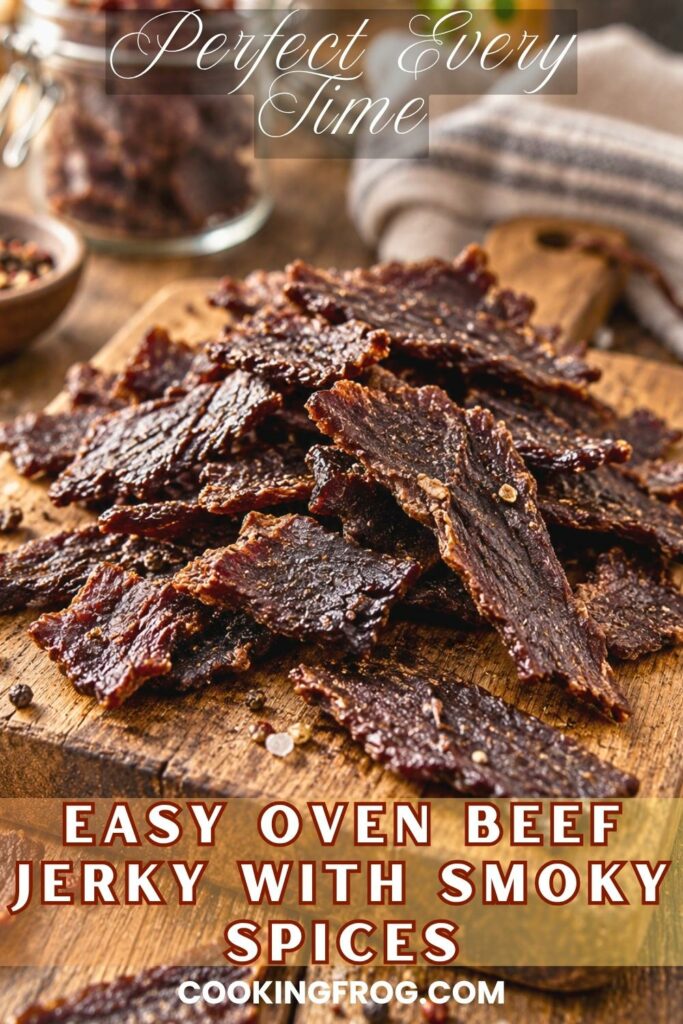
- Choose lean beef. Top round, eye of round, flank steak, and sirloin all work well. Trim away visible fat because fat doesn’t dry like lean meat and can shorten storage life.
- Partially freeze before slicing. About 30–45 minutes in the freezer firms the beef enough to cut into thin, even strips.
- Keep the thickness consistent. Aim for about ⅛–3/16 inch so the pieces finish drying at roughly the same time.
- Slice for the texture you want. Cut against the grain for more tender jerky or with the grain for a chewier bite.
- Don’t overcrowd the racks. Leave space between the strips so hot air can circulate around them.
- Judge doneness after cooling a piece. Warm jerky feels softer than it really is. A cooled strip should bend and develop small cracks without snapping completely in half.
Can I Make Beef Jerky in a Dehydrator?
Yes. A food dehydrator is actually a good option for homemade beef jerky.
For food safety, heat the marinated beef to an internal temperature of 160°F (71°C) before beginning the low-temperature drying stage.
Then arrange the strips in a single layer in a dehydrator set to 130–140°F (54–60°C), or follow your dehydrator manufacturer’s jerky setting if it falls within that range.
Dry until the jerky feels dry and leathery and a cooled piece bends with small cracks without breaking completely. Drying time varies considerably depending on the thickness of the meat and the dehydrator.
Best Cuts of Beef for Jerky
Lean cuts work best because excess fat can become rancid during storage.
Good choices include:
- Top round
- Eye of round
- Bottom round
- Flank steak
- Sirloin
You don’t need an expensive cut. A lean, relatively uniform piece of beef is more important than tenderness because the meat is sliced thin before drying.
Can I Make Gluten-Free Beef Jerky?
Yes, but check both sauces carefully.
Use certified gluten-free soy sauce or tamari and make sure your Worcestershire sauce is also labeled gluten-free. The remaining seasonings in this recipe should also be checked if cross-contact is a concern.
How to Store Homemade Beef Jerky
Let the jerky cool completely before transferring it to an airtight container. Packing it while still warm can trap condensation and add moisture back to the meat.
Properly dried homemade jerky can be stored at room temperature, but for the best quality I prefer to keep it refrigerated once opened or when making a larger batch.
USDA recommends a shorter shelf life for homemade jerky than commercially produced jerky, with about 2 months as its home-storage guideline. For longer storage, freeze the jerky in an airtight freezer-safe bag or container.
If you notice mold, unusual moisture, or an off smell, discard the jerky.
More Dried Beef Recipes
If you enjoy homemade dried beef, try my South African Biltong recipe next. Biltong uses a different seasoning and drying process, so the finished texture and flavor are quite different from American-style jerky.

I have made deer jerky for years along with beef, and I find your recipe a good one, but I also add some pink salt, Prague powder #1, which is sodium nitrite cure to the marinade. It does change the flavor which I think is better, and stretches the shelf life some. I would like to ad that if you want a little heat that you sprinkle the jerky with Tobasco, or your favorite hot sauce and black pepper while it is still wet on the drying rack. The pepper will not stick to the dry jerky. If you like the smoke flavor, then at the beginning of drying you can sprinkle a little liquid smoke on top also. About 1/2 way through the drying process, I flip the jerky over one time to finish drying. The hot sauce, smoke, and pepper do not work as well in the marinade as they do after the strips of meat are on the drying rack. I watch closely as the drying process finishes. The jerky can become too dry and snap like a potato chip. If this happens, sometimes if left at room temperature in a plastic bag with a slice of fresh bread it will soften up a little. The bread dries out and transfers the moisture back into the over dried jerky. It works for me.
I’m glad you’ve liked our beef jerky recipe Alan, and thank you so much for your suggestions; it sounds like you know your beef/deer jerky.