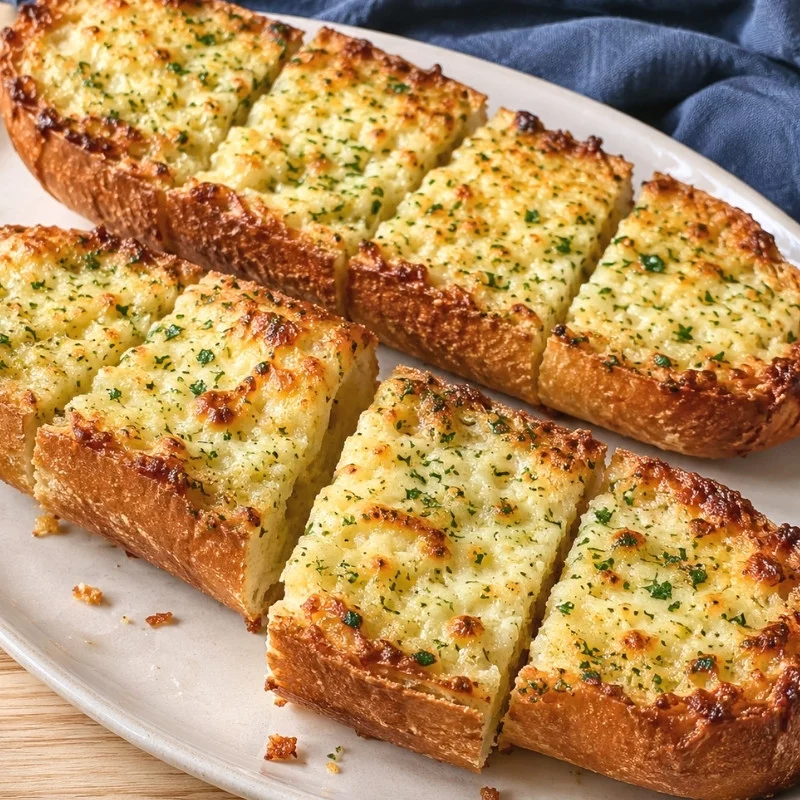
This garlic bread recipe turns a plain loaf into the first thing that disappears from the table. The crust turns crisp under the broiler while the inside stays soft, and the butter carries real minced garlic instead of the flat flavor you get from a jar. I reach for it whenever there’s a big pot going on the stove, next to a bowl of clam chowder or a plate of spaghetti and meatballs. It’s the fastest way to round out dinner without touching a second burner.
The base recipe uses just butter, garlic, salt, and parsley, and it already tastes better than anything wrapped in foil at the grocery store. Add shredded mozzarella halfway through baking and it turns into the cheesy version people usually order at a restaurant, good next to a bowl of zuppa toscana or a pan of lasagna. Either way, the whole thing comes together in under twenty-five minutes, and most of that time is just the oven doing the work.
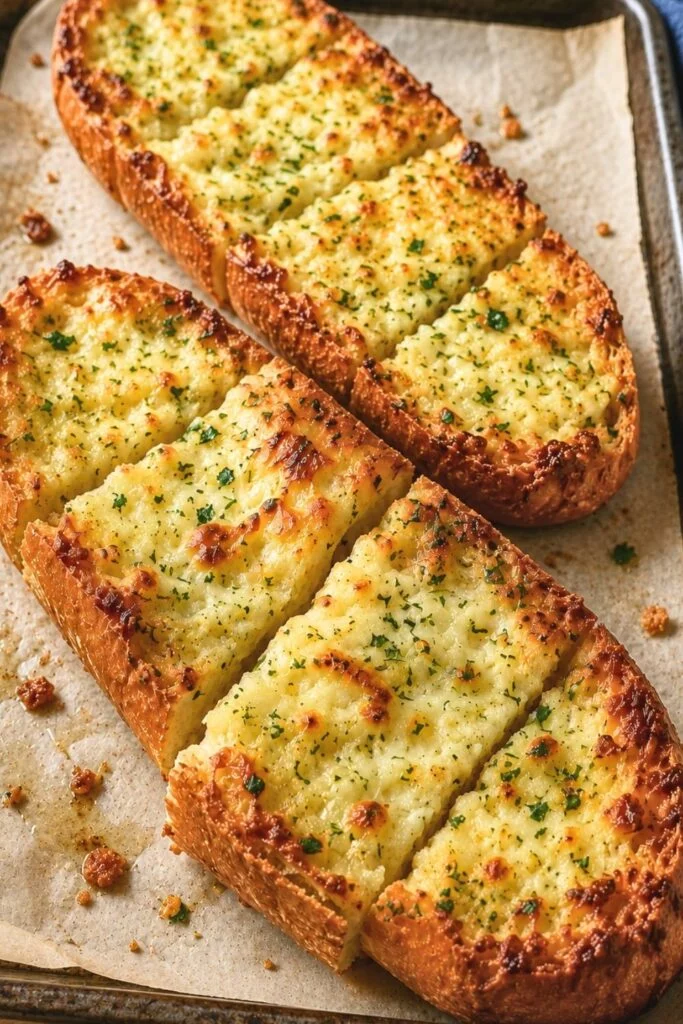
The broiler step is what separates good garlic bread from the soft, pale kind you get at a chain restaurant. A regular bake gets the butter melted and the bread warm, but only that last minute or two under direct heat gives you real caramelized spots along the edges. Skip that step and the bread still turns out fine. Add it, and it becomes the version people ask you to make again.
Ingredients
- 1 large French baguette or Italian loaf (about 20 inches), split lengthwise
- ½ cup (1 stick / 113 g) unsalted butter, softened
- 4 cloves garlic, finely minced (about 4 teaspoons)
- 3 tablespoons finely chopped fresh parsley
- ¼ teaspoon fine sea salt
- ⅓ cup (33 g) finely grated Parmesan cheese
- 1 cup (113 g) shredded mozzarella (optional, for the cheesy version)
Instructions
- Make the garlic butter: In a medium bowl, mash the softened butter with the minced garlic, parsley, salt, and Parmesan using a fork. Keep mashing until the mixture turns pale green and speckled and no streaks of plain butter remain. Taste a small bit on its own. It should taste strongly of garlic, since the flavor mellows once it bakes into the bread.
- Split and spread: Set the oven rack in the middle position and preheat to 400°F (200°C). Slice the loaf in half lengthwise and lay both halves cut-side up on a parchment-lined baking sheet. Spread the garlic butter edge to edge in a thick, even layer, right up to the crust so every bite gets butter.
- Bake until golden: Bake for 10 to 12 minutes, until the butter is fully melted and the edges of the bread just start to turn light gold. If you’re adding mozzarella, pull the sheet out at the 8-minute mark, scatter the cheese over both halves, and return it to the oven for the remaining time.
- Broil for a crisp finish: Switch the oven to broil and watch closely for 1 to 2 minutes, until the edges turn deep golden brown and any cheese is bubbling and lightly spotted. Broilers vary a lot, so stay at the oven door, since bread can go from golden to burnt in under thirty seconds.
- Rest, slice, and serve: Let the bread rest for 2 to 3 minutes before cutting. This keeps the melted butter from soaking through and turning the crust soggy. Slice into pieces with a serrated knife using a gentle sawing motion, and serve immediately while it’s still warm.
Tips for the Best Golden Garlic Bread with Parmesan and Parsley
- Use fresh garlic, not the jarred minced kind. Jarred garlic often turns bitter and slightly sour once it hits high oven heat, while fresh cloves mellow into something sweeter and rounder.
- Let the butter come fully to room temperature before mixing. Butter that’s still a bit firm won’t spread evenly and tends to tear the crust instead of coating it.
- Wrap the bread in foil for the first half of baking for a softer, pillowy texture, or leave it uncovered the entire time for crisp, toasted edges. Neither method is a mistake, they just produce different textures depending on what you’re serving alongside it.
- If you’re using salted butter, cut the added salt back to a pinch. Parmesan already brings plenty of salt on its own, and the two together can push the bread past seasoned into salty.
- Mince the garlic by hand instead of using a garlic press for this one. A press releases more juice and less pulp, and the juice alone burns faster under the broiler than minced pieces do.
- Grate the Parmesan yourself instead of buying it pre-shredded. Pre-shredded cheese is coated with anti-caking starch that keeps it from melting smoothly into the butter, so you end up with gritty spots instead of an even coating.
- If your loaf is more than a day old, it works even better here. Slightly stale bread holds its shape under the butter and crisps up faster than a fresh, soft loaf that can turn gummy in the middle.
Storage
Keep leftover garlic bread in an airtight container or wrapped tightly in foil. It holds up at room temperature for about a day, or in the refrigerator for up to 3 days if you added mozzarella, since dairy shortens the safe window. Reheat it in a 350°F oven for 5 to 7 minutes instead of the microwave, since the microwave turns the crust soft and chewy instead of crisp. If the bread smells sour or you spot any mold, throw the whole piece out rather than cutting around it. You can also freeze the unbaked, buttered loaf wrapped tightly in foil and then in a freezer bag for up to 3 months, and bake it straight from frozen, adding about 5 extra minutes to the bake time. University of Nebraska-Lincoln Extension confirms homemade bread holds up well in the freezer for up to three months, which matches how long this assembled loaf keeps its texture and flavor.
FAQ
Can you make garlic bread ahead of time?
Yes. Mix the garlic butter up to 3 days ahead and keep it covered in the fridge so the garlic and herbs have time to blend into the butter. You can also assemble the whole buttered loaf, wrap it tightly, and refrigerate it for up to a day before baking. Let it sit at room temperature for about 15 minutes before it goes in the oven so it bakes evenly instead of staying cold in the center.
Can you freeze garlic bread?
Yes, both baked and unbaked versions freeze well. Wrap the loaf tightly in foil and then in a freezer bag to keep ice crystals out, and freeze for up to 3 months. Bake it straight from frozen, adding 5 to 8 extra minutes if it’s unbaked, or reheat at 350°F for about 10 minutes if it’s already baked and just needs warming through.
What’s the best bread for a garlic bread recipe?
A sturdy, crusty loaf works best, think French baguette, Italian bread, or a firm sub roll. The dense crumb holds the butter without falling apart, and the thick crust turns crisp instead of soggy. Soft sandwich bread or brioche can’t hold up to the butter, so save those for a different use.
Why does my garlic bread turn out soggy?
The usual culprits are too much butter, butter spread while the bread is still warm from a previous bake, or skipping the broiler step that crisps the surface. Warm bread absorbs butter like a sponge instead of holding it on the surface where it can crisp. Stick to a thick but controlled layer, and finish under the broiler for the last minute or two to lock in the crunch.