
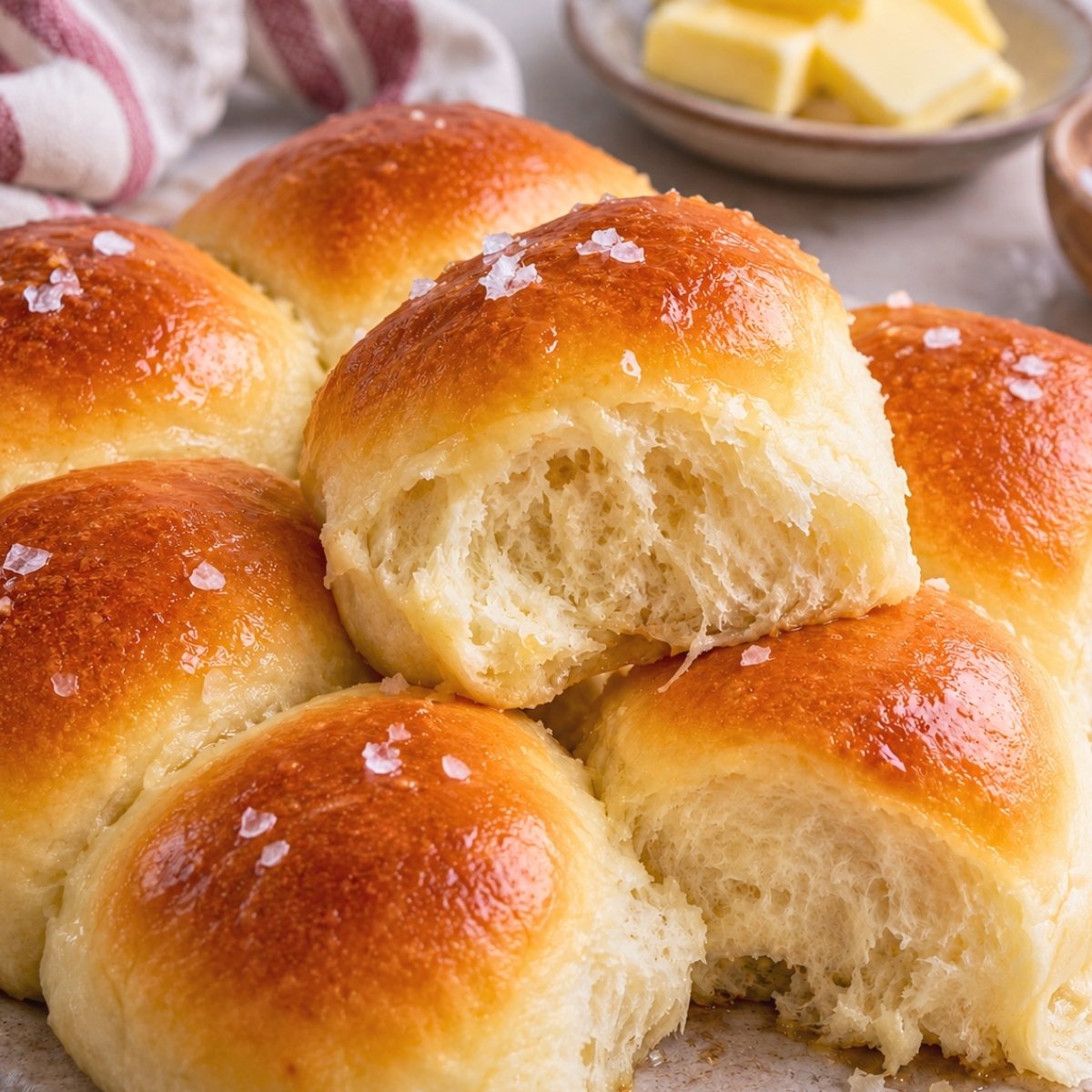
A dinner rolls recipe earns its place on the holiday table when the rolls stay soft from the first one to the last, and that comes down to two things: how you measure the flour and how far you let the second rise go. I keep the dough on the soft side, knead it only until it pulls clean off the bowl, and judge the shaped rolls with a poke instead of the clock. My turkey gravy sits next to them on the table, mostly because a warm roll is the best way to get the last of it off the plate.
The failures I see most often are dense centers and rolls that spread into one flat sheet. Both usually start before the oven: too much flour in the bowl, or a second rise that ran long in a warm kitchen. Flour settles differently in every bag, and a cup scooped straight from the container can weigh 20 g more than a cup spooned and leveled. That extra flour is enough to turn a soft dough tight, which is why the recipe lists grams next to the cups and why the dough should still feel tacky when you stop kneading.
Ingredients
- 4 cups (500 g) all-purpose flour, plus extra for dusting
- 1¼ cups (300 ml) whole milk, warmed to 110°F (43°C)
- 2¼ teaspoons (1 packet / 7 g) instant yeast
- 3 tablespoons granulated sugar
- 1 large egg, at room temperature
- 6 tablespoons (85 g) unsalted butter, softened, divided
- 1½ teaspoons fine salt
- Flaky salt for the tops
Instructions
- Warm the milk and bloom the yeast: Warm the milk to 105-110°F (40-43°C), and use a thermometer here because milk above 115°F can weaken the yeast before the dough even starts. Stir in 1 tablespoon of the sugar and all of the yeast, then let it sit 5 to 10 minutes until the surface looks foamy.
- Mix and knead the dough: Whisk the flour, the remaining 2 tablespoons of sugar, and the salt in a large bowl. Add the yeast mixture, the egg, and 4 tablespoons of the softened butter, then stir with a sturdy spoon until a shaggy dough forms. Turn it out and knead 6 to 8 minutes, until the dough is smooth, slightly tacky, and pulls clean off the counter.
- Let the dough double: Put the dough in a lightly oiled bowl, cover it, and leave it in a warm spot for 60 to 90 minutes, until it has doubled and a floured finger pressed into it leaves a dent that fills slowly. Butter a 9 by 13 inch pan while it rises.
- Shape the rolls: Punch the dough down and divide it into 15 pieces, about 60 g each. Cup each piece under your palm and roll it against the counter until the top is smooth and the seam is pinched underneath. Set them seam side down in the pan in 3 rows of 5, close enough that they touch.
- Proof until puffy: Cover the pan and let the rolls rise 35 to 45 minutes at room temperature, until they are puffy and nearly fill the pan. Poke one gently with a floured finger, since a slow partial spring back means they are ready and a dent that stays put means they have gone too far. Heat the oven to 375°F (190°C) during the last 15 minutes.
- Bake and brush with butter: Bake 20 to 24 minutes, until the tops are deep golden and the center roll reads 195-200°F (90-93°C) on an instant-read thermometer. If the tops brown before the centers are done, lay a sheet of foil over the pan. Brush the hot rolls with the last 2 tablespoons of melted butter and let them cool 10 minutes before pulling them apart.
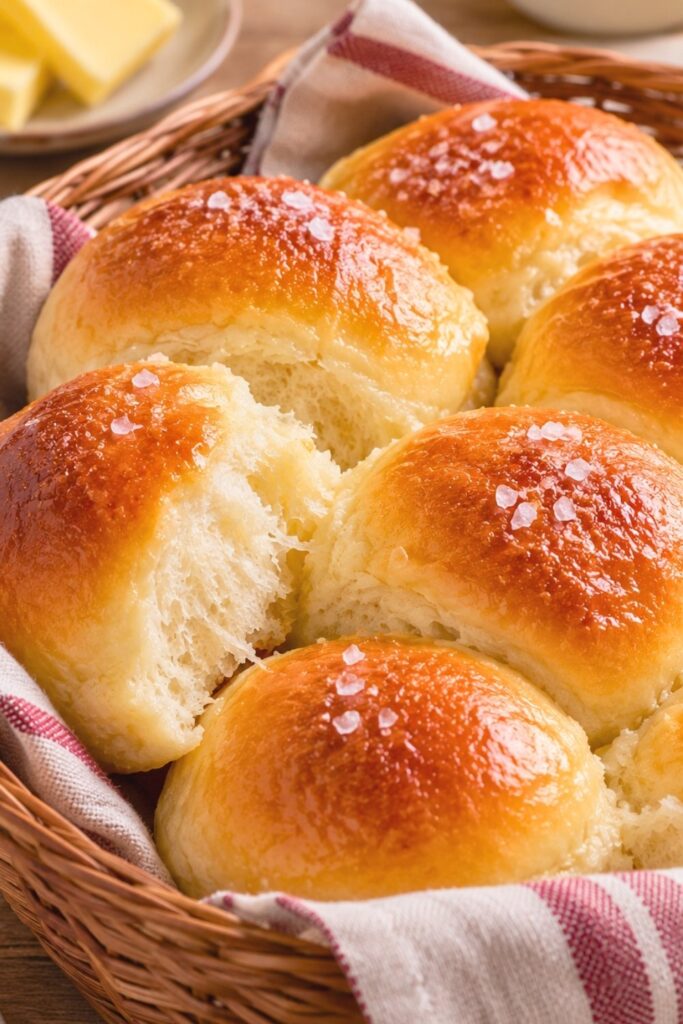
When the rolls turn dense or flat
- Dense centers almost always mean too much flour. Scoop flour with a spoon into the cup and level it, or weigh 500 g, and remember the dough should feel tacky rather than dry when you finish kneading.
- If the dough climbs the hook but stays glued to the bowl, add flour 1 tablespoon at a time and never more than ¼ cup. Dough that’s already dry at this stage bakes into tight, heavy rolls.
- Rolls that spread into one flat sheet were over-proofed. A warm kitchen pushes the second rise faster than the clock does, so start checking at 30 minutes and trust the poke test over the timer. If they have already collapsed, punch the dough down, reshape, and give it a shorter second rise rather than baking a flat pan.
- A gummy strip along the bottom means the center was underbaked. The internal temperature is the honest check, and 195°F is the floor before you pull the pan out. Glass pans run hotter on the base than metal ones, so check those rolls 2 minutes earlier.
- If the yeast never foams, the milk was too hot or the packet was old. Start over with milk at 105°F and a fresh packet instead of baking dough that won’t lift.
- Rolls that turn hard by the next day were likely baked too long or cooled in open air. Take them out at 195°F, butter them while hot, and bag them once they are fully cool.
What goes on the table with them
- My creamy mashed potatoes take the same oven time, so start them before the rolls go in.
- A pan of Southern cornbread dressing covers the savory side of the plate, and both dishes hold well at 200°F while the turkey rests.
- If you want a green vegetable that people actually finish, green bean casserole bakes in a separate pan without competing for space.
- Finish with pumpkin pie and the rolls can move to the counter in the same pan, covered with a towel, until dessert.
Keep cooled rolls in a sealed bag or container at room temperature for up to 3 days. To freeze, wrap them tightly and store for up to 2 months, then thaw at room temperature and warm at 350°F for 5 minutes with foil over the top so the crust doesn’t harden. For a single roll, wrap it in a damp paper towel and microwave it for 20 seconds.
FAQ
Can I use active dry yeast instead of instant?
Yes, but you’ll need to proof it in the warm milk with the sugar for 10 minutes first, so the first rise can take 15 to 20 minutes longer. Instant yeast goes straight into the flour, which is why the method above adds it to the milk.
Can I make the dough the night before?
Shape the rolls, cover the pan tightly, and refrigerate for up to 16 hours. Take the pan out 1 to 1½ hours before baking and let the rolls finish rising at room temperature, then bake them as written. The slow cold rise also builds a little more flavor, so the rolls taste less yeasty than a same-day batch.
Why do my rolls taste like yeast?
A dough that rose in 40 minutes in a hot kitchen never used up the yeast flavor, so it can taste raw. Let the first rise run the full 60 to 90 minutes and keep the dough below 80°F while it works.
Can I double the recipe?
Yes, but use two pans instead of packing 30 rolls into one. Crowding stops the sides from browning and the middle from setting, and the bake time changes once the pan is that full. If both pans fit on one rack, rotate them front to back halfway through the bake.
What changes if I use bread flour?
Bread flour gives a chewier roll with a slightly higher rise, and it drinks more liquid than all-purpose. Add milk 1 tablespoon at a time until the dough reaches the same tacky feel, and keep the knead time the same.
Can I bake the dough as a loaf instead?
The same dough works in a buttered 9 by 5 inch loaf pan. Bake it at 375°F for 35 to 40 minutes, until the center reads 195°F, and tent it with foil after 20 minutes if the top darkens too fast.