
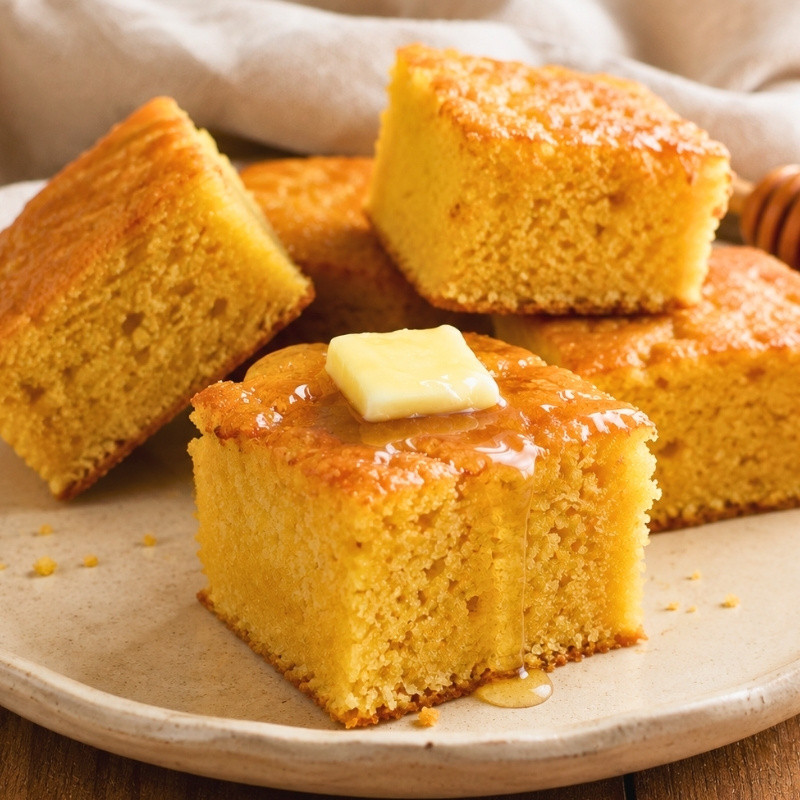
This cornbread recipe is the one I reach for when a pot of chili needs something to soak up the last of the sauce. It walks the middle of the sweet-versus-savory debate: a touch of honey and sugar for flavor, buttermilk for moisture and tang, and enough cornmeal to taste like corn instead of cake. The edges turn crisp and dark in a hot pan, while the middle stays soft and slightly sweet.
I’ve tested this batter several times, because the ratio of cornmeal to flour decides everything about the texture. Too much cornmeal and it crumbles into dust the moment you cut it; too much flour and it turns into yellow cake. Buttermilk does the other half of the work, since its acidity tenderizes the crumb and keeps the bread moist for days instead of hours. If you’ve made my homemade chili or my beef stew, you know both deserve a warm side that can stand up to broth.
This one comes together in a single bowl in about ten minutes of hands-on time, then bakes while you finish the rest of the meal. It works beside sloppy joes, under a pile of comfort food like my creamy mashed potatoes, or with a smear of butter and honey on a quiet morning. You can dress it up with cheddar and jalapeños or keep it plain, and both versions earn a permanent spot on my fall table.
Ingredients
- 1½ cups (180 g) yellow cornmeal
- 1 cup (125 g) all-purpose flour
- 1 tablespoon baking powder
- ½ teaspoon baking soda
- 1 teaspoon salt
- ½ cup (100 g) granulated sugar
- 2 large eggs
- 1¾ cups (420 ml) buttermilk
- ¼ cup (60 g) unsalted butter, melted, plus more for the pan
- 2 tablespoons honey
Instructions
- Preheat and prep the pan: Set the oven rack in the middle position and preheat to 400°F (200°C). Generously butter a 9-inch square baking pan, or place a 10-inch cast iron skillet in the oven to heat while you mix. If using the skillet, the butter will melt and sizzle while the batter comes together, which is exactly what you want for a crisp crust.
- Whisk the dry ingredients: In a large bowl, whisk the cornmeal, flour, baking powder, baking soda, salt, and sugar together until evenly combined. Break up any clumps in the cornmeal with the back of the whisk, since a lump of dry cornmeal in the finished bread is the one thing you can’t fix after baking.
- Mix the wet ingredients: In a medium bowl, whisk the eggs until the yolks break, then whisk in the buttermilk, melted butter, and honey until smooth. The honey will sink and stick to the bowl, so scrape the whisk against the sides and get it all into the mixture rather than leaving a sweet puddle behind.
- Combine the batter: Pour the wet ingredients into the dry and stir with a spatula until just combined, about 15 strokes. A few small lumps are fine and bake out, but overmixing develops gluten in the flour and turns the crumb tough and chewy, so stop the moment you see no more streaks of dry flour.
- Bake until golden: Pour the batter into the prepared pan, or carefully swirl the melted butter around the hot skillet before adding the batter so it sizzles as it lands. Bake for 20 to 25 minutes, until the top is deep golden brown, the edges pull away from the sides, and a toothpick stuck in the middle comes out clean. Let it cool 10 minutes before slicing and serving.
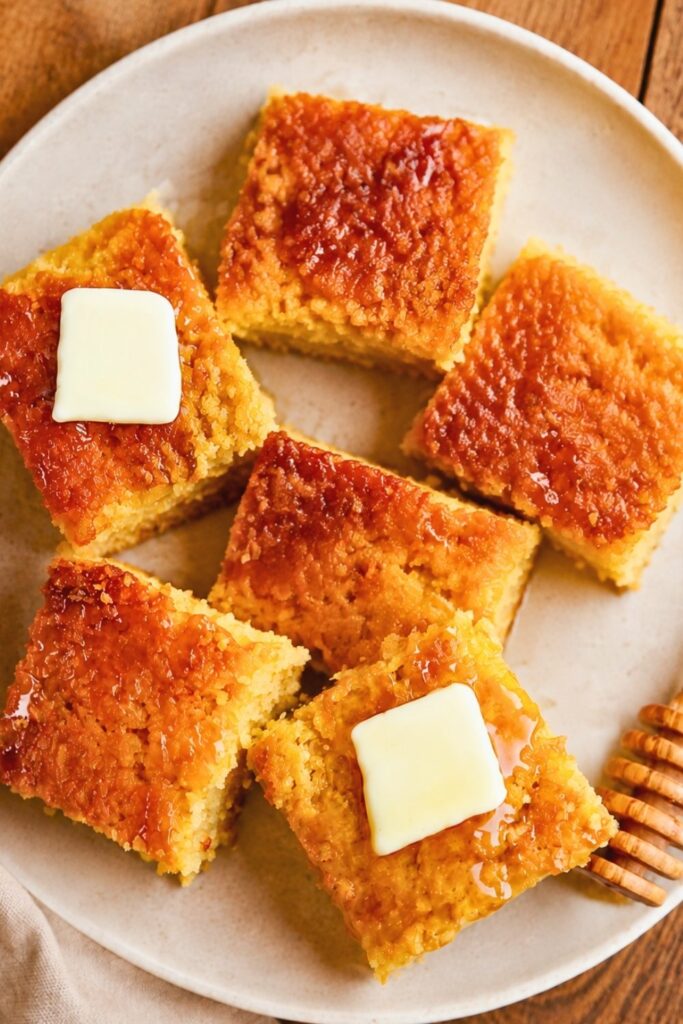
Tips for the Best Moist Cornbread with Buttermilk and Honey
- Stop mixing at about 15 strokes. Gluten develops fast in the flour, and an overmixed cornbread comes out tough and rubbery instead of tender. A few small lumps in the batter are fine and disappear during baking.
- If you’re out of buttermilk, put 1 tablespoon of lemon juice or white vinegar in a liquid measuring cup, add whole milk to reach 1¾ cups, and let it sit for 5 minutes. The acid does the same tenderizing job as real buttermilk, and the recipe comes out identical.
- For the crispiest crust, bake in a 10-inch cast iron skillet instead of a pan. Melt the butter in the skillet in the hot oven, swirl it to coat the sides, then pour in the batter. The hot fat gives you that dark, crunchy edge that a glass or metal pan simply can’t match.
- If your cornbread keeps crumbling when you slice it, the ratio is off: cut the cornmeal back to 1¼ cups and bump the flour up to 1¼ cups next time. Cornmeal has no gluten to hold the crumb together, so flour is the lever that fixes a dusty, falling-apart slice.
- For a spicy or cheesy version, fold in ½ cup of shredded cheddar and one chopped jalapeño with the wet ingredients. A cup of corn kernels or a handful of crumbled cooked bacon work just as well and keep the batter’s moisture intact.
- Keep the sugar and honey light if the cornbread is going next to savory food, since chili and stew want a bread that tastes like corn first. When I want a sweeter, dessert-leaning version, I add an extra tablespoon of honey and skip the jalapeño entirely.
Storage
Cool leftover cornbread completely, then wrap it tightly in plastic wrap or store it in an airtight container at room temperature for up to 3 days. For longer storage, wrap the whole slab in plastic wrap and then foil, and freeze it for up to 3 months; thaw it overnight in the fridge, then warm it in a 300°F oven for 10 minutes to bring back the crisp edge. The microwave works for a quick single square, but the oven keeps the crust from turning soggy, which is the only real way leftover cornbread goes wrong. For safe reheating and handling guidance, see the USDA leftovers and food safety guidelines.
FAQ
Why does my cornbread crumble?
Crumbly cornbread usually means the ratio leans too far toward cornmeal, the batter was overmixed, or the bread baked a few minutes too long and dried out. Cornmeal has no gluten, so flour is what holds the slices together. Cut the cornmeal back to 1¼ cups, add an extra ¼ cup of flour, and pull the bread from the oven the moment a toothpick comes out clean.
Can I make cornbread without buttermilk?
You can, and the swap takes two minutes. Add 1 tablespoon of lemon juice or white vinegar to a liquid measuring cup, top it up with whole milk to 1¾ cups, and let it sit for 5 minutes. The milk thickens slightly and turns tangy, which is close enough to buttermilk for this recipe to work exactly the same. Whole milk gives the moistest crumb, but any milk you have will do in a pinch.
How do you freeze cornbread?
Cornbread freezes well for up to 3 months. Cool it completely, wrap it tightly in plastic wrap and then foil so it doesn’t pick up freezer smells, and freeze the whole slab or individual squares. Thaw overnight in the fridge, then reheat in a 300°F oven for about 10 minutes to crisp the crust back up before serving.
How do I know when cornbread is done?
Bake it at 400°F for 20 to 25 minutes, then test with a toothpick: it should come out clean or with just a few crumbs, never wet batter. The top will be deep golden brown and the edges will pull away from the sides of the pan. If the toothpick comes out wet, give it 3 more minutes and test again.