
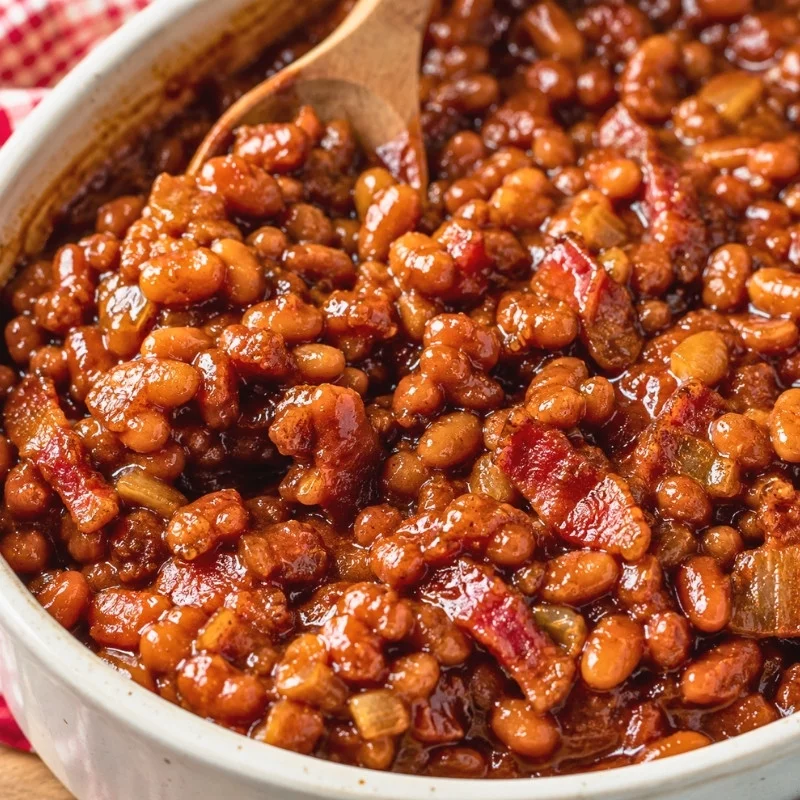
These baked beans with bacon start with canned pork and beans, then bake uncovered until the sauce turns thick, glossy, and clings to every spoonful. Bacon, onion, and green pepper build the savory base, while barbecue sauce, brown sugar, Dijon, apple cider vinegar, and smoked paprika give the beans that sweet, tangy, smoky flavor you want without making them overly sweet.
Baking them uncovered in a 9×13-inch dish lets the extra moisture cook off while the edges caramelize and the sauce thickens. They’re an easy side for cookouts, potlucks, and family dinners, especially with homemade chili or buttermilk cornbread. They’re also a natural match for sloppy joes and classic coleslaw.
Ingredients
- 6 slices thick-cut bacon, chopped
- 2 medium yellow onions, diced
- 1 green bell pepper, diced
- 2 cloves garlic, minced
- 2 (28 oz / 794 g) cans pork and beans, undrained
- ½ cup (120 ml) barbecue sauce
- ¼ cup (50 g) packed light brown sugar
- 2 tablespoons ketchup
- 1 tablespoon Dijon mustard
- 2 tablespoons apple cider vinegar
- 1 teaspoon smoked paprika
- ½ teaspoon black pepper
- ¼ teaspoon kosher salt, plus more to taste
Instructions
- Cook the bacon: Preheat the oven to 350°F (175°C) and set a 9×13-inch (23×33 cm) baking dish aside. Add the chopped bacon to a large skillet over medium heat and cook, stirring now and then, until the fat has rendered and the pieces are browned at the edges but still flexible, 6 to 8 minutes. Scoop the bacon onto a plate and leave about 2 tablespoons of fat in the pan.
- Soften the vegetables: Add the onion and bell pepper to the bacon fat and cook over medium heat until the onion turns translucent and the pepper softens, about 5 minutes. Stir in the garlic and smoked paprika and cook for 30 seconds, just until the garlic smells fragrant and the paprika darkens in the fat.
- Build the sauce: Stir in the barbecue sauce, brown sugar, ketchup, Dijon, vinegar, black pepper, and salt until the sugar dissolves and the mixture looks even. It should smell tangy more than sweet at this stage, because the beans will bring more molasses once they go in.
- Stir in the beans: Pour in both cans of pork and beans with their liquid, then add the cooked bacon and stir until everything is coated. Bring the pan to a gentle simmer for about 2 minutes so the sauce is hot going into the oven. Taste now and add a pinch of salt only if the beans taste flat; they will concentrate as they bake.
- Bake uncovered: Scrape the mixture into the 9×13-inch dish and spread it into an even layer. Bake uncovered on the middle rack for 50 to 60 minutes, until the surface looks darker and a little wrinkled, the edges bubble slowly, and a spoon dragged through the center leaves a trail that fills back in slowly instead of flooding. If the top is browning before the sauce thickens, tent the pan loosely with foil and keep baking.
- Rest and serve: Take the pan out and let it stand for 10 minutes. The sauce looks looser straight from the oven than it will on the table, and that short rest is what lets it set into a thick spoonful. Serve warm.
If the Baked Beans Stay Soupy
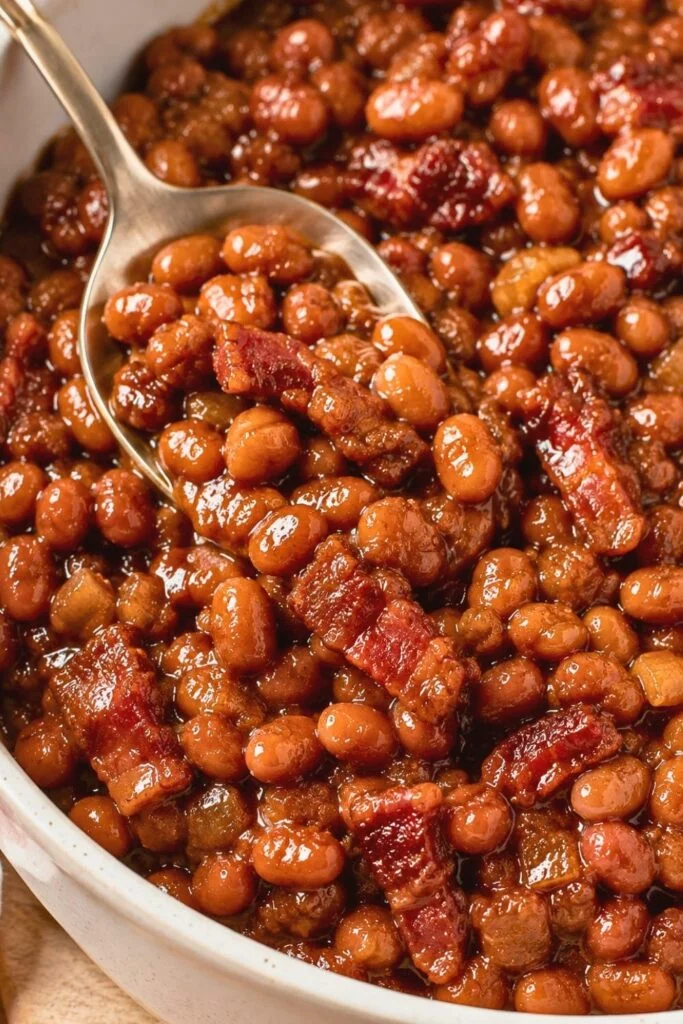
Baked beans thicken as they bake uncovered and continue to set as they cool. If the sauce still looks watery after an hour, give it more time rather than adding a thickener.
- Bake uncovered: Trapped steam keeps the sauce thin. If the top browns too quickly, loosely tent it with foil.
- Use a 9×13-inch pan: The wider surface helps excess moisture evaporate and the sauce caramelize.
- Don’t drain the beans: The liquid from the pork and beans is part of the sauce and helps it develop the right consistency.
- Look for slow, thick bubbles: The beans are ready when the surface darkens slightly and the sauce no longer looks watery.
- Rest for 10 minutes: The sauce will noticeably thicken as it cools.
- Still too thin? Return the dish to the oven uncovered for another 10 to 15 minutes.
Bacon in the beans versus bacon on top
I cook the bacon in the skillet first, then stir it through the beans so every spoonful gets some. Laying whole strips on top looks tidy in a photo, but the strips go leathery while the beans underneath stay untouched by the fat. Rendering the bacon first also gives you the fat to cook the onion and pepper, which is the flavor the canned beans don’t have on their own.
Don’t cook the bacon to a full crisp in the skillet. Fully crisp pieces turn hard after another hour in the oven. I stop when the fat has rendered and the pieces are browned at the edges but still flexible. They finish in the oven and stay meaty instead of shattering. Thick-cut bacon holds up better than thin breakfast slices, which disappear into the sauce.
If you want a few pieces on top for looks, save two slices, cook them only until the fat runs, and lay them over the pan for the last 20 minutes. Any longer and they dry out, and a garnish strip still does nothing for the spoonfuls in the middle of the pan.
Storage
Cool the beans, then refrigerate them in an airtight container within 2 hours of cooking. They keep 3 to 4 days in the fridge. Reheat a portion on the stove over medium-low heat with a splash of water if the sauce has tightened overnight, until the beans are steaming hot all the way through, 165°F (74°C). You can freeze cooled beans for up to 3 months; thaw overnight in the refrigerator and reheat the same way. Bacon puts a clock on leftovers, so don’t leave the pan on the counter through a long cookout. USDA leftovers and food safety has the time and temperature rules.
FAQ
Do you drain canned pork and beans for baked beans?
Don’t drain them; pour the cans in with their liquid, because that starchy, sweet liquid is what reduces into the sauce in the oven. If you drain it, the pan starts thin, you add more barbecue sauce to wet it, and you end up with a loose, extra-sweet pot that never tightens.
Can you make these baked beans ahead for a cookout?
Bake them fully, cool them, and refrigerate them in the same dish, covered, for up to a day. Reheat uncovered at 325°F (165°C) until hot and bubbling, 20 to 25 minutes, adding a splash of water only if the sauce looks pasty. You can also cook the bacon and vegetables, mix everything in the baking dish, refrigerate unbaked, and bake the next day; add about 10 extra minutes since you’re starting from cold.
Can you make these without bacon?
Cook the onion and pepper in 2 tablespoons of oil instead of bacon fat, and add ½ teaspoon extra smoked paprika so the pan still has some smoke. The beans will be a little less salty and a little less rich, so taste before they go in the oven and add a pinch of salt if they taste flat. I wouldn’t swap in liquid smoke here; smoked paprika is enough and it doesn’t turn the sauce bitter.