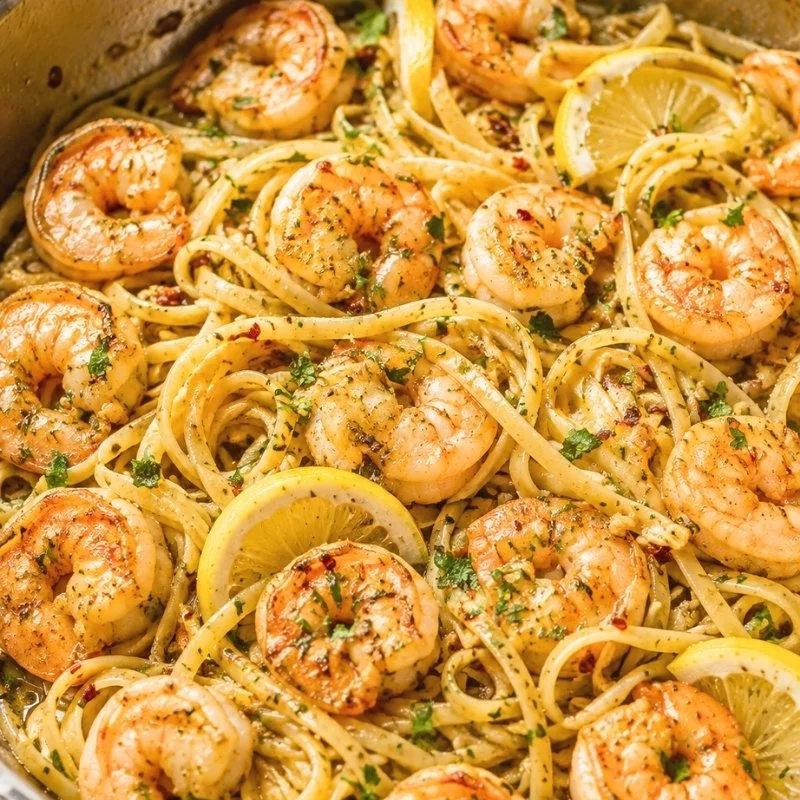
This shrimp scampi recipe combines juicy shrimp, garlic, butter, white wine, lemon, and linguine in a light, glossy sauce that coats the pasta instead of pooling at the bottom of the pan. The key is cooking the shrimp briefly, then taking them out while the wine reduces so they stay tender rather than turning tough.
A little reserved pasta water helps bring the garlic butter sauce together, while cold butter stirred in at the end gives it a smooth finish without adding cream. Serve it with golden garlic bread for soaking up the extra sauce. For another easy pasta dinner, try chicken Alfredo, or go with blackened shrimp when you want something spicier.
Ingredients
- 8 ounces (225 g) linguine
- 1 pound (450 g) large shrimp (21/25 count) peeled and deveined tails off
- ¾ teaspoon kosher salt (divided)
- ½ teaspoon freshly ground black pepper
- 2 tablespoons (30 ml) olive oil
- 4 tablespoons (56 g) unsalted butter (2 tablespoons kept cold)
- 5 garlic cloves minced
- ¼ teaspoon red pepper flakes
- ⅓ cup (80 ml) dry white wine (Pinot Grigio or Sauvignon Blanc)
- 2 tablespoons (30 ml) fresh lemon juice
- 2 tablespoons chopped fresh flat-leaf parsley
- 1 cup (240 ml) reserved pasta water as needed
Instructions
- Boil the linguine: Bring a large pot of water to a boil and salt it until it tastes like the sea. Add the linguine and cook until it’s 1 minute shy of the package time, usually 8 to 9 minutes, so it still has a white core if you bite a strand. Scoop out 1 cup of the cloudy pasta water, then drain the noodles and leave them in the colander. Don’t rinse them, because the starch on the surface is what helps the sauce cling.
- Dry and season the shrimp: If the shrimp were frozen, thaw them in a bowl of cold water for about 10 minutes, then peel and devein if needed. Spread them on paper towels and press the tops until the towels stay dry and the shells look matte. Toss with ½ teaspoon of the salt and the black pepper right before they go in the pan, not earlier.
- Sear, then pull the shrimp: Heat the olive oil and 2 tablespoons of the butter in a 12-inch skillet over medium-high heat until the butter foams and smells nutty, about 1 minute. Lay the shrimp in a single layer and leave them alone for 80 to 90 seconds, until the undersides turn pink and the flesh is still translucent in the middle. Flip and cook 60 to 90 seconds more, until they form a loose C and look just opaque. Move them to a plate; they will finish later. If they have already curled into tight Os, they are overcooked and should come off immediately.
- Build the wine sauce: Drop the heat to medium so the leftover fat doesn’t scorch the garlic. Add the garlic and red pepper flakes and stir for 20 to 30 seconds, until the garlic smells sweet and looks pale gold, not brown. Pour in the wine, scrape the browned bits from the pan, and let it bubble until it reduces by about half and the sharp alcohol smell is gone, 1½ to 2 minutes. Stir in the lemon juice so the sauce tastes bright before you add the cold butter.
- Mount the butter off heat: Take the skillet off the burner. Add the remaining 2 tablespoons of cold butter and swirl the pan until it melts into a glossy, slightly thick sauce. If you leave the pan on high heat, the butter breaks and you get a greasy puddle with lemon floating on top. Taste and add the last ¼ teaspoon of salt if the sauce tastes flat.
- Toss pasta and finish: Add the drained linguine and ⅓ cup of the pasta water. Toss over low heat for 30 to 45 seconds, until every strand looks coated and the sauce clings instead of pooling. Return the shrimp and any plate juices, add the parsley, and toss just until the shrimp are hot, about 30 seconds. If the pan looks dry, add pasta water a spoon at a time; if it looks watery, keep tossing off heat until it tightens. Serve it while the sauce is still glossy, because it tightens as it sits.
If the shrimp turn rubbery
- Pull the shrimp when they still look a little underdone in the center. Residual heat and the final 30-second toss will finish them; a 4-minute simmer in the wine won’t un-tough them.
- Pat thawed shrimp dry until the towel stays clean. A wet pound of shrimp can dump a tablespoon of water into the butter, and that liquid stops the wine from reducing.
- Keep garlic on medium heat for half a minute only. Browned garlic tastes bitter in this short sauce, and there’s no tomato or cream to hide it.
- Mount the last 2 tablespoons of butter off the heat. On a hard boil the fat separates, and more wine won’t bring it back together.
- Use pasta water, not extra wine, if the linguine looks dry in the pan. More wine at the end makes the sauce sharp and thin again.
- Crowding 2 pounds of shrimp in a 12-inch skillet steams them. Cook in two batches, or they will gray instead of sear and the sauce will taste watery.
Storage
Eat shrimp scampi the night you cook it when you can. If you have leftovers, cool them and refrigerate in an airtight container within 2 hours. They keep 3 to 4 days in the fridge. Reheat a portion in a skillet over low heat with a spoon of water just until the shrimp are warm, not bubbling hard, so they don’t tighten again. I wouldn’t freeze this; the shrimp turn mealy and the butter sauce splits on thaw. USDA leftovers and food safety covers the 2-hour cooling window and the 165°F (74°C) leftover reheat target.
FAQ
Can you make shrimp scampi without wine?
Swap the ⅓ cup of wine for ⅓ cup of low-sodium chicken broth plus 1 extra teaspoon of lemon juice. Broth doesn’t reduce with the same bite that wine does, so the extra lemon keeps the sauce from tasting flat. Skip sweet wines, and don’t skip the acid altogether; a butter-garlic pan with no wine and no lemon tastes greasy instead of bright.
Can you use frozen shrimp for shrimp scampi?
Frozen shrimp are what I use most of the time. Thaw them in cold water, not on the counter and not in the microwave, then peel, devein, and dry them hard before they hit the skillet. If they go in wet, they steam and the sauce turns watery. Pre-peeled tails-off shrimp save time; tails-on look nicer on a platter but are a nuisance in linguine.
How do you know when the shrimp are done?
Look at the shape and the color, not only the clock. Done shrimp are opaque and curved into a C. Overcooked shrimp curl into a tight O, turn chalky white, and bounce when you bite them. Large 21/25 shrimp need about 90 seconds on the first side and a little less on the second in a hot pan, then they come out. They go back in for 30 seconds at the end, which is enough to heat them without cooking them twice.