
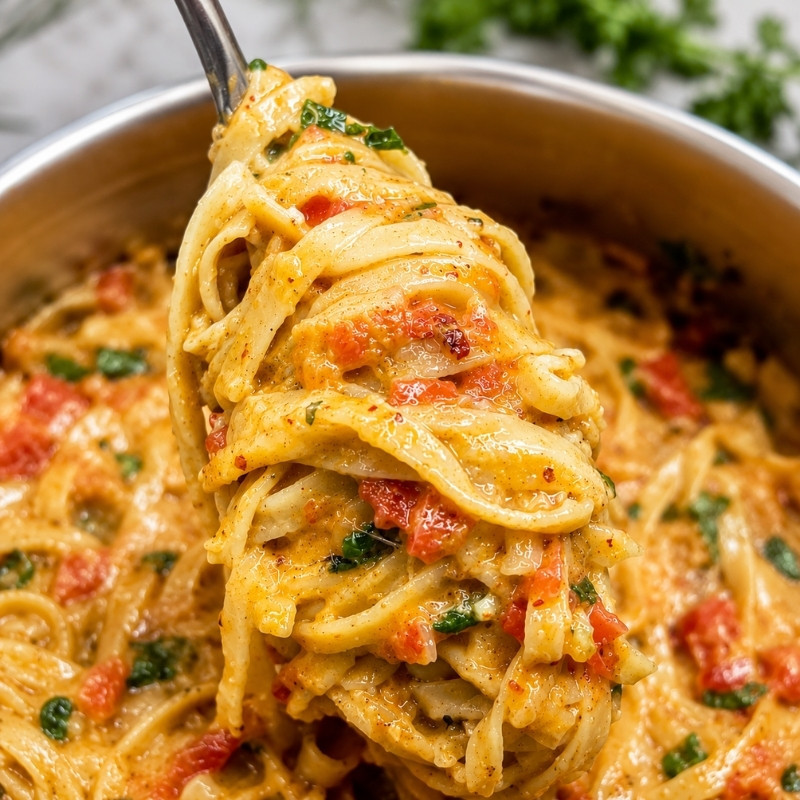
There’s something especially satisfying about turning a handful of everyday vegetables into a pasta sauce that tastes far richer than you’d expect. For this one-pan zucchini tomato pasta, zucchini, Roma tomatoes, garlic, butter, and olive oil cook until soft enough to mash into a thick, rustic sauce. The pasta then cooks right in the same pan, soaking up all that savory tomato flavor as the sauce clings to every strand.
Smoky paprika, oregano, and a little heat keep it from tasting plain, while fresh spinach and Parmesan bring everything together at the end. It’s cozy, full of flavor, and easy enough for a weeknight—plus, there’s only one pan to clean.
Ingredients
Pasta and Sauce
- 1 tablespoon olive oil
- 1 tablespoon unsalted butter
- 1 medium zucchini, halved lengthwise
- 3 Roma tomatoes, halved
- 4 garlic cloves, peeled and left whole
- 2 tablespoons tomato paste
- 12 ounces tagliatelle, about 8 nests
- 2 to 2½ cups water or vegetable broth
- 4 cups fresh spinach, roughly chopped
Seasoning Mix
- 1 tablespoon smoked paprika
- 2 teaspoons dried oregano
- 1 teaspoon red pepper flakes
- 1 teaspoon onion powder
- 1 teaspoon fine salt
For Serving
- Freshly grated Parmesan
- Extra red pepper flakes, optional
Instructions
- Soften the vegetables. Heat the olive oil and butter in a large, deep skillet over medium heat. Once the butter melts, add the zucchini and tomatoes cut-side down, along with the whole garlic cloves.
- Cook until very soft. Cover the skillet and cook for 10–12 minutes, turning the zucchini once halfway through. The vegetables should be soft enough to crush easily and the tomatoes should release plenty of juice.
- Mash the sauce. Remove the lid and mash the zucchini, tomatoes, and garlic directly in the pan using a potato masher or the back of a wooden spoon. Continue until you have a thick, slightly chunky sauce.
- Build the flavor. Stir in the tomato paste, smoked paprika, oregano, red pepper flakes, onion powder, and salt. Cook for 1 minute, stirring constantly, so the tomato paste darkens slightly and the spices become fragrant.
- Add the pasta. Place the tagliatelle nests in the sauce and pour in 2 cups of water or broth. Bring to a gentle simmer, then cover and cook for 8–10 minutes.
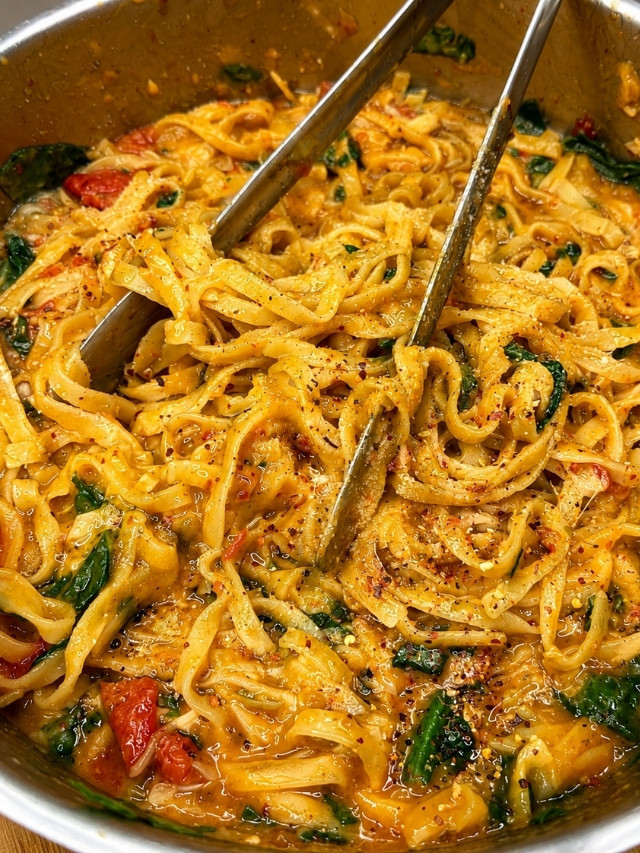
- Stir as it cooks. Uncover the pan every 2 minutes and gently separate the pasta strands with tongs. This keeps the pasta from sticking and helps it cook evenly in the sauce.
- Adjust the liquid. Continue cooking until the pasta is al dente and the sauce clings to the strands. Add the remaining ½ cup of water or broth a little at a time only when the pan looks dry before the pasta is ready.
- Add the spinach. Fold in the chopped spinach and cook for about 1 minute, until just wilted. Taste and add more salt or red pepper flakes if needed.
- Serve. Divide the pasta between bowls and finish with freshly grated Parmesan and extra red pepper flakes.
Tips for the Best Zucchini Tomato Pasta
- Let the vegetables get completely soft. The zucchini, tomatoes, and garlic need to crush easily before you mash them. If they still feel firm after 12 minutes, cover the pan and give them another 2–3 minutes.
- Keep the heat at medium. Butter adds plenty of flavor, but it can brown too quickly over high heat. A steady medium heat softens the vegetables without scorching the bottom of the pan.
- Use a wide, deep skillet. The pasta needs enough room to soften and spread out as it cooks. A cramped pan makes the strands more likely to stick together.
- Start with only 2 cups of liquid. Zucchini and tomatoes release moisture as they cook, so adding the full amount at once can leave the sauce watery. Pour in more only when the pasta needs it.
- Separate the pasta early. Once the tagliatelle begins to soften, gently pull the strands apart with tongs. Repeat this every couple of minutes so the nests cook evenly.
- Do not let the pan boil too hard. A gentle simmer gives the pasta time to absorb the sauce without the liquid evaporating before the noodles are tender.
- Remember that the sauce thickens as it sits. Take the pan off the heat while the sauce still looks slightly loose. It will continue to thicken and cling to the pasta before serving.
- Taste before adding extra salt. Parmesan and broth can both be salty, so wait until the pasta is finished before adjusting the seasoning.