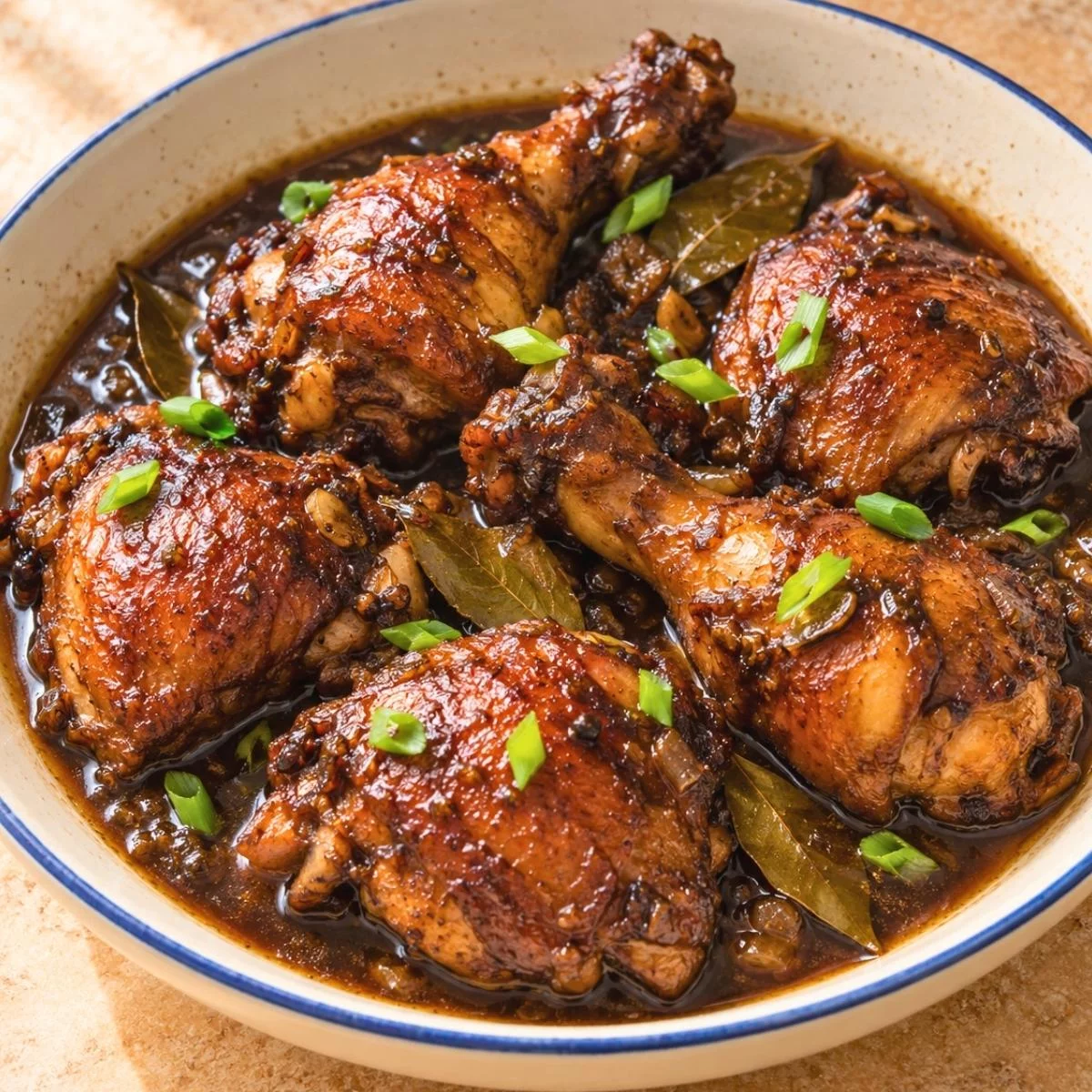
This chicken adobo recipe is a one-pot Filipino braise of chicken thighs in soy sauce, vinegar, garlic, and whole peppercorns, finished with a glossy sauce that clings to every piece. The chicken goes in skin side down first, so the fat renders and the sauce picks up that browned flavor, and the vinegar goes in later so it keeps its bite. I keep the soy and the vinegar close to equal, which is the balance most Filipino cooks reach for. Serve it over rice with the sauce spooned on top.
Ingredients
- 2 pounds (900 g) bone-in, skin-on chicken thighs and drumsticks
- ⅓ cup (80 ml) soy sauce
- ⅓ cup (80 ml) white cane vinegar or plain white vinegar
- 1 head garlic, cloves crushed (about 10 to 12 cloves)
- 3 dried bay leaves
- 1 tablespoon whole black peppercorns
- 1 tablespoon brown sugar
- 1 cup (240 ml) water
- 2 tablespoons neutral oil
Instructions
- Season the chicken: Put the chicken in a bowl with the soy sauce and half the crushed garlic and turn the pieces to coat. Let it sit 20 minutes at room temperature while you get everything else ready, or up to 1 hour in the fridge. You don’t need to go longer than that.
- Sear the skin: Heat the oil in a heavy pot or Dutch oven over medium-high heat. Pat the chicken dry, then lay it skin side down and leave it alone for 4 to 5 minutes, until the skin is deep golden and releases from the pot. Flip and cook 2 minutes more, then move the pieces to a plate.
- Build the sauce: Add the rest of the garlic to the pot and cook about 30 seconds, until it smells sweet and no longer raw. Pour in the water, vinegar, sugar, peppercorns, bay leaves, and the reserved soy marinade. Bring it to a full boil and let it bubble for 2 minutes before you stir, which keeps the vinegar from tasting flat.
- Braise until tender: Return the chicken to the pot skin side up, cover it, and drop the heat to low. Simmer for 20 to 25 minutes, until the meat is tender and a thigh reads 175°F (79°C) on an instant-read thermometer. The darker meat stays moist past 165°F, which is why thighs work better here than breast.
- Reduce the sauce: Uncover the pot and raise the heat to medium. Simmer 8 to 10 minutes, until the sauce coats the back of a spoon and no longer looks watery. If it is still thin, pull the chicken out and reduce the sauce on its own for another 5 minutes, then return the pieces to the pot.
- Rest and serve: Take the pot off the heat and let it rest 5 minutes. Spoon off the fat that rises to the top, then serve the chicken over rice with plenty of the dark sauce. The flavor deepens after a night in the fridge, so leftovers are worth keeping.
What I Tried and Skipped
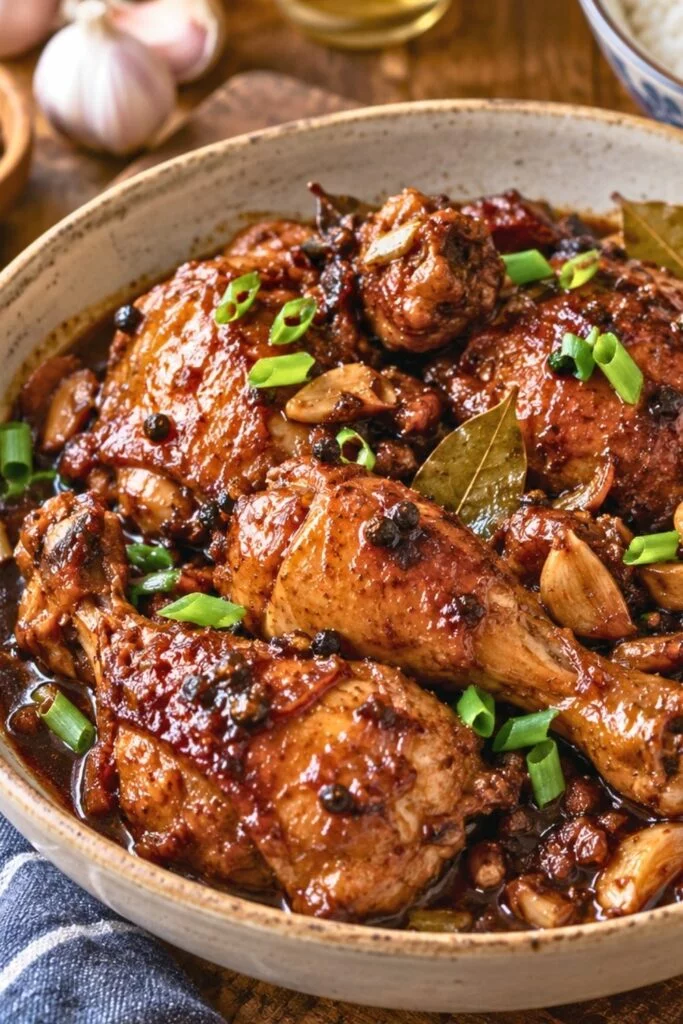
- I stopped marinating the chicken overnight. A 20-minute soak gives the meat plenty of soy and garlic, and anything past an hour leaves it salty before the sauce ever reduces.
- I skip searing in a separate pan. I brown the chicken in the same pot I braise in, so the glaze picks up all those browned bits without a second pan to wash.
- I stopped adding the vinegar at the start. I add it after the soy and let it come to a full boil before stirring, because vinegar stirred in cold tastes raw instead of sharp.
- I keep coconut milk out of the base. It makes a richer adobong manok sa gata, but it mutes the clean vinegar tang, so this version stays dark and sour.
What to Serve with Chicken Adobo
- Steamed jasmine rice, so the sauce has something to soak into. The sauce is strong, so spoon it on a little at a time and add more as you eat.
- A cold, crunchy Thai cucumber salad to cut the salt and the richness of the chicken skin.
- The vinegar-forward Din Tai Fung cucumber salad if you want a side that matches the tang of the sauce.
- Garlicky mushroom garlic noodles to mop up what the rice leaves behind.
- For another easy chicken dinner, my honey garlic chicken breast is a faster weeknight cook.
Storage
Chicken adobo keeps in an airtight container in the refrigerator for up to 4 days, which follows the USDA leftover guidance, and it tastes better on day two once the sauce settles into the meat. Cool it quickly, then store the chicken in its sauce so it stays moist. Reheat gently on the stovetop or in the microwave until steaming, and bring any leftover sauce back to a boil before you serve it. You can freeze it in the sauce for up to 2 months and thaw it overnight in the fridge.
FAQ
Do you have to marinate chicken adobo?
You don’t have to marinate it at all. Twenty minutes in the soy and garlic is enough to season the meat, and the simmer finishes the job. An overnight soak is optional, but it makes the chicken read salty before the sauce reduces, so I usually keep it short.
Why did my adobo turn out too salty?
Soy sauce gets stronger as the liquid cooks down, so the same amount tastes saltier at the end than it did at the start. Use an all-purpose or light soy instead of dark soy, hold any added salt until you taste the finished sauce, and if it’s already too salty, loosen it with a splash of water and a pinch more sugar.
Can you make chicken adobo with chicken breast?
You can, but breast dries out over a long simmer. Cut the braise to about 12 minutes, pull the chicken at 165°F (74°C), and reduce the sauce on its own so the lean meat doesn’t overcook. Thighs still give the juicier result.
What vinegar is best for chicken adobo?
A neutral white vinegar or Filipino cane vinegar keeps the flavor clean and sharp. Apple cider vinegar works in a pinch, but balsamic or red wine vinegar adds a sweetness and a color that isn’t classic adobo.