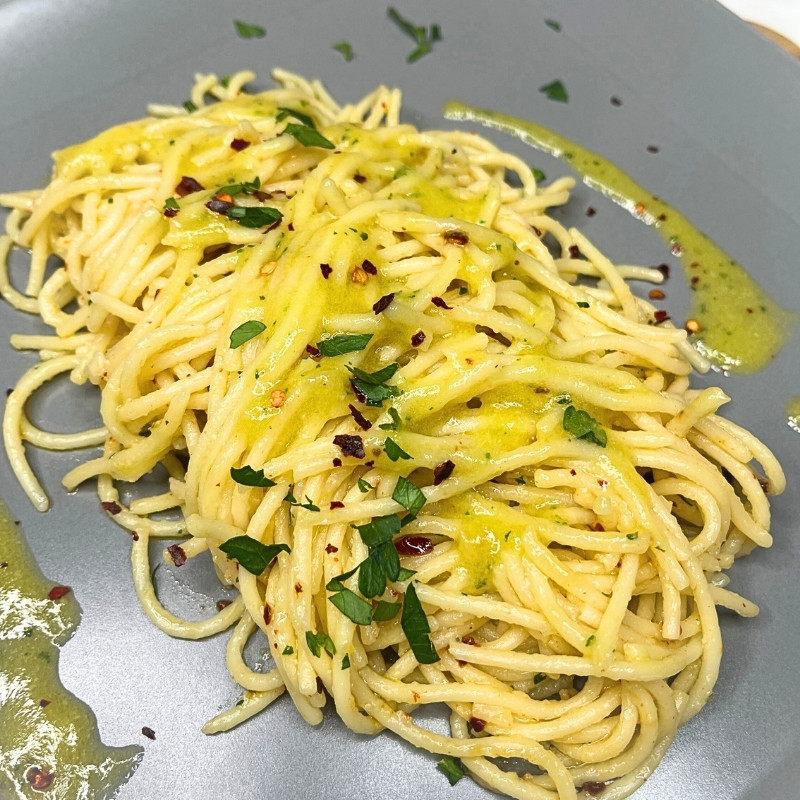
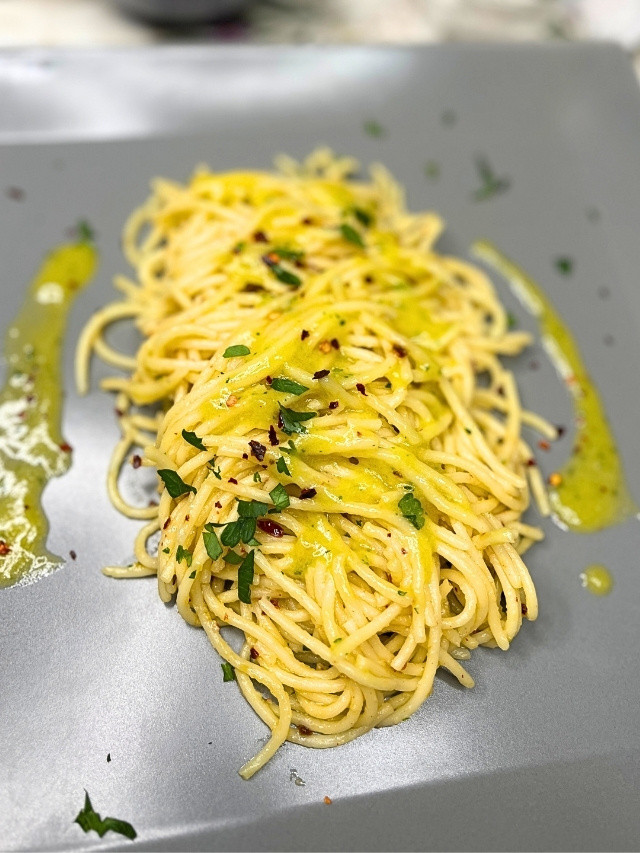
Aglio e olio is usually the “pan + sliced garlic + olive oil” situation—but this roasted version is the one I make when I want the flavor to feel deeper and a little more luxurious. Roasting the garlic in olive oil turns it sweet and mellow, then you blend it with starchy pasta water so it becomes an actual sauce that clings to every strand of spaghetti. It still tastes like classic garlic and olive oil pasta, just smoother, shinier, and way harder to mess up.
Ingredients
-
12–16 garlic cloves, peeled (about 1 large head)
-
1/2 cup extra-virgin olive oil (120 ml), plus a splash more if needed
-
1/2–1 tsp chili flakes, to taste
-
12 oz spaghetti (340 g)
-
1 1/2 tsp kosher salt for the pasta water (or salt it “like the sea”)
-
Fresh parsley, finely chopped (optional)
-
Parmesan, finely grated (optional, for serving)
-
Black pepper, to finish (optional)
Instructions
1) Roast the garlic in oil
-
Heat oven to 300°F (150°C).
-
Add peeled garlic to a small oven-safe dish (or a small loaf pan). Pour in the olive oil so the cloves are mostly submerged.
-
Roast 35–45 minutes, until the garlic is soft enough to smash with a spoon and lightly golden (not browned and dry).
Important: Don’t add chili flakes yet unless you’re doing the “last 5–10 minutes” method.
2) Cook the pasta + save the water
-
Bring a large pot of water to a boil.
-
Salt it well, then add the pasta.
-
Cook until just al dente.
-
Right before draining, scoop out 1 1/2 cups (360 ml) of pasta water. You’ll use this to make the sauce.
3) Blend the roasted garlic into a sauce
-
Pour the roasted garlic and all the oil into a blender (or use an immersion blender in a tall container).
-
Add 3/4 cup (180 ml) of hot pasta water to start.
-
Blend until smooth and creamy.
What you’re looking for: it should look like a loose, glossy sauce—not watery, not thick like hummus.
4) Finish in a pan (this is where it turns “restaurant”)
-
Set a large pan over medium heat.
-
Pour in the blended garlic sauce.
-
Add chili flakes now and stir for 20–30 seconds (this blooms them without burning).
-
Add the drained pasta straight into the pan.
-
Toss hard for 60–90 seconds, adding extra pasta water a splash at a time, until the sauce clings and looks shiny.
If it looks dry: add pasta water.
If it looks thin: keep tossing—starch + movement thickens it fast.
5) Finish and serve
-
Turn off the heat.
-
Stir in parsley if using.
-
Plate, then top with Parmesan and black pepper.
Parmesan note: Traditionally, aglio e olio doesn’t always use cheese, but it’s your kitchen—Parmesan works great here because the roasted garlic is mellow and sweet.
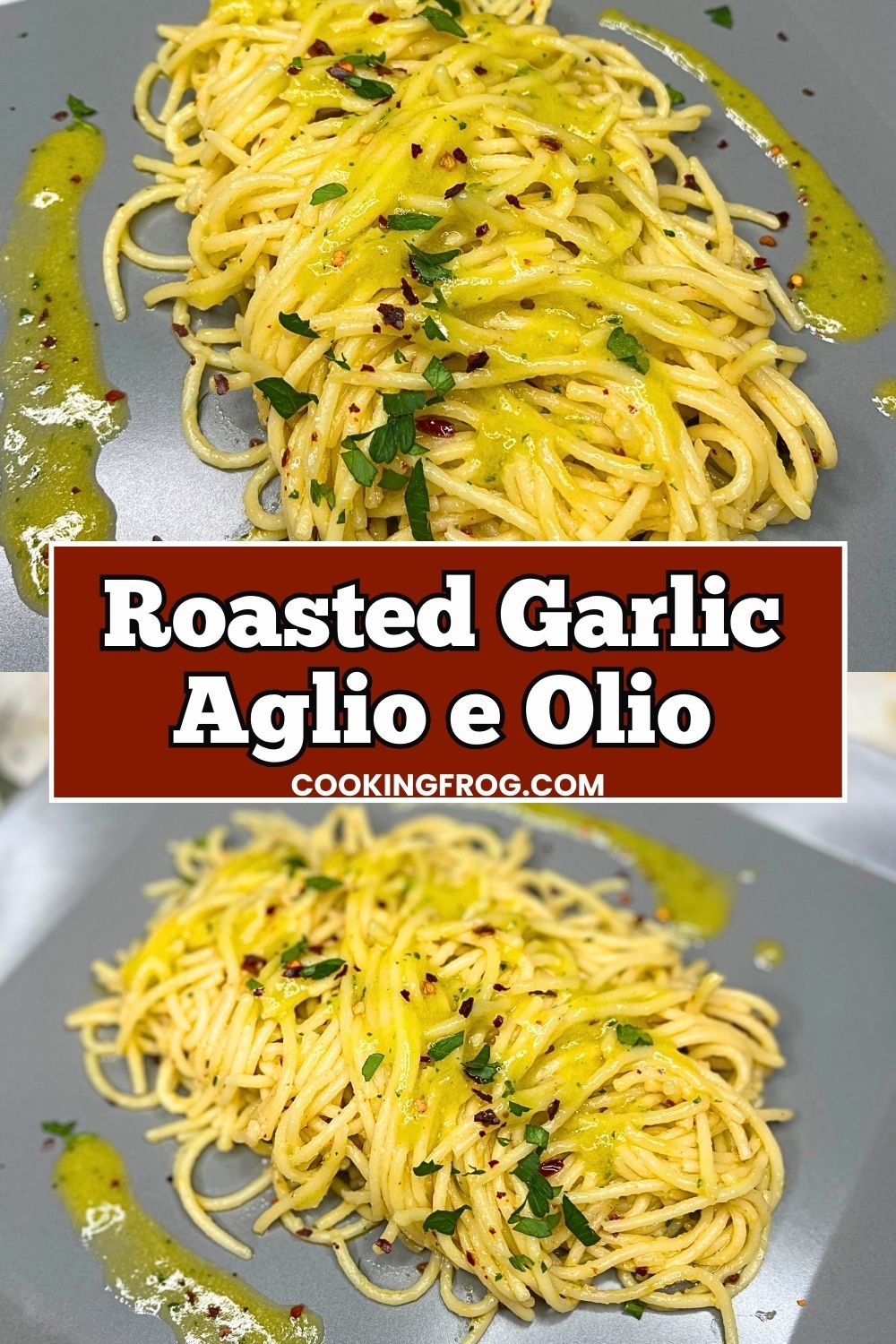
If this Roasted Garlic Aglio e Olio made you hungry, do me a quick favor—save it for later. Tap the image below and pin it to your Pinterest pasta (or weeknight dinner) board, so it’s right there the next time you’re craving garlicky noodles and don’t feel like thinking.
Tips and Tricks
-
Roast until smashable: The garlic should mash easily with a spoon. If it’s still firm, the sauce won’t blend silky.
-
Add chili flakes later: For the cleanest flavor, stir chili flakes into the warm sauce in the pan for 20–30 seconds (they can turn bitter if roasted too long).
-
Save more pasta water than you think: Grab at least 1 1/2 cups. It’s how you control thickness at the end.
-
Blend with less water first: You can always loosen the sauce in the pan, but you can’t “un-water” it.
-
Toss in the pan to make it cling: Keep tossing for 60–90 seconds. That movement is what makes it glossy and coats the pasta.
-
Thin vs thick fix: Dry? add a splash of pasta water. Too loose? toss a bit longer on medium heat.
-
Cheese goes on top: Parmesan is best as a finishing sprinkle (not blended in), so the sauce stays smooth.