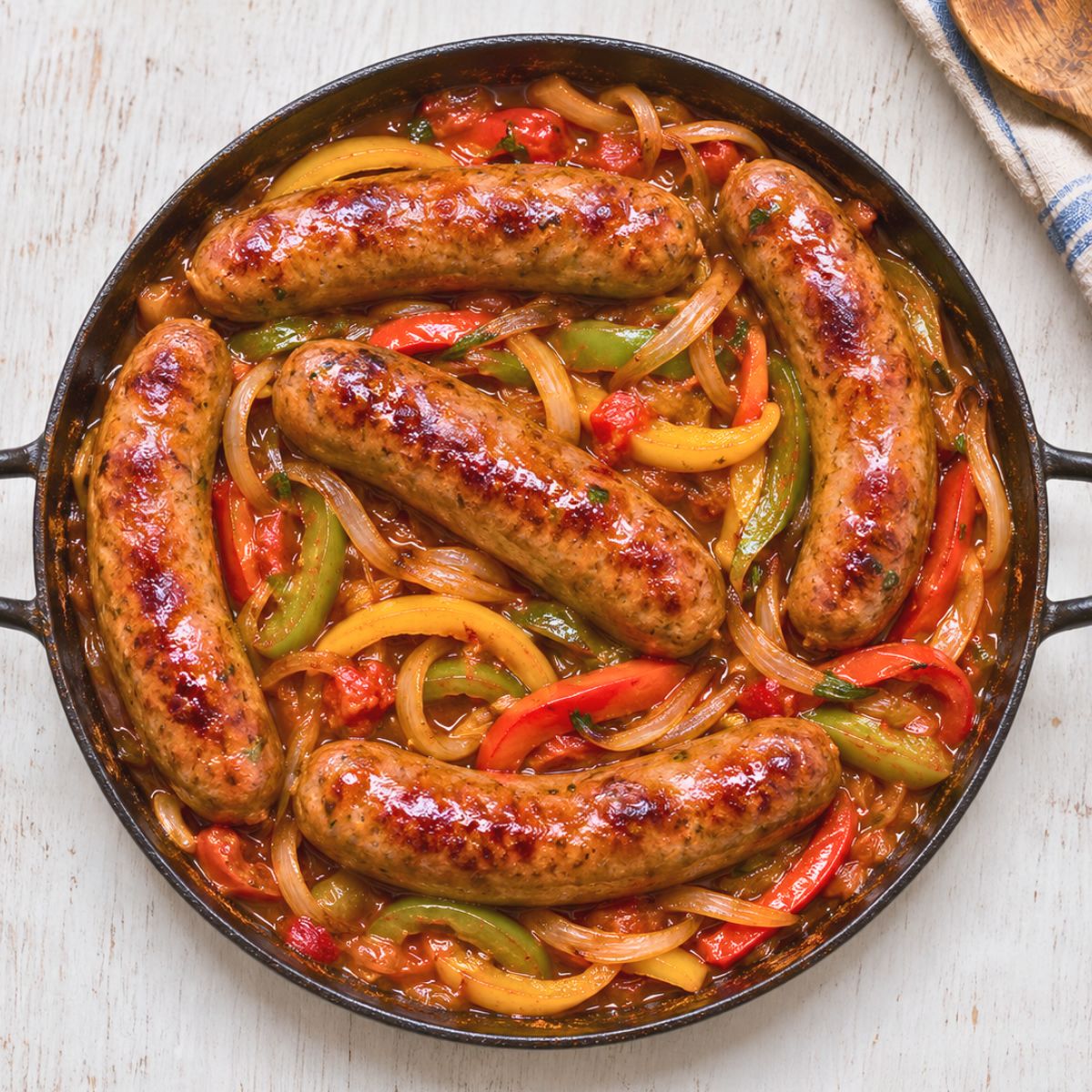
This sausage and peppers recipe browns the links hard before the peppers ever touch the pan, and that order is the difference between a glossy skillet and a watery one. Sweet or hot Italian sausage, thick-sliced bell peppers, and a short splash of white wine go into one 12-inch skillet, and dinner is ready in about 45 minutes. I pile it into toasted rolls with dinner rolls nearby, or spoon it over pasta with a slice of garlic bread when I want a plate instead of a sandwich.
The usual failure is a pan of gray liquid with peppers that have collapsed into soft strips. Peppers and onions start releasing water the moment they meet salt, so they need high heat, a wide pan, and a little patience before that liquid can build up. Browning the sausage first leaves fat and browned bits behind to season everything after it. Returning the links for the final simmer keeps them juicy while the sauce thickens around them.
Ingredients
- 1½ pounds sweet or hot Italian sausage links (about 6 links)
- 3 tablespoons olive oil
- 2 large bell peppers, any color, sliced ½ inch thick (about 3 cups)
- 1 large yellow onion, sliced ½ inch thick (about 1½ cups)
- 4 garlic cloves, thinly sliced
- ¾ cup dry white wine or low-sodium chicken broth
- 1 teaspoon dried oregano
- ½ teaspoon kosher salt, plus more to taste
- ¼ teaspoon freshly ground black pepper
- ¼ cup torn fresh basil or chopped parsley
- Grated Parmesan, for serving (optional)
Instructions
- Brown the sausage: Heat a 12-inch skillet over medium-high for two full minutes, then add 1 tablespoon of the olive oil. Add the sausage links and brown them on all sides, 6 to 8 minutes, turning every minute or so. Pull them out onto a plate, leaving the rendered fat in the pan. The links will finish cooking in the sauce later, so don’t worry if the centers are still raw.
- Sear the vegetables: Lower the heat to medium, add the remaining 2 tablespoons of olive oil, and scrape up any browned bits. Add the onion and cook for 4 minutes, until the edges start to soften. Add the bell peppers and cook for 6 to 8 minutes, stirring only every minute or two, until the edges blister and the peppers still hold their shape.
- Bloom the garlic: Push the vegetables to the sides of the pan and add the garlic to the center. Cook for 45 seconds, until it smells sweet and turns pale gold, then stir it through the peppers. Sprinkle in the oregano, salt, and black pepper and stir once more.
- Deglaze with wine: Pour in the white wine and let it bubble for 2 minutes, scraping the bottom of the pan with a wooden spoon as it reduces. The sharp alcohol smell should fade and the liquid should coat the vegetables rather than pool around them. If you use broth instead of wine, add 1 tablespoon of lemon juice with it to keep the sauce from tasting flat.
- Simmer the sausage: Nestle the sausage back into the skillet and spoon some peppers over the top. Cover, lower the heat to medium-low, and simmer for 10 to 12 minutes, until the sausage reaches 160°F at the center. Turn the links once halfway through so both sides take on the sauce.
- Reduce and finish: Uncover the pan and raise the heat to medium-high for 2 minutes, until the liquid thickens enough to cling to the peppers. Taste and add salt only if the sauce needs it, since the sausage is already seasoned. Scatter the basil over the top and serve with grated Parmesan on the side.
Variations That Keep the Skillet Dry
- Hot Italian sausage in place of sweet brings a clean chili heat, and the peppers don’t need extra seasoning to balance it. A mix of one hot link and five sweet links is the middle ground I use most.
- A 14.5-ounce can of diced tomatoes, drained well, turns the skillet into a sauce for polenta or a plate of chicken alfredo style pasta. Add it after the wine has reduced, so the pan doesn’t turn soupy.
- Chicken or turkey sausage works and cooks faster, so brown it for 4 minutes instead of 6 and check that it reaches 165°F before serving. It releases less fat, so add another tablespoon of oil with the peppers.
- For a party tray, slice the cooked links on a bias and fold them through the peppers right before serving. Whole links look better on the plate, but slices stay put in a roll.
- A tablespoon of tomato paste added with the garlic deepens the color and gives the wine something to cling to. Let it cook for a minute before the wine goes in, or the sauce tastes raw.
- Pickled peppers or a splash of red wine vinegar at the end cuts the richness when the sausage is on the fatty side. Add it off the heat, taste, and stop before the sauce turns sharp.
Why the Peppers Stay Firm
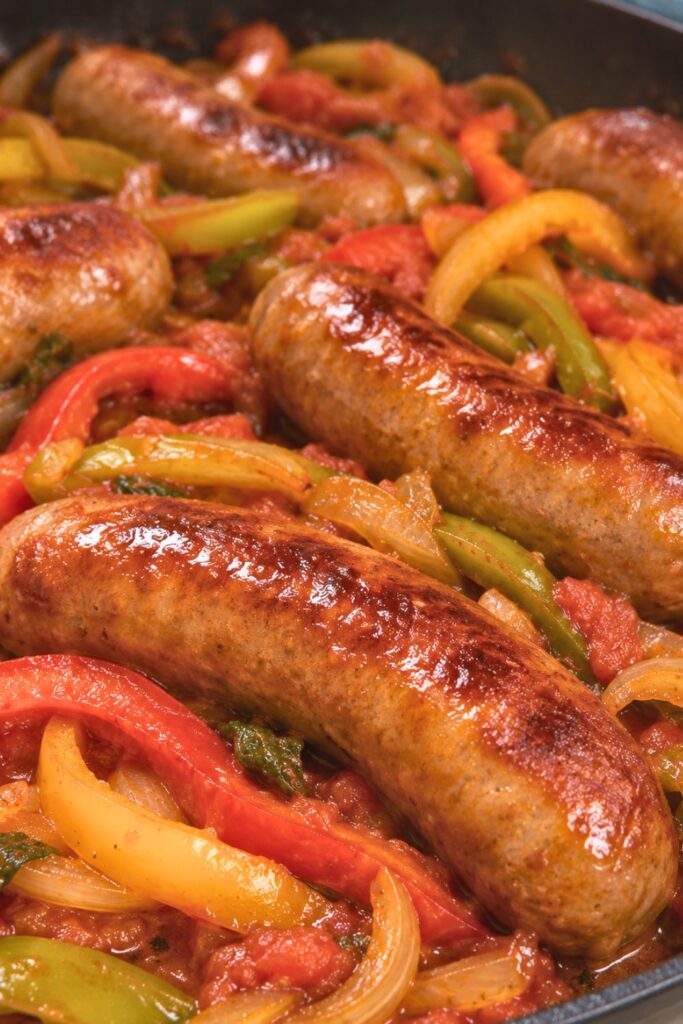
- Heat the dry skillet over medium-high for a full two minutes before adding oil. A lukewarm pan steams the peppers instead of searing them, and once they start to steam they never catch up.
- Cut the peppers and onion into ½-inch strips. Thin strips soften in the first minute and never pick up color, while thick slabs stay raw in the middle.
- Dry the cut vegetables on a towel if they were just rinsed. Surface water drops the pan temperature fast, and the peppers sit in liquid before they can brown.
- Cook the peppers in one layer. If your skillet is smaller than 12 inches, sear them in two batches and combine both at the end with the sausage.
- Leave the vegetables alone for a minute between stirs so the edges can brown, then toss and repeat. Constant stirring keeps them moving and wet.
- Salt after the peppers have color. Early salt pulls water to the surface and turns the sear into a braise, which is exactly the soft texture you are trying to avoid.
Storage
Leftovers keep in an airtight container in the refrigerator for up to 4 days. Reheat in a skillet over medium heat for 4 to 5 minutes, adding a splash of broth if the pan looks dry, until the sausage reads 165°F. The peppers soften a little on the second day, which is why I keep the first sear on the firm side. Freeze the cooled mixture in a shallow container for up to 3 months and thaw overnight in the fridge; the texture holds best in a sandwich or over pasta rather than on its own. Serve the leftovers with creamy mashed potatoes if you want a full plate.
FAQ
Should I use sweet or hot Italian sausage?
Sweet sausage lets the peppers and wine lead, and it’s the version I make when the skillet is going into sandwiches for a mixed table. Hot sausage adds a steady background heat, so taste the sauce before adding red pepper flakes. A mix of one hot link and five sweet links is a good middle ground, and it keeps the dish from turning one note.
Can I make sausage and peppers ahead of time?
You can make this ahead, and it reheats well. Brown the sausage and cook the peppers until just tender, then cool and refrigerate the whole skillet for up to 2 days. Reheat gently with a splash of wine or broth, because the peppers continue to soften as they sit. If you’re feeding a crowd, keep the peppers slightly firm on the first cook so they hold up on the reheat.
Can I make this in the oven instead?
Spread the sausage, peppers, and onions on a sheet pan, toss with the oil and oregano, and roast at 425°F for 25 to 30 minutes, turning once. The vegetables caramelize more evenly than on the stove, but the sausage still needs to reach 160°F at the center. Add the wine to the hot pan at the end and scrape up the browned bits for a quick sauce.
Do I need to prick the sausages before browning?
I don’t prick them for this recipe. The casing holds the juices and gives the links a snap, and a steady medium-high heat browns them without splitting. If a link does burst, the fat runs into the pan and the peppers pick it up, which isn’t a disaster. Pricking is more useful on a grill, where dripping fat can cause flare ups.