
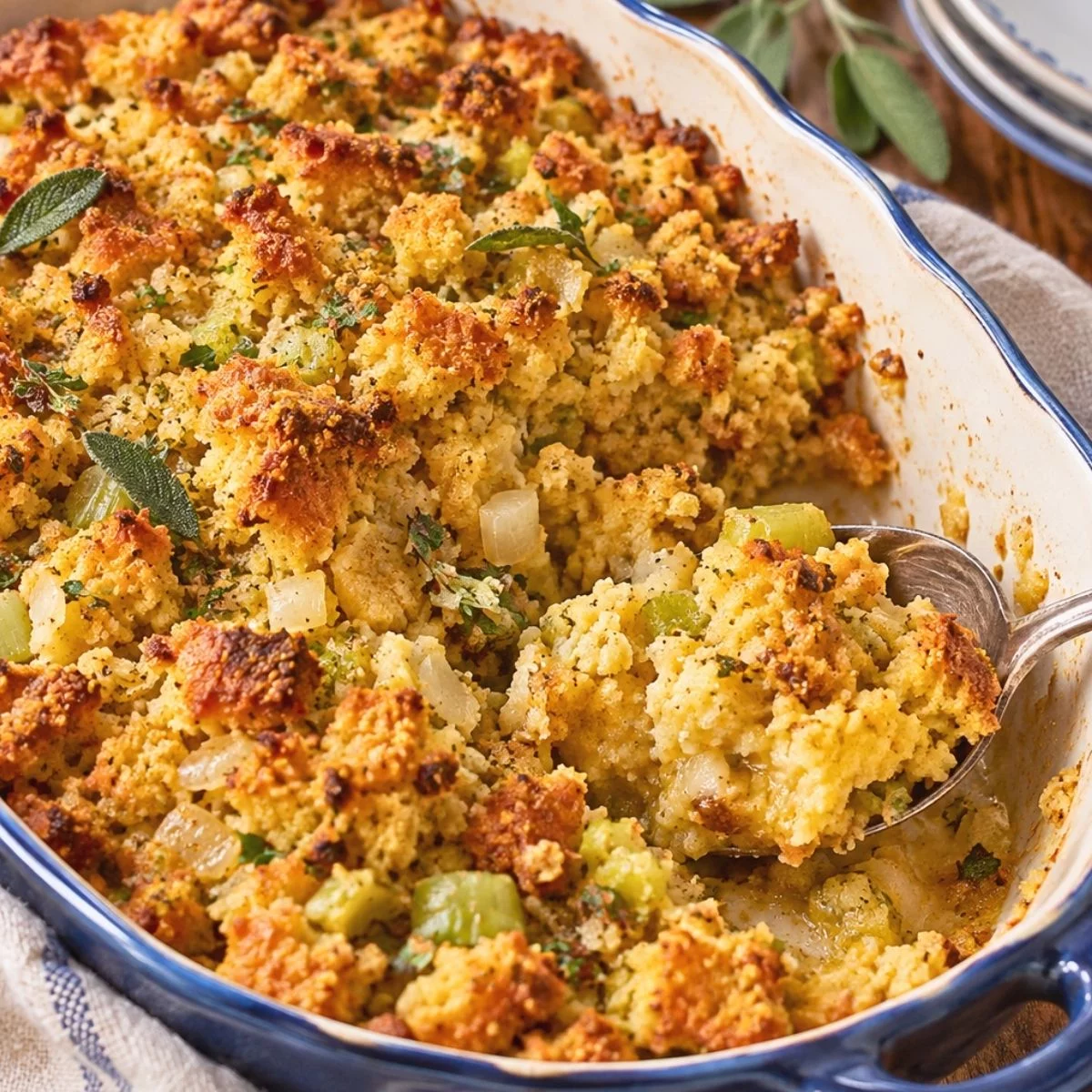
Southern cornbread dressing is the savory side that makes a holiday plate feel complete: crumbled cornbread, softened onions and celery, plenty of stock, and sage baked into a moist, tender casserole with a crisp top. This cornbread dressing recipe rests on one decision that matters more than any other, and it’s how wet the bread mixture is before it goes in the oven. Get that right and you never serve a dry, crumbly dressing or a soupy one that never sets.
The mistake I see most often is treating dressing like a plain casserole and adding just enough stock to moisten the top of the bowl. Cornbread is thirsty and keeps drinking as it bakes, so the mix should look looser than feels comfortable going in. A handful squeezed in your fist should hold together with a little liquid beading at the edges, and that’s the cue to stop pouring. Pair it with a moist buttermilk cornbread you crumble yourself and the base tastes like something instead of a box.
Ingredients
- 6 cups crumbled day-old savory cornbread (about one 8×8-inch pan)
- 4 cups day-old Italian or French bread, cut into ½-inch cubes
- ½ cup (1 stick / 113 g) unsalted butter, plus more for the dish
- 1 large yellow onion, finely diced (about 1½ cups)
- 3 celery ribs, finely diced (about 1 cup)
- 3 garlic cloves, minced
- 2 ½ to 3 cups turkey or chicken stock, plus more as needed
- 2 large eggs, beaten
- 2 teaspoons poultry seasoning
- 1 teaspoon dried sage
- 1 teaspoon dried thyme
- 1 teaspoon kosher salt, plus more to taste
- ½ teaspoon freshly ground black pepper
- ¼ cup chopped fresh parsley
Instructions
- Dry the bread: Crumble the cornbread into a large bowl and spread it and the bread cubes across two sheet pans. Leave them uncovered overnight, or dry them in a 350°F oven for 10 to 12 minutes until the edges are crisp but the centers still give a little. Dry bread soaks up stock instead of turning to paste, and fresh, soft bread is what makes a mushy dressing.
- Sauté the aromatics: Melt the butter in a large skillet over medium heat and cook the onion and celery for 8 to 10 minutes until soft and translucent, stirring now and then. Add the garlic and cook for 1 minute more, just until it smells sweet rather than sharp. Scrape the whole buttery mixture, including the liquid in the pan, over the dried bread.
- Season the base: Add the poultry seasoning, sage, thyme, salt, and pepper to the bowl and toss everything together until the herbs are spread evenly through the bread. Taste a small pinch now, while the seasoning is still on the surface, and adjust the salt before any liquid goes in. This is the last easy moment to fix the flavor.
- Add stock and eggs: Whisk the eggs into 2½ cups of the stock, then pour it over the bread and fold gently until every piece is damp. Squeeze a handful: it should hold its shape with a little liquid beading out between your fingers. If it feels dry or crumbly, add the remaining stock a splash at a time until it loosens up.
- Bake covered: Heat the oven to 350°F and butter a 9×13-inch baking dish. Spread the dressing evenly in the dish without packing it down, then cover tightly with foil. Bake for 30 minutes so the middle cooks through and the eggs set while the steam keeps everything moist.
- Uncover and brown: Remove the foil and bake for another 20 to 25 minutes, until the top is deep golden and the center is set with no wet custard when you press it. If the top browns faster than the middle sets, tent it loosely with foil and keep going. Let the dish rest for 10 minutes before serving so it slices instead of crumbles.
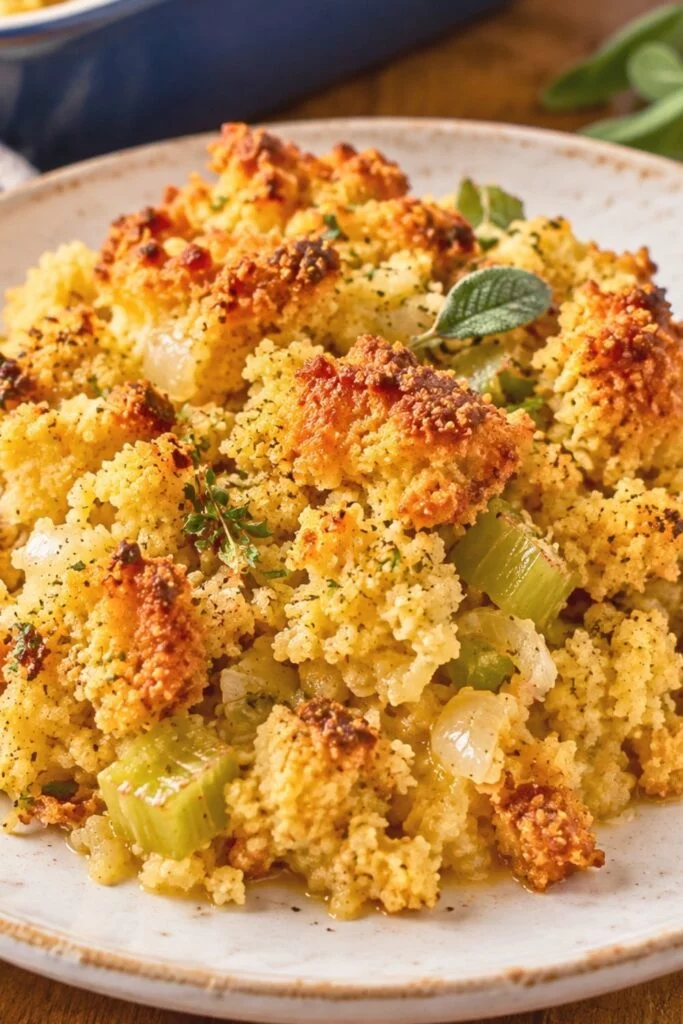
If the dressing comes out dry or soupy
- Dry after baking usually means the mix went in too tight. Cornbread keeps absorbing in the oven, so if the raw mixture looked just barely moist, it bakes into sawdust. Aim for loose and slightly soupy before it goes in the dish.
- Soupy after baking usually means too much liquid, not too little. Add the stock in stages and stop the moment a squeezed handful holds together, because once it’s in the pan there’s no fixing the ratio.
- Sweet cornbread ruins the whole thing. A honey-sweetened or boxed mix like Jiffy carries sugar that fights the sage and makes the dressing taste like dessert, so use a savory buttermilk cornbread or make a plain batch for this dish.
- Don’t pack the dish. Pressing the dressing down squeezes out the air and steam pockets that keep it light, and it bakes into a dense slab. Spread it and level the top with a spatula only.
- Skipping the foil for the first stretch dries the top before the middle sets. The covered 30 minutes lets the eggs cook through gently, and the uncovered finish is only for browning.
- Mushy in the middle with a browned top means the oven was too hot or the dish was too deep. Use a 9×13 for this amount, and if the middle is still wet, cover it and bake 10 more minutes at 325°F.
What goes on the plate with it
- The classic pairing is roast turkey. A maple-glazed roast turkey or a slow cooker turkey breast both leave drippings you can spoon over the dressing at the table.
- For the green on the plate, a classic green bean casserole or a simple creamy coleslaw cuts through how rich dressing is.
- Potatoes belong next to it. Creamy mashed potatoes or scalloped potatoes round out the savory side of the meal.
- Finish with something sweet and seasonal, like a classic pecan pie or a blind-baked pumpkin pie.
Cooled dressing keeps in an airtight container in the refrigerator for up to 4 days. Reheat single portions in the microwave, or cover the whole dish with foil and warm it at 325°F for about 20 minutes, adding a splash of stock if it looks dry. To freeze, wrap it tightly and freeze for up to 3 months, then thaw overnight in the fridge before reheating. Never leave dressing sitting out at room temperature for more than two hours, since it holds stock and eggs.
FAQ
What’s the difference between cornbread dressing and stuffing?
The words get used interchangeably, but traditionally stuffing is bread and seasoning packed inside the turkey cavity, while dressing is baked in its own dish. This version is a dressing, so it bakes in a casserole where the heat reaches it evenly and the top can crisp. That also makes it safe to assemble ahead and bake the day of the meal.
Can I make cornbread dressing ahead of time?
Yes, and it’s the smartest way to handle a holiday. Crumble and dry the cornbread, and sauté the onion and celery, up to two days ahead, then store both covered in the fridge. Assemble the whole dish unbaked a day ahead, cover it, and refrigerate. Cold dressing needs a little extra stock and about 10 extra minutes in the oven, so loosen it and start checking late.
Can I use a cornbread mix like Jiffy?
You can, but only a savory one. Sweet cornbread mixes carry sugar that makes the finished dressing taste like cake against the sage, which is why most Southern cooks reach for a buttermilk cornbread instead. If your only option is a sweet mix, cut the added sugar in the mix or balance it with an extra pinch of salt and more poultry seasoning.
Why did my cornbread dressing turn out dry?
Dry dressing almost always means the bread mixture went into the pan too stiff. Cornbread keeps absorbing liquid as it bakes, so a mix that looked just moist turns crumbly. Next time, loosen it until a squeezed handful holds together with liquid beading out, bake it covered for the first 30 minutes, and add a splash of warm stock before reheating leftovers.