
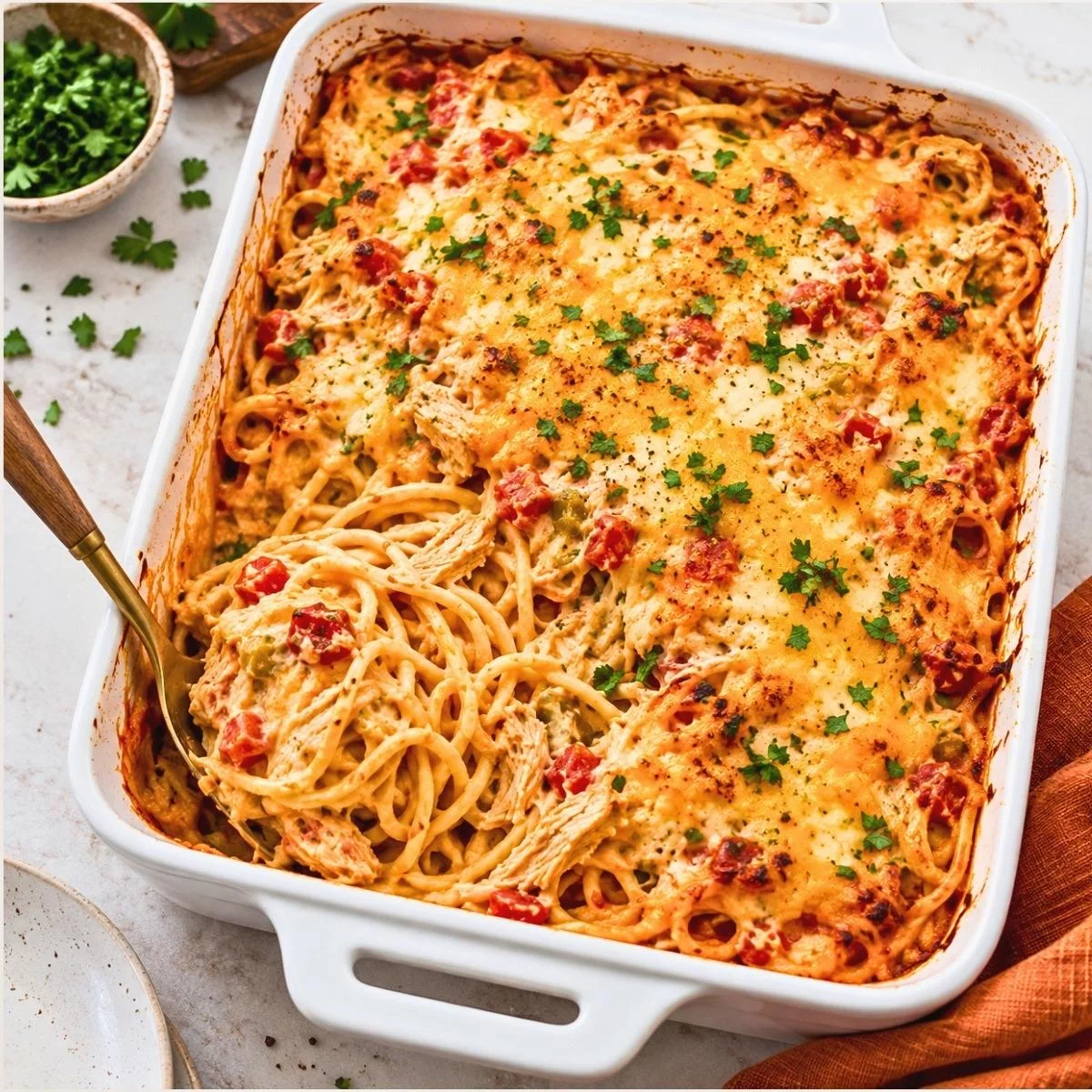
This chicken spaghetti recipe bakes shredded chicken and spaghetti in a creamy, cheesy sauce until the edges bubble and the top goes golden. A quick flour-and-butter sauce, sharp cheddar, and a can of Ro-tel give it more flavor than the canned-soup version, and the pasta finishes in the oven instead of soaking up liquid on the counter. It fills a 9×13 pan, so it suits a potluck or a hungry family. If you like creamy pasta bakes, this pairs well with chicken parmesan on a dinner rotation.
The usual problem is a casserole that turns soupy or gummy. Canned soups and processed cheese carry a lot of water, and spaghetti boiled to full doneness keeps drinking sauce in the oven. I pull the noodles two minutes shy of done and thicken a simple roux, so the sauce clings to every strand instead of pooling in the dish. The same control makes spaghetti and meatballs work, too.
Ingredients
- 1 pound (454 g) spaghetti
- 2 pounds (900 g) boneless, skinless chicken breasts (about 3 large)
- 8 cups water, for poaching
- 1 dried bay leaf
- 4 tablespoons (57 g) unsalted butter
- 1 medium yellow onion, finely chopped (about 1 cup)
- 2 celery ribs, finely chopped (about ½ cup)
- 3 garlic cloves, minced
- ¼ cup (30 g) all-purpose flour
- 1½ cups reserved poaching liquid (or low-sodium chicken broth)
- 1 cup whole milk (or half-and-half)
- 1 can (10 ounces) Ro-tel diced tomatoes with green chiles, undrained
- 4 ounces (113 g) cream cheese, softened and cubed
- 2 cups (8 ounces / 227 g) shredded sharp cheddar, divided
- 1 teaspoon kosher salt, plus more for the pasta water
- ½ teaspoon freshly ground black pepper
- ½ teaspoon smoked paprika
- 2 tablespoons chopped fresh parsley, for serving (optional)
Instructions
- Poach the chicken: Put the water and bay leaf in a large pot and bring it to a gentle boil. Add the chicken, reduce the heat to low, cover, and simmer for 18 to 20 minutes, until the thickest piece reads 165°F on a thermometer. Lift the chicken out to cool, then shred it with two forks. Strain the pot and save 1½ cups of the liquid.
- Cook the spaghetti short of done: Bring the reserved poaching liquid plus enough fresh water to reach 4 quarts back to a boil and salt it well. Add the spaghetti and cook for 2 minutes less than the package says, so the center still has a firm bite. Drain it, saving 1 cup of the starchy water, and toss the noodles with a teaspoon of oil so they do not clump.
- Build the base: Heat the oven to 375°F. Melt the butter in a large pot or Dutch oven over medium heat, then add the onion and celery. Cook for 5 to 6 minutes, until the onion turns translucent and soft, then stir in the garlic for 30 seconds, just until it smells sweet.
- Make the cheese sauce: Sprinkle the flour over the vegetables and stir for a full minute to cook out the raw taste. Pour in the reserved liquid and the milk in a slow stream, whisking so no lumps form, and simmer for 3 to 4 minutes until the sauce coats the back of a spoon. Take the pot off the heat and stir in the cream cheese until smooth, then add 1½ cups of the cheddar a handful at a time. Stir in the Ro-tel, salt, pepper, and smoked paprika, then taste for salt.
- Fold in the chicken and pasta: Add the shredded chicken and the spaghetti to the sauce and fold gently until every strand is coated. The mix should be thick but loose enough to spread; if it looks tight, splash in the reserved pasta water a little at a time. Spread it into a 9×13-inch baking dish and scatter the remaining ½ cup cheddar over the top.
- Bake until bubbly: Bake for 20 to 25 minutes, until the sauce bubbles around the edges and the top cheese melts and turns light golden. If the top needs more color, run it under the broiler for 1 to 2 minutes, watching closely so the cheese does not scorch.
- Rest and serve: Let the casserole rest for 5 to 10 minutes before you cut into it, so the sauce sets and the portions hold together. Scatter the parsley on top if you like and serve straight from the dish while it is hot.
What I Tried and Skipped
- Canned cream soups plus Velveeta is the fastest route, but the sauce stays loose and the casserole goes soupy once the pasta sits. I build a quick roux and grate real cheddar instead, which holds the noodles in a coating rather than a pool.
- Boiling the spaghetti to full doneness before baking turns it to mush by the time the cheese bubbles. Pulling it two minutes early and letting the oven finish the pasta keeps a firm bite.
- A true one-pot version where the noodles cook in the sauce sounds tidy, but starchy pasta water and milk get gluey over that much time. Cooking the spaghetti separately and folding it in is more predictable.
- A rotisserie chicken is a fine shortcut and saves the poach, but the poaching liquid is what makes the sauce taste like chicken instead of milk and flour. When I have 20 minutes, I keep the homemade broth.
- Pre-shredded cheddar is convenient, but its starch coating melts grainy in a sauce. Grating a block on the box grater gives a smoother, glossier finish.
- Boneless breasts poach evenly and keep the sauce pale, while thighs add richness but darken the color. I stay with breasts for the classic look, and use thighs when I want a deeper flavor.
What to Serve With Chicken Spaghetti
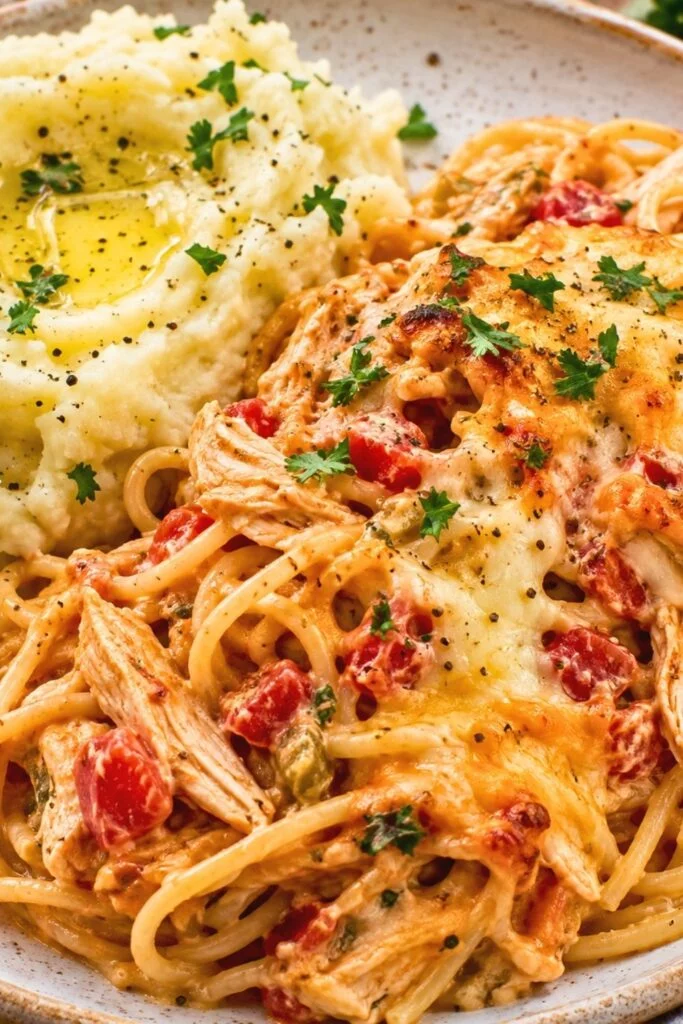
- Creamy mashed potatoes are a double-starch plate that a lot of people love, but the lighter choice is a simple green vegetable.
- Golden garlic bread is the easy answer for sopping up any extra sauce left in the dish.
- Green bean casserole rounds the meal out for a holiday table or a potluck.
- Classic coleslaw cuts the richness with a cold, tangy crunch.
- A crisp green salad or steamed broccoli works just as well when you want something quick and fresh on the side.
Storage
Store leftovers in an airtight container in the refrigerator for up to 4 days, and reheat them covered in a 350°F oven for about 20 minutes with a splash of milk or broth, since the pasta keeps soaking up sauce as it sits. To freeze, assemble the casserole in a freezer-safe dish without baking, wrap it tightly, and freeze for up to 2 months. Thaw it overnight in the refrigerator, then bake as directed, adding 5 to 10 minutes if it is still cold in the middle.
FAQ
Can I make chicken spaghetti ahead of time?
Yes, and it is a strong make-ahead dish. Assemble the casserole all the way up to the cheese topping, cover it, and refrigerate for up to 3 days. Bake it straight from the fridge, adding about 5 to 10 minutes to the time, or freeze it unbaked for up to 2 months and thaw it overnight before baking.
Why did my chicken spaghetti turn out soupy?
It is usually too much liquid and pasta cooked too long. Cheesy casseroles tighten as they bake, but the noodles keep absorbing sauce once the dish rests, so a sauce that looks perfect in the pot can still pool later. Cook the spaghetti two minutes shy of done, keep the sauce thick enough to coat a spoon, and let the baked dish sit for 5 to 10 minutes before serving.
Can I use rotisserie chicken instead of poaching?
Yes, pull the meat from one store-bought rotisserie chicken, which gives you about 3 to 4 cups, and use low-sodium chicken broth in place of the poaching liquid. That saves about 20 minutes of cooking time. The sauce will taste a little less chicken-forward because the broth replaces the liquid the chicken cooked in, which is why I poach when I have the time.
Can I use canned cream soup instead of the flour sauce?
Yes, and that is the old-school shortcut. Stir one can of cream of chicken and one can of cream of mushroom soup into the sauteed vegetables in place of the flour, liquid, and milk, then skip the cream cheese if you want. It will be saltier and thinner, so leave out the added salt until you taste it, and cut back on any liquid you add.
Can I use Velveeta instead of cheddar?
You can, and it melts into a very smooth sauce. Use about 12 ounces of cubed Velveeta in place of the cream cheese and cheddar and stir it in over low heat until it melts. The trade-off is a softer, saltier sauce that sets thinner as it cools, so I still add a little cheddar on top for flavor and color.
What pasta works best for chicken spaghetti?
Long spaghetti is the classic choice, and thin spaghetti cooks a touch faster, so check it early. Penne or rotini also work and their ridges hold more sauce, which makes the casserole a little less likely to run. Whichever shape you use, cook it short of al dente so it does not overcook in the oven.