
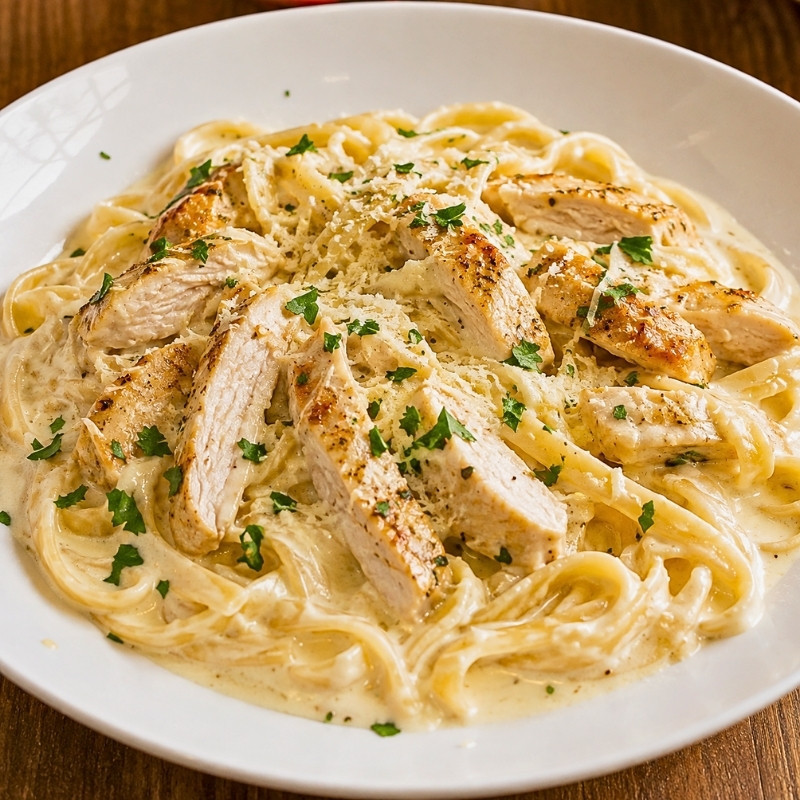
Chicken alfredo turns three staples you probably already have, chicken, cream, and Parmesan, into a dinner that beats delivery on time. Pan-seared cutlets sit on top of pasta wrapped in a sauce that stays glossy instead of clumping, as long as you keep the heat in check once the cheese goes in. From the first cutlet hitting the pan to a full bowl on the table, you’re looking at about 35 minutes, most of it hands-on instead of waiting around.
This version leans on a few habits that keep the sauce smooth every time: gentle heat after the Parmesan hits the pan, reserved pasta water to loosen things back up, and cutlets sliced thin enough to cook through fast. A pinch of nutmeg in the sauce is the one ingredient people skip and then wonder why restaurant alfredo tastes rounder than theirs. If you’re already into our creamy lemon pasta, pasta carbonara, or honey garlic chicken breast, this one slots right into the same weeknight rotation.
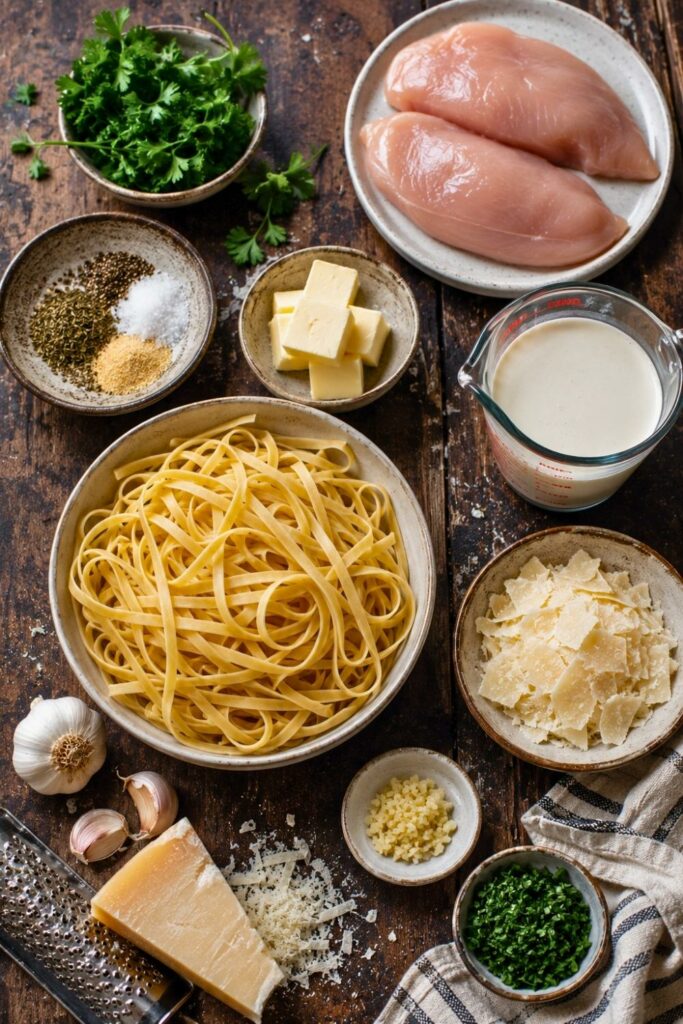
Ingredients
Chicken
- 1 pound (450 g) boneless, skinless chicken breasts
- 1 teaspoon garlic powder
- 1 teaspoon Italian seasoning
- 3/4 teaspoon salt, divided
- ½ teaspoon black pepper, divided
- 2 tablespoons olive oil
Pasta and Alfredo Sauce
- 12 ounces (340 g) fettuccine
- 4 tablespoons unsalted butter
- 4 cloves garlic, minced
- 1½ cups heavy cream
- 1 cup freshly grated Parmesan cheese
- ¼ teaspoon ground nutmeg
- Chopped fresh parsley, for serving
Instructions
- Season and sear the chicken: Slice each chicken breast in half horizontally to make thin cutlets. Season both sides with garlic powder, Italian seasoning, ½ teaspoon salt, and ¼ teaspoon pepper. Heat olive oil in a large skillet over medium-high heat and sear the cutlets 5 to 6 minutes per side, until they hit 165°F. Move to a plate and tent with foil.
- Cook the pasta: Bring a large pot of well-salted water to a boil. Cook the fettuccine until al dente, about 1 minute less than the package says. Scoop out 1 cup of pasta water, then drain.
- Build the sauce: In the same skillet, melt the butter over medium heat. Add the garlic and cook 30 seconds, just until fragrant, don’t let it brown. Pour in the heavy cream and the remaining ¼ teaspoon salt and ¼ teaspoon pepper, bring to a gentle simmer, and let it reduce for 2 to 3 minutes.
- Melt in the cheese: Lower the heat and add the Parmesan a handful at a time, whisking until smooth after each addition. Stir in the nutmeg. If the sauce looks close to boiling hard, pull the pan off the heat while you whisk, the cheese seizes and turns grainy over high heat.
- Combine and serve: Add the drained pasta to the sauce along with a splash of the reserved pasta water, and toss until every strand is coated. Slice the chicken and lay it over the top, or stir it through. Sprinkle with parsley and serve right away while the sauce is still loose.
Tips for the Best Chicken Alfredo with Garlic Parmesan Sauce
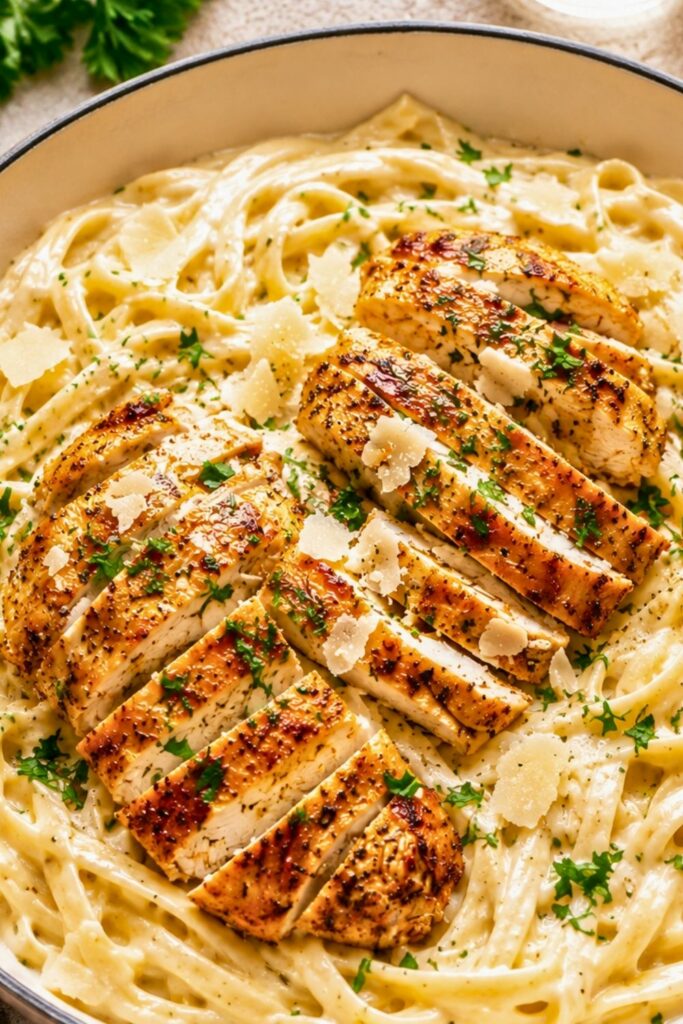
- Slice the chicken breasts horizontally into thinner cutlets before you season them. Thinner pieces cook through in under 6 minutes, so you’re not stuck choosing between a raw center and dry, chalky chicken.
- Keep the heat at medium once the cheese goes into the pan. A hard-boiling cream sauce breaks Parmesan into grainy clumps that no amount of whisking brings back together.
- Save more pasta water than you think you’ll need, at least a full cup. A few extra tablespoons stirred in right before serving loosen the sauce fast if it tightens up while you’re plating.
- Grate the Parmesan yourself if you can, pre-shredded cheese is coated in starch that keeps it from melting smoothly into a sauce. Add it in small handfuls instead of dumping it in all at once, whisking each handful until it disappears before adding more.
- If the sauce splits anyway, pull the pan off the heat and whisk in a tablespoon of cold cream before you try anything else. That usually brings it back without starting over.
- Let the seared chicken rest for a couple of minutes under the foil before you slice it. Cutting into it right away lets the juices run out onto the cutting board instead of staying in the meat.
Storage
Refrigerate leftover chicken alfredo in an airtight container within 2 hours of cooking, and use it within 3 to 4 days. Splitting it into shallow containers before it goes in the fridge helps it cool faster and keeps you out of the food safety danger zone longer than necessary. The sauce thickens a lot as it chills since the fat firms up, so don’t expect it to look like day one straight out of the fridge. Reheat it gently in a skillet over low heat with a splash of milk or cream, stirring often until the sauce loosens back up and coats the pasta again, and check that it’s steaming hot all the way through before you serve it. Skip the microwave if you can, the uneven high heat is exactly what breaks a cream sauce apart.
You can freeze chicken alfredo too, and it stays safe to eat for months, but the texture takes a real hit once a cream sauce thaws. If you want to freeze extra, freeze the chicken and sauce in a container separate from the pasta, then cook fresh noodles when you’re ready to eat instead of thawing soggy ones.
FAQ
Can you freeze chicken alfredo?
You can, and it stays safe to eat for months in the freezer. The catch is texture: cream sauces separate as they thaw, so what comes out can look broken even after reheating. It works better to freeze the chicken and sauce on their own, without the pasta, then toss everything with freshly cooked noodles once it’s time to eat. Thaw it in the refrigerator overnight rather than on the counter, then warm it slowly in a skillet so you have a better shot at the sauce coming back together.
Why did my alfredo sauce turn grainy?
Grainy sauce almost always means the pan got too hot after the cheese went in. Parmesan proteins seize up and clump together above a bare simmer, and once that happens, whisking alone won’t smooth it back out. Pull the pan off the heat before you add the cheese, add it in small handfuls, and keep the burner on medium or lower for the rest of the process. A splash of extra cream or reserved pasta water whisked in at the end usually smooths out minor graininess even if you catch it a little late.
Can you use milk instead of heavy cream?
Yes, but the sauce will be thinner and more likely to break as it cooks. Whole milk holds up better than anything lower in fat, since the extra fat in cream is what keeps the sauce stable at higher heat. Whisking in an extra tablespoon of butter helps a milk-based sauce still coat the pasta instead of sliding right off. Taste and adjust the salt at the end either way, since cream and milk season differently once the Parmesan goes in.
What pasta works best for chicken alfredo?
Fettuccine is the traditional choice because its flat, wide shape holds onto a thick sauce better than thin, round noodles do. Penne, linguine, and pappardelle all work fine too if that’s what you have in the pantry. Whatever you pick, cook it a minute under the package time so it finishes softening in the sauce instead of turning mushy in the pot. Steer clear of anything too delicate like angel hair, it turns to mush under a sauce this heavy almost immediately.