
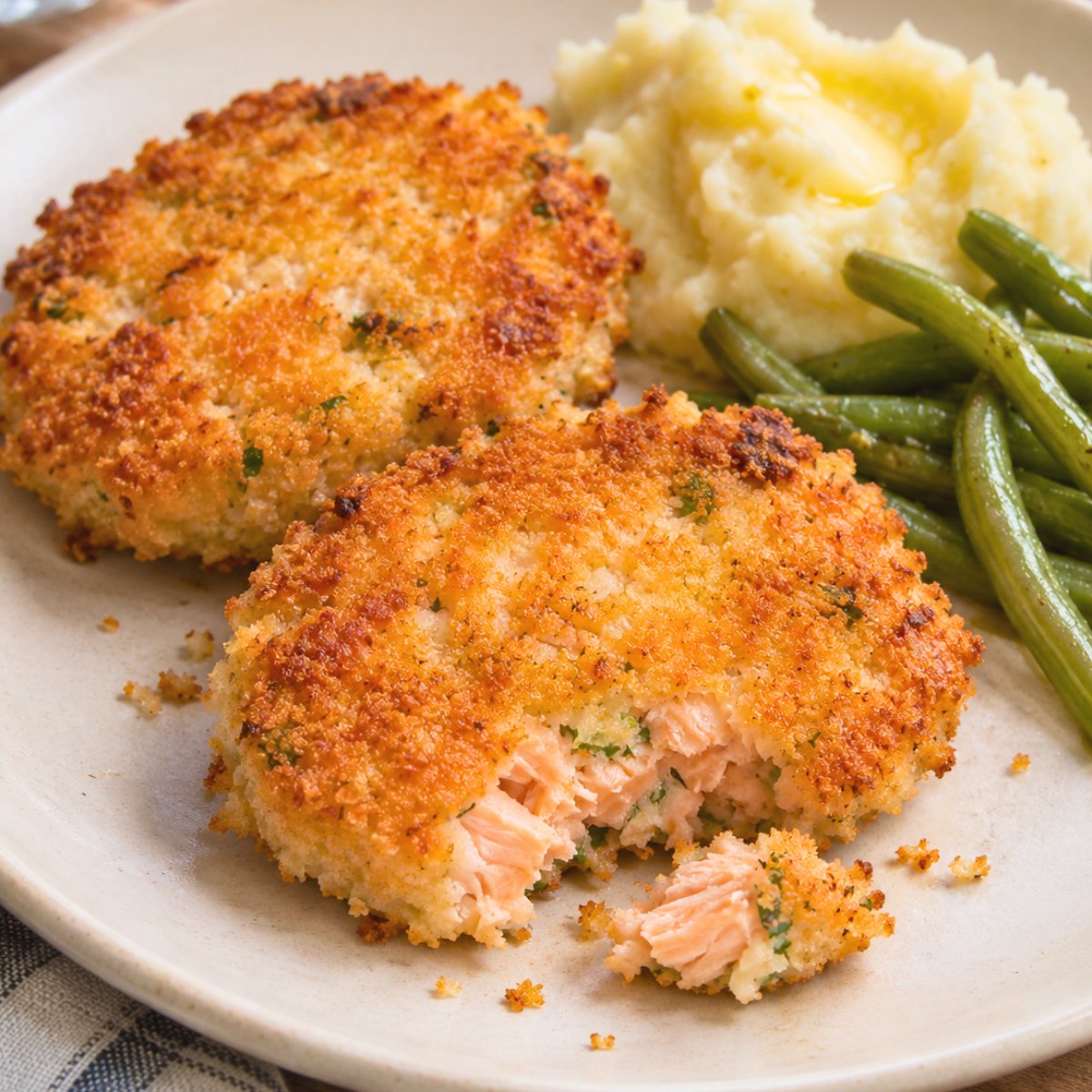
This salmon patties recipe turns two cans of pantry salmon into a golden dinner in about half an hour, and the patties hold together in the skillet instead of crumbling at the flip. I keep the mix simple so the fish stays in visible flakes, then chill it briefly and fry in a shallow layer of oil for a crust that stays crisp on the plate.
The one step I never skip is draining the salmon hard. Canned fish holds a surprising amount of liquid, and that liquid is what turns a patty soft in the middle and loose at the edges. Press it against the side of a strainer until it stops dripping, then flake it with a fork and leave the small bones in if you don’t mind them.
Ingredients
- 2 cans (14.75 oz each) pink salmon, drained and flaked
- 2 large eggs
- ⅔ cup panko breadcrumbs
- 3 scallions, thinly sliced
- 2 tablespoons chopped fresh dill
- 1 tablespoon Dijon mustard
- 1 tablespoon fresh lemon juice
- ½ teaspoon garlic powder
- ½ teaspoon fine salt
- ¼ teaspoon black pepper
- 3 tablespoons olive oil or vegetable oil, for frying
Instructions
- Drain the salmon: Open both cans and tip the salmon into a fine-mesh strainer set over a bowl. Press gently with a spatula until the liquid stops dripping, then flake the fish with a fork and pick out any large bones or patches of skin you don’t want. Small bones are soft enough to leave in, and they add nothing gritty once the patties cook.
- Hydrate the crumbs: Whisk the eggs, mustard, lemon juice, garlic powder, salt, and pepper in a large bowl until smooth. Stir in the panko and let it sit for two minutes so the crumbs absorb the liquid; the mix should look like wet sand, not soup. If it still looks dry, add a teaspoon of water rather than another egg.
- Fold in the salmon: Add the flaked salmon, scallions, and dill to the bowl. Fold with a spatula just until everything is evenly distributed, keeping some salmon in distinct flakes instead of mashing it into paste. Overmixing is what makes a patty dense and dry, so stop as soon as the last dry patch disappears.
- Chill the mix: Cover the bowl and refrigerate for 10 to 15 minutes. The panko hydrates fully and the mix firms up, which makes the patties easier to shape and less likely to split in the pan. Don’t skip this on a warm day, because a loose mix will slump in the skillet.
- Shape the patties: Scoop a level ⅓ cup of the mix and shape it into a patty about ¾ inch thick, packing it just enough to hold. Press a shallow dimple in the center of each one so the middle cooks at the same speed as the edges. You should get eight patties from the full batch.
- Fry until gold: Heat 2 tablespoons of oil in a 12-inch skillet over medium heat until it shimmers, about 350°F. Add four patties and leave them alone for 3 to 4 minutes, until the underside is deep golden and releases from the pan. Flip once, cook 2 to 3 minutes more, and move them to a rack or paper towel; repeat with the remaining oil and patties.
- Check the center: Cut into one patty or use an instant-read thermometer; the center should read 145°F. If it’s still cool, return the patties to the pan for another minute per side. Serve right away, while the crust is at its crispest.

Pan-fry, bake, or air fry: what I tried
- I started with baking at 425°F because it’s hands-off. The patties came out tender, but the crust stayed soft and the tops dried before the centers were hot.
- The air fryer at 400°F gave a better crust, though a standard basket fits only four patties, so a family batch takes two rounds.
- Shallow frying in a wide skillet won. The flat surface keeps every patty in contact with hot oil, so the crust turns deep gold in three to four minutes.
- I skipped deep frying because the extra oil hides the salmon flavor and leaves the kitchen smelling like a fryer for a day.
- If you want to bake anyway, preheat the sheet pan with the oil so the patties start on a hot surface instead of a cold one.
- Whichever method you use, don’t press the patties flat with the spatula. Pressing squeezes out the juices and turns the middle dry.

What to serve with salmon patties
- Stir ½ cup mayonnaise with 2 tablespoons chopped dill pickles, 1 teaspoon capers, and 1 teaspoon lemon juice for a tartar-style sauce.
- Classic coleslaw adds cold crunch and enough acid to cut through the fried crust.
- Roasted Brussels sprouts or green beans round it into a full dinner without another pan on the stove.
- For a lighter plate, set the patties over dressed greens and finish with lemon and flaky salt.
- A toasted bun, lettuce, and a spoon of the same sauce turns one patty into a salmon burger.
- Creamy mashed potatoes work when you want comfort food, especially on a cold night.
Storage
Cool leftover patties within two hours, then keep them in an airtight container in the refrigerator for up to three days. Reheat in a 350°F oven or a dry skillet over medium heat for five to six minutes, until the crust crisps and the center is hot. I skip the microwave because it steams the crust and leaves the patties soft.
FAQ
Can I use fresh salmon instead of canned?
It works well with fresh salmon instead of canned. Cook about 1 pound of fresh salmon until it just flakes, cool it, and break it into chunks. Fresh fish releases less liquid than canned, so start with ⅓ cup panko and add the rest only if the mix feels wet. The patties will taste milder and look pinker inside, which is fine as long as the center reaches 145°F. Skip smoked salmon here, because its salt level throws off the whole mix.
Why did my salmon patties fall apart?
The mix was probably too wet, or the pan wasn’t hot enough. Drain the canned salmon hard, chill the mixture for 10 to 15 minutes, and let each patty form a crust before you touch it. If the mix still feels loose, stir in another tablespoon of panko and a teaspoon of mustard, because both bind without turning the fish into paste. A thin, flexible spatula also helps when you flip.
What sauce goes with salmon patties?
Tartar sauce is the classic choice, and a quick version takes two minutes: mayonnaise, chopped dill pickles, capers, lemon juice, and a pinch of dill. Remoulade, tzatziki, or a lemon-dill yogurt sauce also work. Keep the sauce cold and sharp so it contrasts with the hot, crisp patty instead of making the plate feel heavy. A squeeze of plain lemon is enough if you don’t want to mix anything.
Can I freeze salmon patties?
Yes, and raw patties freeze better than cooked ones. Shape them, set them on a parchment-lined tray, and freeze until firm, then move them into a bag for up to three months. Cook from frozen in a lightly oiled skillet over medium heat, adding two to three minutes per side so the center thaws before the crust burns. Let cooked leftovers cool completely before freezing, and reheat them in the oven rather than the microwave.
How do I keep salmon patties from tasting too fishy?
Use pink salmon packed in water rather than oil, drain it well, and lean on acid. Lemon juice, Dijon mustard, and fresh dill do most of the work, and a spoonful of capers adds a briny note that helps. Serve the patties the day you make them, because fish flavor gets stronger after a couple of days in the fridge. Fresh salmon will taste milder than canned if that’s your main concern.
Can I make salmon patties ahead of time?
Yes, the mixture can wait overnight. Shape the patties, set them on a plate, and cover them tightly so the surface doesn’t dry out. Cook them straight from the fridge the next day, adding about a minute per side because the center starts cold. I wouldn’t hold the raw mix longer than 24 hours, since the scallions and dill start to taste flat.
Do I have to remove the bones and skin from canned salmon?
No, the small bones are soft from canning and mash into the mix without any crunch. They also add a little calcium, which is a fair bonus. The skin is a matter of taste: it holds more fishy flavor, so pull out the larger pieces if you’re serving someone who picks fishy notes out of a dish. Look over the fish once with your fingers and remove anything that feels sharp or tough.