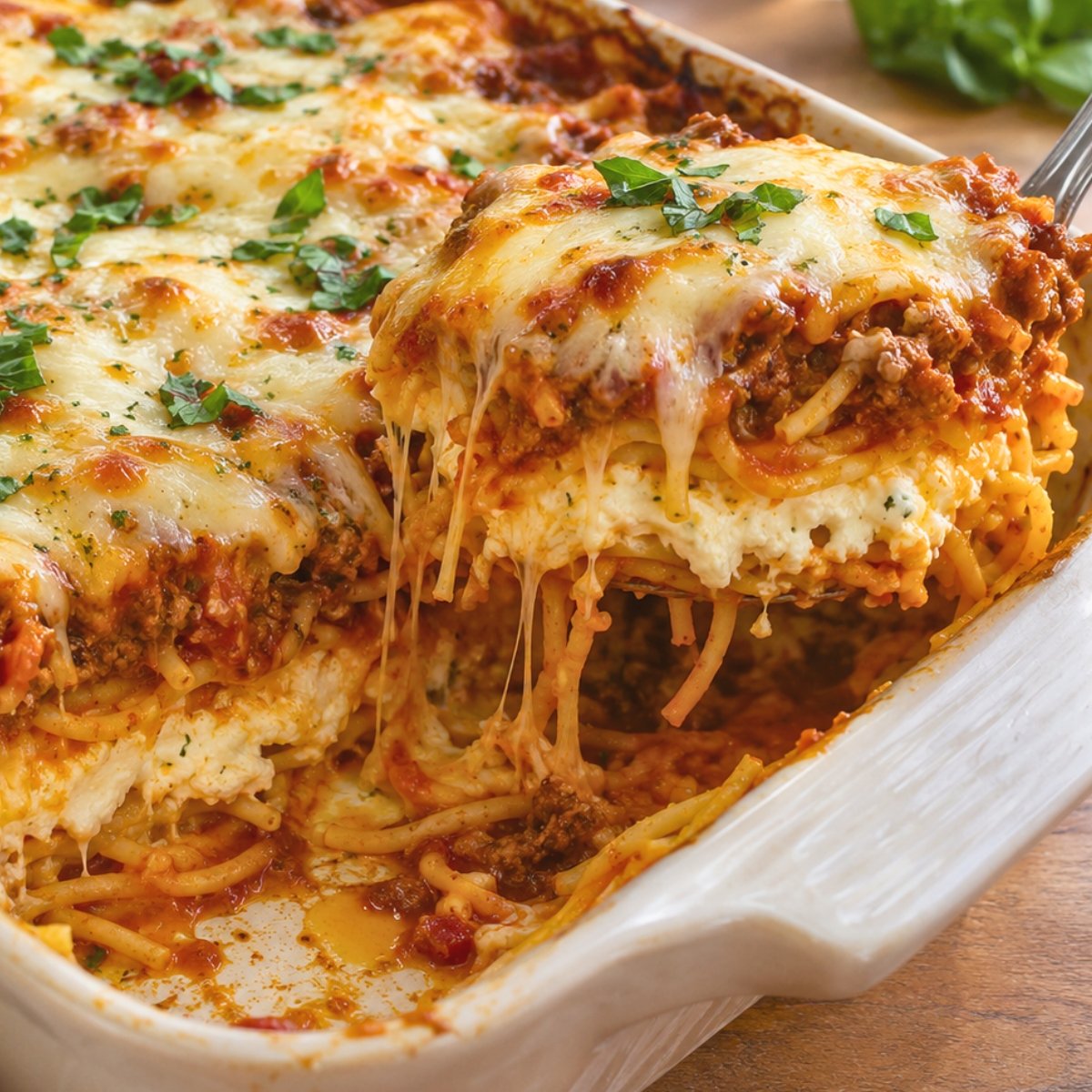
Million dollar spaghetti is a baked pasta casserole built from saucy noodles, a soft cream cheese filling, and a meat sauce under melted mozzarella. The name promises something worth serving to guests, and the dish delivers when the layers stay separate instead of collapsing into one heavy block.
Most versions go wrong in two places. The noodles dry out around the edges while the middle is still wet, and the cream cheese layer turns oily because it never softened all the way through. I head both off before the dish goes into the oven: hold back a little pasta water, let the cream cheese sit out until it dents under a finger, and bake covered for the first stretch so the pasta steams before the top browns.
Ingredients
- 1 lb (450 g) spaghetti
- 1 tablespoon olive oil
- 1 lb (450 g) ground beef, 80/20
- 1 small onion, diced
- 3 garlic cloves, minced
- 24 oz (680 g) marinara sauce
- 1 teaspoon dried oregano
- 8 oz (226 g) cream cheese, fully softened
- 1 cup (240 g) whole-milk ricotta
- ¼ cup grated Parmesan
- 1 large egg
- 2 cups (225 g) shredded mozzarella
- 2 tablespoons chopped fresh basil or parsley
- Salt for the pasta water
Instructions
- Boil the spaghetti: Bring a large pot of well-salted water to a boil and cook the spaghetti 2 minutes short of the package time. Scoop out 1 cup of pasta water, then drain the noodles without rinsing them. The pasta should still have a firm bite in the center.
- Brown the beef: Set a large skillet over medium-high heat, add the olive oil, and cook the onion for 3 minutes until it softens. Add the beef, break it into small pieces, and cook for 6 to 8 minutes until no pink remains. Spoon off the excess fat.
- Build the sauce: Stir the garlic into the beef for 30 seconds, just until it smells strong. Pour in the marinara and oregano, bring it to a simmer, and let it cook for 5 minutes so the sauce thickens slightly. Taste and add salt only if the sauce needs it.
- Beat the cheese layer: In a medium bowl, beat the softened cream cheese, ricotta, Parmesan, egg, and a small pinch of salt until the mixture is smooth with no visible lumps. If it still looks curdled, let the bowl sit for 5 minutes and beat again.
- Coat the noodles: Toss the drained spaghetti with 2 tablespoons of the reserved pasta water and about half a cup of the meat sauce. This thin coating keeps the noodles loose and keeps the exposed edges from drying during the bake.
- Layer the casserole: Spread half the noodles in a 9×13-inch baking dish. Dollop the cheese mixture over them and spread it to the edges, then add the rest of the noodles. Pour the remaining meat sauce on top and scatter the mozzarella over everything.
- Bake covered, then brown: Bake at 350°F for 20 minutes with the dish covered in foil. Remove the foil and bake another 10 to 15 minutes until the sauce bubbles at the edges and the mozzarella turns golden in spots. Stop as soon as the top browns, because extra time dries the pasta.
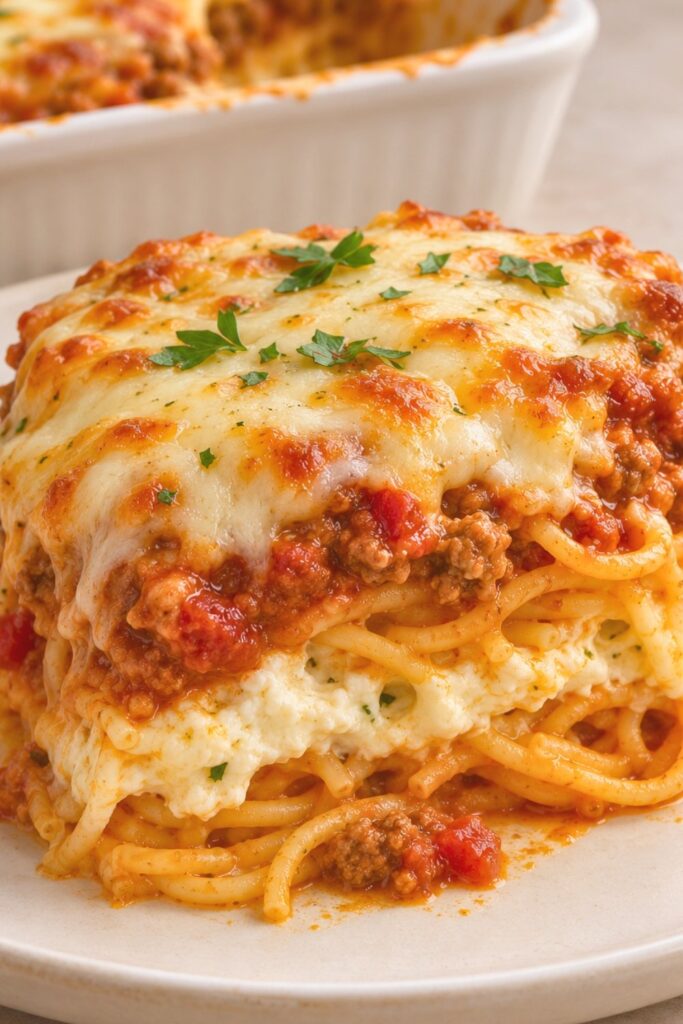
- Rest before serving: Let the dish stand for 10 minutes before cutting. The cheese layer sets just enough to hold the layers together, so the portions come out clean instead of sliding apart on the plate.
When the Layers Go Wrong
- Cold cream cheese never blends smooth. If you beat it straight from the fridge, small lumps survive the bake and leave greasy pockets where the fat separates. Leave the block out for about an hour, or soften it in short bursts at half power and stir between them, until a finger presses a deep dent into it.
- Naked noodles dry at the edges. Toss the drained spaghetti with a couple of tablespoons of pasta water and a ladle of sauce before it goes into the dish, so every strand carries a thin coat. The starch in the pasta water helps the sauce cling instead of sliding to the bottom.
- Undrained beef fat pools under the cheese and turns the whole layer oily. Tilt the skillet and spoon the fat off after browning, and leave about a teaspoon behind for flavor. With leaner 90/10 beef, add a tablespoon of olive oil so the meat does not dry out while it browns.
- Uncovered baking is what turns the corners crisp and dry. Foil for the first 20 minutes traps steam through the pasta so the center cooks before the top sets, and the last 10 minutes without it browns the mozzarella. If the cheese darkens before the sauce bubbles, lay the foil back on loosely.
- Too much sauce makes the layers slide and the bottom soggy. Hold back about half a cup of marinara and spoon it over portions at the table, where it stays bright instead of soaking into the noodles. The finished dish should look moist, not swimming.
- Cutting straight from the oven collapses the layers. Ten minutes of rest lets the cheese set just enough to hold a clean square on the plate, and the carryover heat finishes the center without drying the edges.
What to Serve With It
- Golden garlic bread is the right tool for the extra sauce left in the dish, and a toasted slice under a portion soaks up what the noodles do not.
- Green bean casserole fits a potluck table and keeps the plate from being all pasta and cheese. It bakes at the same 350°F, so both dishes can share the oven if you plan the timing.
- Classic coleslaw cuts the richness with a cold, tangy crunch, and it can be made a day ahead while the oven is free.
- For a holiday spread, Italian lasagna covers the same crowd in a second baked pasta, and both hold well in a warm oven while you finish the sides.
Storage
Keep leftovers in an airtight container in the refrigerator for up to 4 days. Reheat covered at 350°F with a splash of water or extra sauce for about 15 minutes, because the pasta keeps soaking up sauce as it sits. To freeze, assemble the casserole unbaked, wrap it tightly, and freeze for up to 2 months. Thaw overnight in the refrigerator, then bake as directed, adding 5 to 10 minutes if the middle is still cold.
FAQ
Can I make million dollar spaghetti ahead of time?
It works well made ahead. Layer it unbaked in the dish, cover it tightly, and refrigerate for up to 2 days. Bake it straight from the refrigerator and add about 10 minutes to the covered stretch so the middle heats through before the top browns.
Why did the cream cheese layer turn greasy?
Cold cream cheese and undrained beef fat are the usual causes. Soften the cream cheese until it beats smooth with no lumps, and spoon the fat off the meat before you add the marinara. If the layer still looks oily after baking, it spent too long under high heat or under the broiler.
Can I use ricotta instead of cream cheese?
Yes, and it makes a lighter filling. Use half ricotta and half cream cheese if you still want the tang and the firm set, because all ricotta bakes looser and can weep into the pasta. Drain the ricotta in a strainer for 15 minutes first if it looks watery in the tub.
How do I keep the pasta from drying out in the oven?
Cover the dish with foil for the first 20 minutes, keep a little pasta water on the noodles, and stop baking as soon as the sauce bubbles at the edges. Extra time under dry heat pulls moisture out of the pasta, and the thin edges dry first.
What makes it million dollar spaghetti?
The name describes the layered, company-worthy look rather than an expensive ingredient list. A cream cheese and ricotta filling sits between two layers of spaghetti, with a meat sauce and melted mozzarella on top, so each portion cuts like a casserole instead of a bowl of pasta.
Can I use a different pasta shape?
Penne, ziti, or rigatoni hold up better than long strands and are easier to cut into squares. Cook them 2 minutes short of the package time as well, and keep the same layering order so the filling stays in the middle.
Can I freeze million dollar spaghetti?
Assemble the casserole unbaked, wrap the dish tightly in plastic and foil, and freeze for up to 2 months. Thaw it overnight in the refrigerator, then bake as directed, adding 5 to 10 minutes if the middle is still cold. Freezing after baking works too, but the pasta softens more on the reheat.