
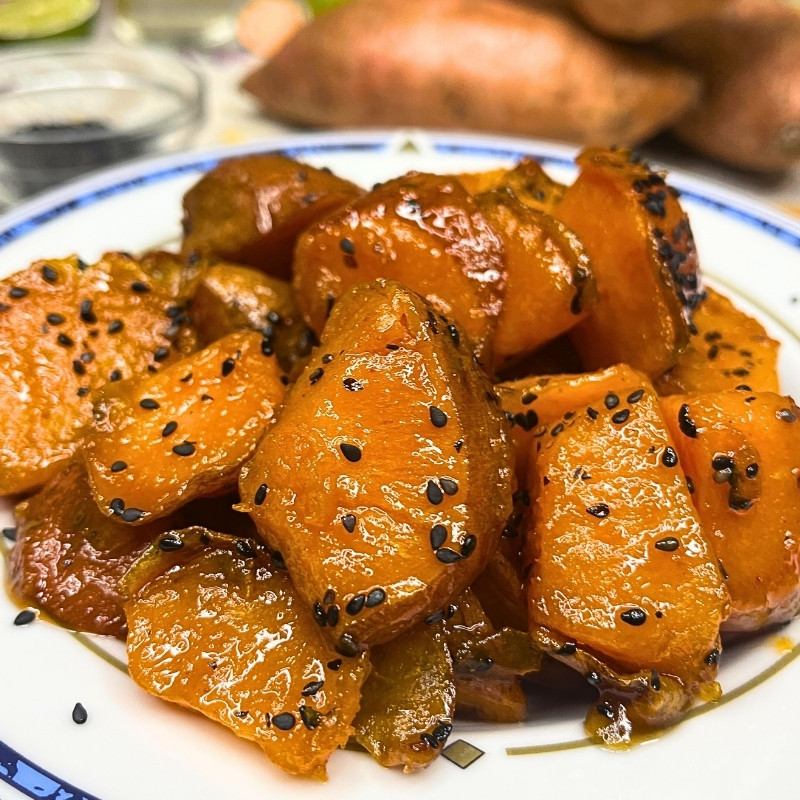
The first time I tried these Japanese candied sweet potatoes, I remember thinking: why is something this basic so good? They’re just sweet potato pieces that get steamed, fried, and tossed in a quick syrup glaze—but the texture is the whole magic. Crisp edges, soft center, and that shiny coating that sets up just enough to feel like candy. If you’ve ever ended up with sticky syrup or soggy sweet potatoes, don’t worry.
The method is easy once you do it in the right order, and I’ll show you exactly when to steam, when to fry, and when to glaze so it actually works.
Ingredients
-
1 lb Japanese sweet potatoes (satsuma-imo) (450 g)
-
Vegetable oil, for deep-frying (enough for about 2 inches / 5 cm depth)
-
1/4 cup water (60 ml)
-
1/4 cup brown rice syrup (about 2.8 oz / 80 g)
-
2 Tbsp evaporated cane sugar (about 0.7 oz / 20 g)
-
2 tsp black sesame seeds
Instructions
1) Cut the sweet potatoes
Trim the ends, then cut into rangiri chunks: slice at a 45° angle, rotate the potato 90°, slice again, and repeat. Aim for pieces that are roughly the same thickness so they cook evenly.
2) Soak
Add the pieces to a bowl of cold water and soak for 10 minutes (this helps remove excess starch). Drain well.
3) Steam until nearly tender
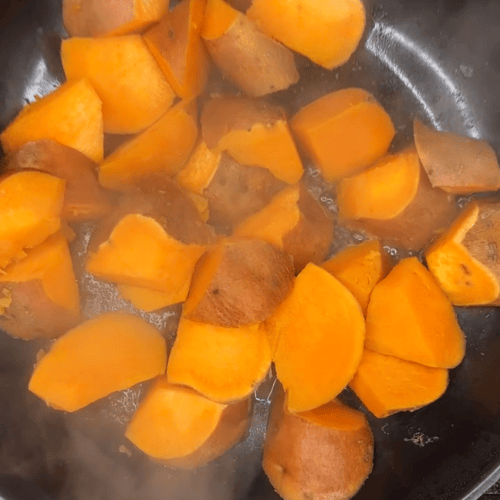
Put the drained sweet potatoes in a pan with 1/4 cup water (60 ml). Cover and cook over medium-high heat until the water is almost gone and the potatoes are mostly tender (a fork should go in with a little resistance).
Remove the lid and let any remaining water fully evaporate.
4) Heat the oil
Heat about 2 inches of oil to 340°F (170°C) in a pot or deep skillet.
5) Fry
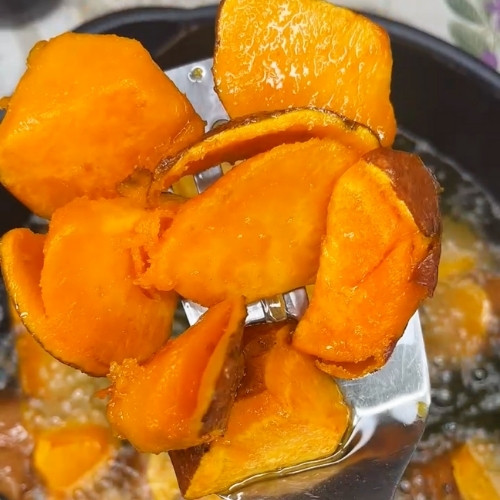
Carefully add the sweet potatoes and fry for 4–6 minutes, turning occasionally, until golden and lightly crisp. Remove to a rack or paper towel.
6) Make the glaze
In the same pan you used for steaming, add:
-
1/4 cup brown rice syrup (80 g)
-
2 Tbsp evaporated cane sugar (20 g)
Warm over medium heat, stirring just until the sugar dissolves and the glaze looks smooth.
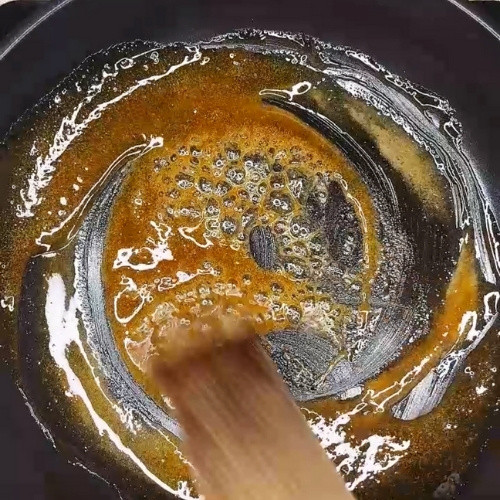
7) Coat the sweet potatoes
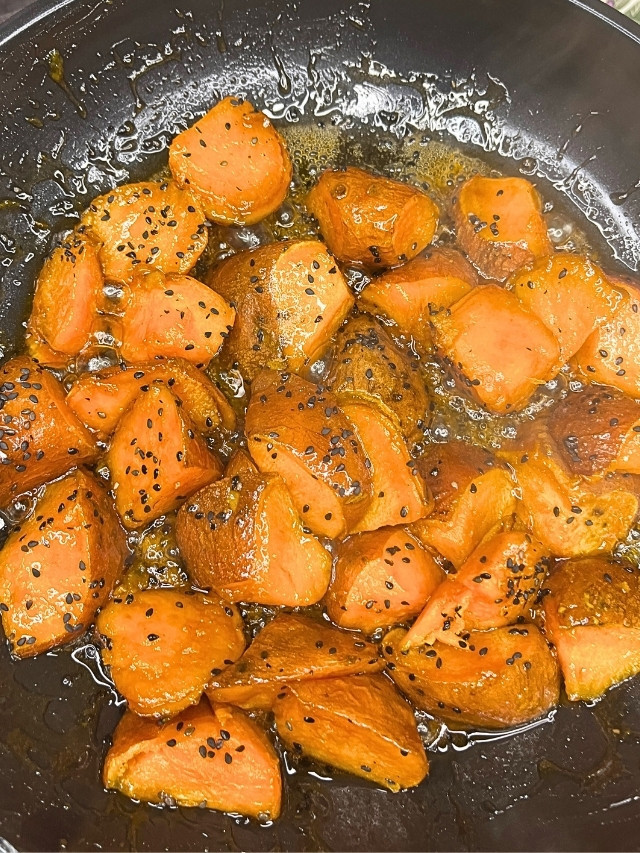
Add the fried sweet potatoes to the glaze and toss until glossy and evenly coated.
If the glaze tightens too fast, add 1 tsp water at a time to loosen it.
8) Finish
Add 2 tsp black sesame seeds and toss once more. Serve warm.
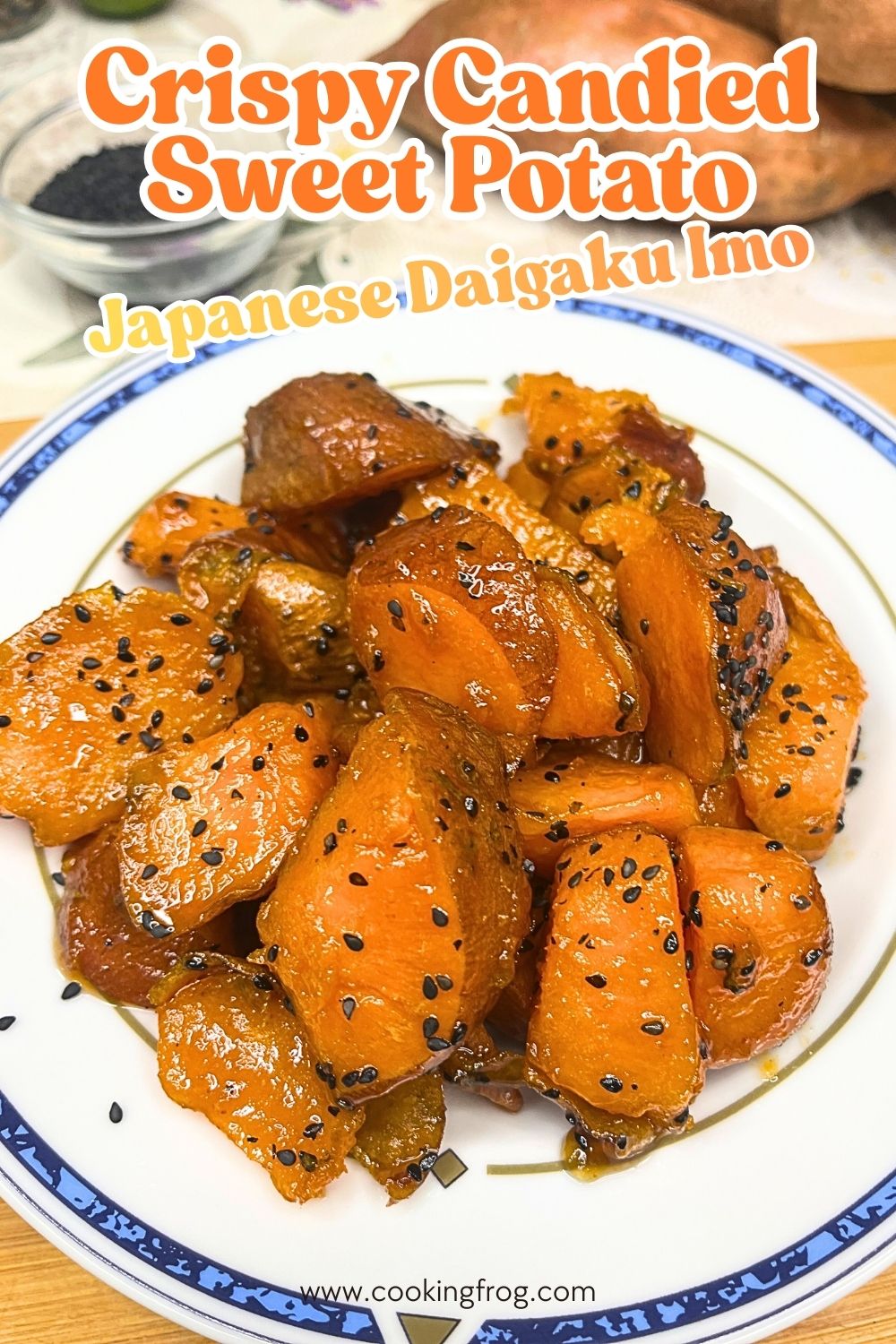
If you’re making these again (and you probably will), pin the photo below so you don’t lose it.
Tips and Tricks (So They Turn Out Right)
-
Cut matters more than shape. Rangiri looks nice, but the real goal is even thickness. If some pieces are thin and some are thick, the thin ones brown too fast while the thick ones stay firm inside.
-
Don’t skip the soak. A quick soak pulls off surface starch so the pieces fry cleaner and don’t glue themselves together.
-
Steam until “almost” tender, not fully soft. You want a fork to go in with a little resistance. If they’re fully soft before frying, they can break apart and drink up oil.
-
Let the pan go dry before frying. After steaming, keep the lid off and cook for a minute until the water is completely gone. Any leftover moisture = more splatter and less crisp.
-
Hold the oil around 340°F (170°C). Too hot and the outside gets dark before the inside is right; too cool and they soak up oil. Fry in small batches if your pot is crowded—crowding drops the oil temp fast.
-
Use a rack if you can. Draining on a wire rack keeps the bottoms from getting soft. Paper towels work, but they trap steam.
-
Warm the glaze gently. You’re not trying to boil it hard—just heat it enough to dissolve the sugar and make it loose. If it thickens too much in the pan, it’ll turn into sticky candy before you can coat the potatoes.
-
Toss fast, then stop. Once the sweet potatoes are coated and glossy, take them off the heat. Overcooking after glazing can make the coating gritty or overly hard.
-
If the glaze tightens up: Add 1 teaspoon water at a time and stir. It loosens back up quickly—don’t dump in a bunch or it’ll go thin.
-
Sesame timing: Add sesame at the very end so it sticks to the coating instead of sinking into the syrup.
-
Best texture window: These are at their peak within 15–30 minutes. They’re still good later, but the crisp edges soften as they sit.