
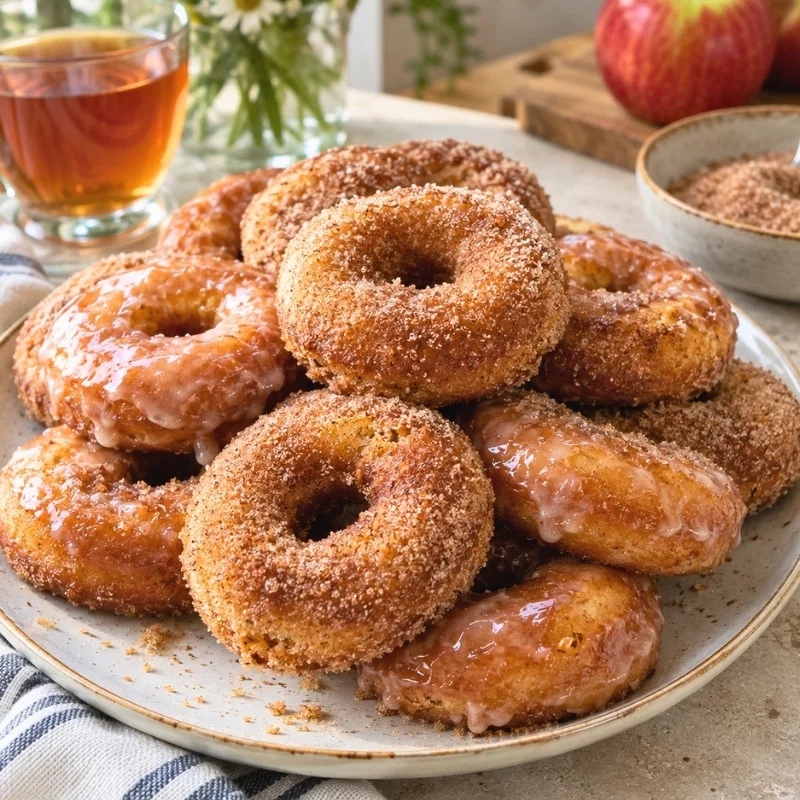
This apple cider donuts recipe gets its orchard flavor from cider boiled down until it coats a spoon, then fried at 350°F (175°C) so the crust cracks instead of turning greasy. I skip apple juice here – even reduced, it stays one-note sweet and never tastes like a cider mill. If you want a faster fried bite without rolling dough, I already have fried apple cider glazed donut holes, and leftover fruit from a cider run goes into air-fryer apple crisp.
Ingredients
For the donuts
- 2 cups (480 ml) nonalcoholic apple cider, preferably unfiltered
- 3 cups (375 g) all-purpose flour, spooned and leveled, plus extra for dusting
- 2 teaspoons baking powder
- ½ teaspoon baking soda
- 1 teaspoon Diamond Crystal kosher salt or ½ teaspoon Morton kosher salt
- 1½ teaspoons ground cinnamon
- ¼ teaspoon ground nutmeg
- ⅓ cup (67 g) packed light brown sugar
- 2 large eggs
- 4 tablespoons (56 g) unsalted butter, melted and cooled until lukewarm
- ⅓ cup (80 ml) buttermilk
- Vegetable or canola oil, for frying
For the cinnamon sugar
- ¾ cup (150 g) granulated sugar
- 1½ teaspoons ground cinnamon
Instructions
- Reduce the cider. Bring the cider to a boil in a wide saucepan, then simmer until reduced to ⅓ cup (80 ml), checking after 15 minutes. Measure in a heatproof cup: simmer longer if needed, or add a little water if reduced too far. Cool until lukewarm.
- Make the dough. Whisk the flour, baking powder, baking soda, salt, cinnamon, and nutmeg in a large bowl. Separately, whisk the brown sugar, eggs, cooled cider, melted butter, and buttermilk, breaking up any sugar lumps. Fold the wet ingredients into the dry just until no flour remains. The dough should be soft and sticky.
- Chill and prepare the coating. Cover and refrigerate for 45–60 minutes, or until firm enough to handle with floured hands. Chill longer if it still smears when lifted. Mix the coating sugar and cinnamon in a shallow bowl.
- Shape the donuts. On a lightly floured surface, gently pat or roll the dough to ½ inch (1.3 cm) thick. Cut 3-inch rings with 1-inch centers, flouring the cutters as needed. Transfer the rings and holes to a lightly floured baking sheet with a spatula. Reroll scraps once, then refrigerate the cut dough while the oil heats.
- Heat the oil. Add 2 inches (5 cm) of oil to a Dutch oven, filling it no more than halfway. Heat to 350°F (175°C), using a frying thermometer with its tip clear of the pot’s bottom. Set a wire rack over a baking sheet nearby.
- Fry and check. Fry one ring first, about 60–75 seconds per side, until golden. Let cool briefly, then cut it open: the center should have a cake-like crumb with no wet dough. Adjust the cooking time if needed. Fry the remaining rings 2 or 3 at a time, keeping the oil near 350°F and letting it return to temperature between batches.
- Coat while warm. Lift the donuts out with a slotted spoon, drain on the rack for 15–30 seconds, then gently turn in the cinnamon sugar. Fry the holes separately for about 1–2 minutes total, turning frequently, until golden and cooked through. Drain, coat, and serve warm.
Pan bake, glaze, and overnight dough
- A donut pan at 350°F (175°C) for 10 to 11 minutes gives a muffin crumb, not the cracked orchard crust. Brush those with melted butter before the cinnamon sugar or it won’t cling. If you’d rather bake a fall breakfast than heat oil, I make pumpkin muffins.
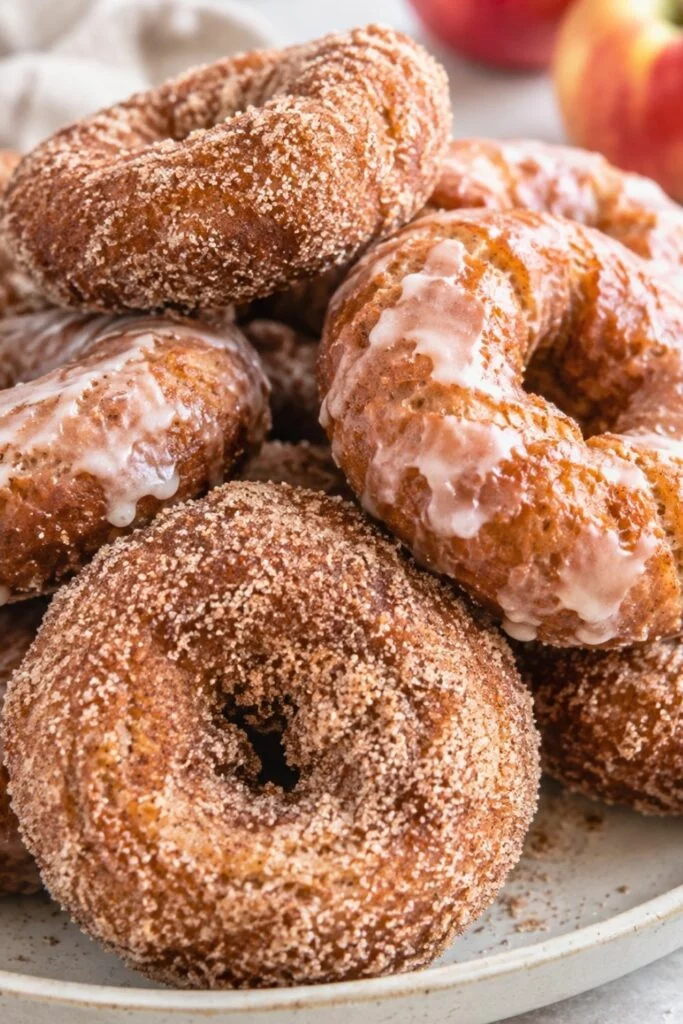
- For a glaze instead of cinnamon sugar, whisk 1 cup (120 g) powdered sugar with 2 tablespoons of the reduced cider until it ribbons, then dip the donuts after they cool 5 minutes.
- Covered dough keeps overnight in the fridge. If it’s stiff the next morning, leave it on the counter 10 minutes before you roll.
These are best the day you fry them, while the crust still cracks. Keep leftovers in an airtight container at room temperature for 1 to 2 days, then reheat on a rack at 325°F (165°C) for about 8 minutes so the outside dries again. I don’t freeze fried cider donuts – they thaw soggy.