
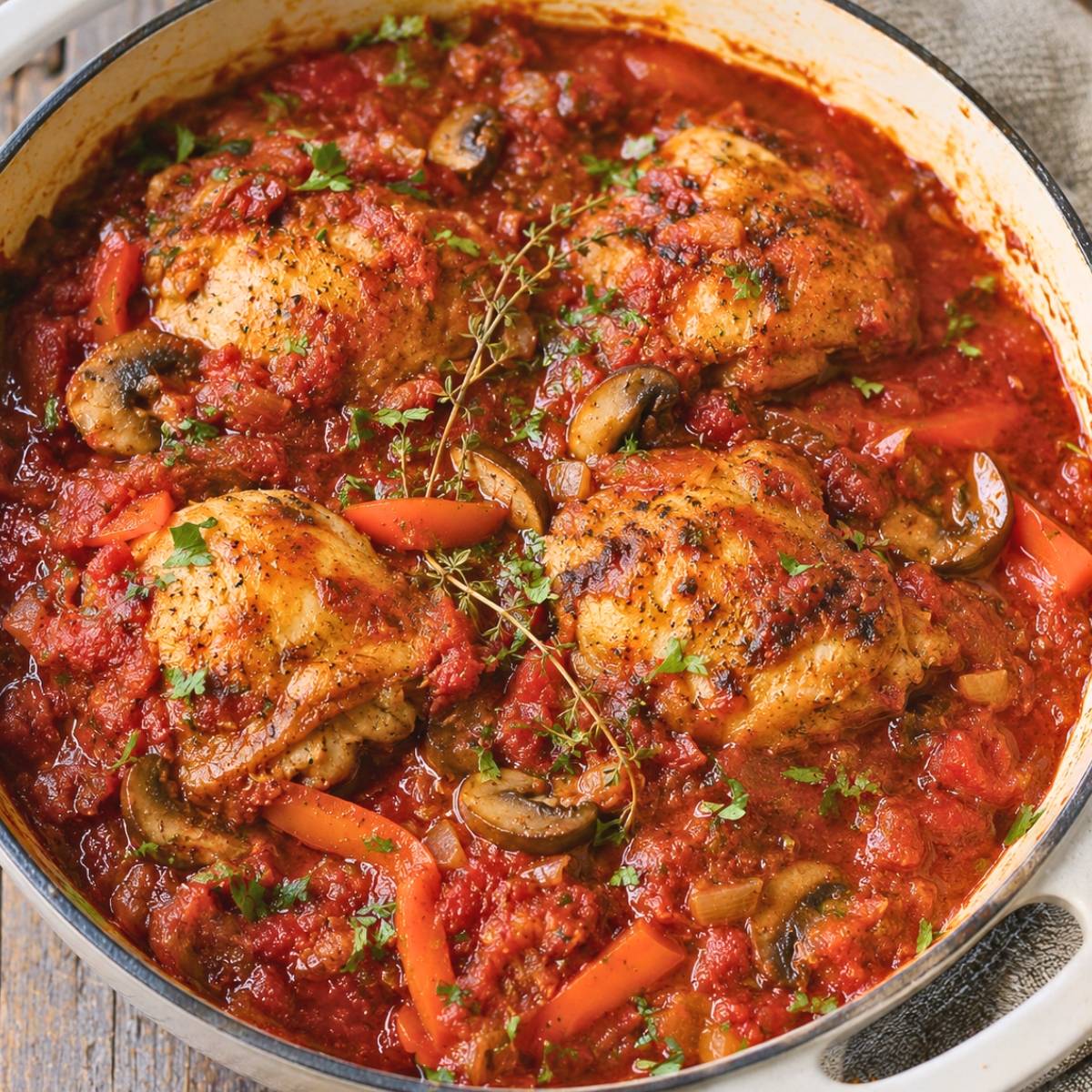
This chicken cacciatore recipe starts with bone-in thighs browned skin-side down, then finishes uncovered in the oven so the skin stays crisp while the tomato, wine, and mushroom sauce reduces around it. I keep the liquid below the skin and let the oven handle the slow part, which is the difference between a rich braise and a pot of steamed chicken.
It’s a hunter-style Italian dish that sits somewhere between a stew and a Sunday roast, and it works just as well on a weeknight because most of the cooking is hands-off. Serve it with creamy mashed potatoes or soft polenta to catch the sauce, and keep a loaf of bread nearby for the last spoonfuls. If you like this skillet-to-oven rhythm, my chicken marsala uses the same approach with a much faster pan sauce.
Ingredients
- 6 bone-in, skin-on chicken thighs (about 2½ lb / 1.1 kg)
- 2 teaspoons kosher salt, plus more to taste
- ½ teaspoon freshly ground black pepper
- 3 tablespoons olive oil
- 1 medium yellow onion, finely chopped
- 1 small carrot, finely chopped
- 1 celery rib, finely chopped
- 4 garlic cloves, thinly sliced
- 1 tablespoon chopped fresh rosemary
- 1 tablespoon chopped fresh sage
- ½ teaspoon red pepper flakes
- 8 oz (225 g) cremini mushrooms, sliced
- ¾ cup dry white wine, or chicken broth
- 1 tablespoon tomato paste
- 1 (28-oz / 800 g) can crushed tomatoes
- ½ cup chicken broth, plus more if the sauce tightens too much
- 2 tablespoons chopped fresh parsley
Instructions
- Dry and season the chicken: Pat the thighs completely dry with paper towels and season both sides with the salt and pepper. Let them sit at room temperature for 10 minutes while you chop the vegetables, since dry skin browns far better than cold, damp skin.
- Brown the skin: Heat the olive oil in a wide Dutch oven over medium-high heat until it shimmers. Lay the thighs in skin-side down and leave them alone for 6 to 8 minutes, until the skin is deep golden and releases from the pot, then turn and cook 2 minutes more. Move the chicken to a plate and pour off all but 2 tablespoons of the fat.
- Build the soffritto: Lower the heat to medium and add the onion, carrot, and celery to the pot. Cook for 8 to 10 minutes, scraping up the browned chicken bits as the vegetables soften, then stir in the garlic, rosemary, sage, and red pepper flakes and cook 1 minute until fragrant.
- Brown the mushrooms: Raise the heat to medium-high, add the mushrooms, and cook for 5 to 6 minutes without crowding the pot. Let their liquid cook off and the edges turn brown before you add anything wet, because mushrooms that steam stay rubbery.
- Deglaze and build the sauce: Pour in the wine and scrape the bottom of the pot with a wooden spoon until the browned bits dissolve, then simmer 2 to 3 minutes until the wine smells mellow rather than sharp. Stir in the tomato paste for 1 minute, add the crushed tomatoes and broth, and bring the sauce to a gentle simmer.
- Braise uncovered in the oven: Heat the oven to 350°F (175°C). Nestle the thighs back into the pot skin-side up, keeping the sauce around the meat rather than over the skin. Bring the pot back to a simmer on the stove, then transfer it uncovered to the oven for 35 to 45 minutes, until the thighs reach 175°F (79°C) and the sauce has reduced and darkened.
- Rest, skim, and finish: Lift the chicken out to a warm plate and let it rest for 10 minutes. Spoon the clear fat off the surface of the sauce, taste for salt, and stir in the parsley. Serve the thighs with plenty of sauce spooned around them, not on top of the skin.
Why the sauce turns watery or the chicken dries out
- A covered pot traps steam, and steam is what makes the sauce thin and the skin soft. Leave the lid off in the oven and reduce the sauce on the stovetop for 5 minutes at the end if it still looks loose, stirring the bottom so the tomatoes do not catch.
- Crushed tomatoes carry different amounts of water from brand to brand, and a can that looks thick can turn thin once it heats. If the sauce is still soupy after the chicken rests, simmer it uncovered until a spoon dragged across the bottom leaves a clear trail.
- Sauce over the skin undoes the browning in minutes, so keep the liquid level below the skin and spoon it around the thighs when you serve. If the skin softens anyway, run the pot under a hot broiler for 2 minutes before serving, with the handle wrapped in foil.
- Thighs are forgiving but not endless. Pull them at 175°F to 185°F, when the meat gives easily at the bone and the juices run clear, and remember they keep cooking as they rest under a loose tent of foil.
- If you use boneless breasts instead, brown them the same way and add them back for only the last 20 minutes. At 160°F they are done, and longer cooking turns them chalky, so check with a thermometer rather than by the clock.
- Bitter sauce usually means the aromatics or tomato paste scorched on the bottom. Scrape only the dark brown bits into the sauce, never the black ones, and lower the heat before the garlic goes in so it turns fragrant instead of acrid.
What to serve with chicken cacciatore
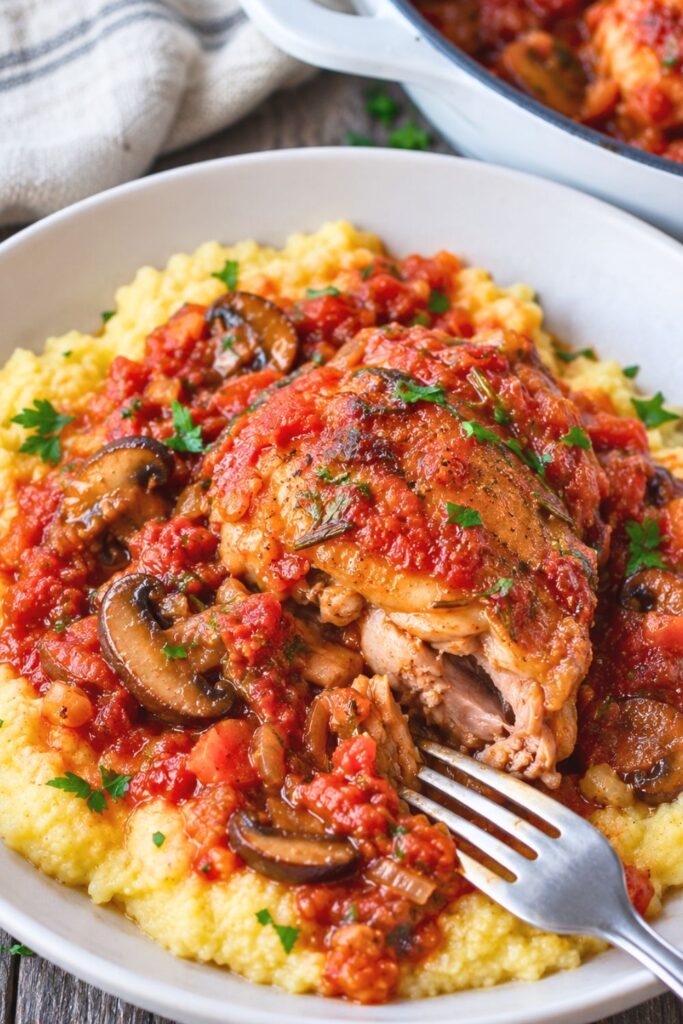
- Creamy polenta or mashed potatoes soak up the sauce better than rice, which tends to sit on the plate while the sauce runs around it.
- A loaf of garlic bread or plain crusty bread is there for the last of the sauce, and it keeps the plate from feeling heavy.
- Spaghetti or rigatoni turns the leftovers into a second meal, though the skin will not stay crisp once it sits in the sauce.
- Roasted potatoes or a sharp green salad cut through the richness, and either one can go in the oven while the chicken braises.
- A green salad with a mustard vinaigrette resets the palate between bites of rich sauce, and it takes five minutes while the chicken rests.
- Steamed broccoli or green beans add color without competing for the sauce, and they can steam on the stovetop while the chicken finishes in the oven.
Storage
Keep leftovers in an airtight container in the refrigerator for up to 3 days. Reheat gently on the stovetop with a splash of broth and bring it to a full simmer before serving. The sauce may separate in the fridge, so stir it back together over low heat rather than pouring off the liquid. I skip freezing the chicken because the skin loses its texture, but the sauce alone freezes well for up to 3 months.
FAQ
Why is my chicken cacciatore sauce watery?
The usual cause is a covered pot, watery tomatoes, or mushrooms that were never browned. Cook the mushrooms until their liquid evaporates, braise the chicken uncovered in the oven, and simmer the sauce on the stovetop at the end until it coats the back of a spoon.
Can I make chicken cacciatore with chicken breasts?
Yes, but the timing changes with the cut you use. Brown skinless or skin-on breasts in the pot, then return them to the sauce for only the last 20 minutes and pull them at 160°F. Breasts dry out quickly, so check them with a thermometer rather than by the clock.
Can I make chicken cacciatore ahead of time?
It tastes better made a day ahead, because the sauce deepens overnight in the fridge. Cook it completely, cool it uncovered for 30 minutes, then cover and refrigerate for up to 3 days. Reheat gently on the stovetop with a splash of broth and add fresh parsley at the end.
Do I have to use wine in chicken cacciatore?
No, you don’t have to use wine in this recipe. Dry white wine adds acidity and a rounder finish, but chicken broth works fine and keeps the dish alcohol-free. Use the same amount, let it reduce for 3 minutes, and add a teaspoon of lemon juice at the end if the sauce tastes flat without the wine.
Can I use a whole chicken or legs instead of thighs?
Yes, but cut a whole chicken into 8 pieces and brown the breasts for less time. Legs and thighs can stay in the oven for the full 45 minutes, while wings and breasts should go in for the last 20 minutes so they do not dry out. A whole cut chicken also needs a wider pot so the pieces sit in a single layer.
What kind of tomatoes work best for chicken cacciatore?
Crushed tomatoes give the sauce body without turning it into a puree. If you only have whole peeled tomatoes, crush them by hand and simmer the sauce 10 minutes longer. Avoid tomato sauce, which is already thin and seasoned, and skip canned diced tomatoes because their firm pieces stay chunky in the finished sauce.