
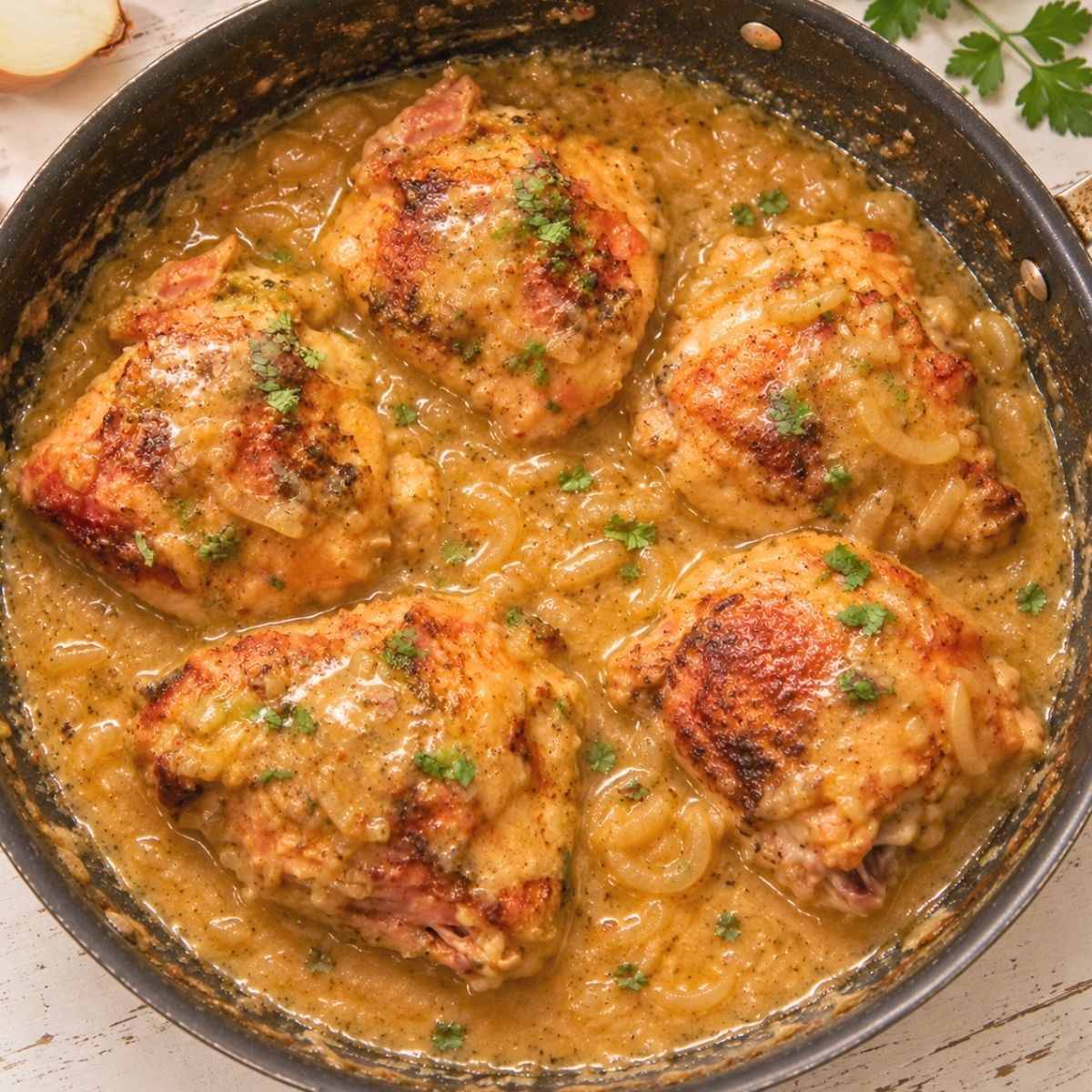
This smothered chicken recipe starts with skin-on thighs seared hard in a cast iron skillet, then buried under slow-caramelized onions and a gravy built from the pan drippings. The chicken finishes in the sauce, so it stays juicy while the gravy thickens around it. Spoon it over creamy mashed potatoes or split a piece of buttermilk cornbread and drag it through the onions.
The gravy is where most versions fall apart. A flour dredge that never gets cooked, onions rushed over high heat, and too much thickener turn a good pan of chicken into a pasty mess. I keep the coating light, cook the roux until it smells nutty, and give the onions the full twenty minutes they need. That order is the whole recipe.
Ingredients
- 6 bone-in, skin-on chicken thighs (about 2 lb)
- 1½ teaspoons kosher salt
- 1 teaspoon freshly ground black pepper
- ½ teaspoon smoked paprika
- ⅓ cup all-purpose flour, for dredging
- 2 tablespoons vegetable oil
- 1 tablespoon unsalted butter
- 2 large yellow onions, thinly sliced (about 4 cups)
- 3 garlic cloves, minced
- 2 tablespoons all-purpose flour, for the roux
- 2 cups low-sodium chicken broth
- 1 teaspoon Worcestershire sauce
- ½ teaspoon dried thyme
- 1 teaspoon apple cider vinegar
- 2 tablespoons chopped fresh parsley
Instructions
- Season and dredge: Pat the thighs completely dry with paper towels, then season both sides with the salt, pepper, and smoked paprika. Put the ⅓ cup flour in a shallow dish and dredge each thigh, pressing lightly so the coating sticks, then shake off the excess. Dredge right before searing so the flour doesn’t turn gummy.
- Sear the skin: Heat the oil in a large cast iron skillet over medium-high heat until it shimmers. Lay the thighs in skin side down and sear for 6 to 8 minutes without moving them, until the skin is deep golden and releases from the pan. Flip and cook 3 minutes more, then move the chicken to a plate. It will not be cooked through yet.
- Caramelize the onions: Pour off all but about 1 tablespoon of the fat, lower the heat to medium, and add the butter and sliced onions. Cook for 18 to 22 minutes, stirring every few minutes and scraping up the browned bits, until the onions are soft, sweet, and the color of dark honey. Add the garlic and thyme in the last minute and stir until fragrant.
- Build the roux: Sprinkle the 2 tablespoons of flour over the onions and stir constantly for 90 seconds, until the raw smell is gone and the mixture looks sandy. Pour in the broth in three additions, whisking smooth after each one, and scrape the bottom of the skillet to lift the fond. Stir in the Worcestershire sauce.
- Simmer the chicken: Return the thighs skin side up, nestling them into the gravy without submerging the skin. Bring to a gentle simmer, cover, and cook for 20 to 25 minutes, until the thickest part of a thigh reads 165°F on an instant-read thermometer. Stir the gravy around the chicken once or twice so it doesn’t catch.
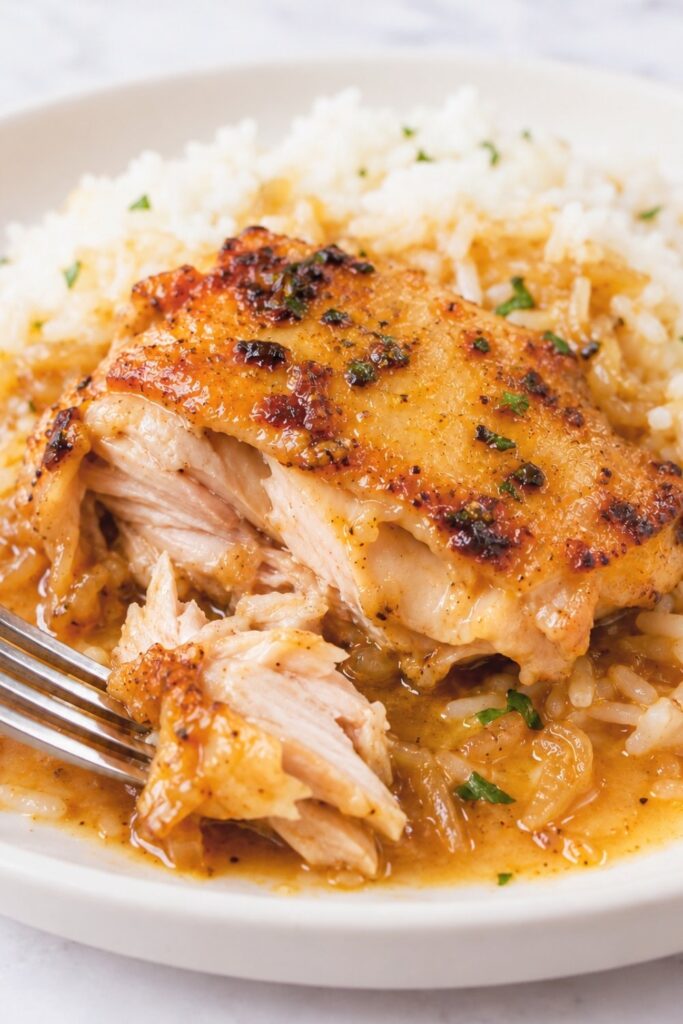
- Finish and rest: Taste the gravy and adjust the salt, then stir in the cider vinegar off the heat. Let the skillet sit for 5 minutes so the gravy settles around the chicken, and scatter the parsley over the top. Serve straight from the pan with rice, mashed potatoes, or cornbread.
When the gravy goes wrong
- If the gravy turns gluey, there was too much flour for the fat in the pan. Whisk in broth a splash at a time until it coats the back of a spoon instead of clumping around it.
- A raw flour taste means the roux needed another minute. Cook it until it smells like toasted nuts and turns the color of light peanut butter before any liquid goes in.
- Thin gravy is usually just undercooked. Simmer it uncovered for five to eight minutes, and only then reach for a slurry of one teaspoon cornstarch in one tablespoon cold water.
- Dry chicken comes from searing it all the way through. Pull the thighs at 160°F and let the last few degrees happen in the gravy, where they stay moist and take on the onion flavor.
- If the flour coating slides off in the pan, the skin was wet or the oil wasn’t hot enough. Pat the chicken dry, dredge it right before searing, and wait for the oil to shimmer.
- A pale, flat gravy needs the fond and a little acid. Scrape every brown bit into the broth, then finish with cider vinegar and taste for salt right before serving.
Thighs, breasts, and the heat you need
- Bone-in, skin-on thighs are the forgiving choice here. The skin renders into the gravy, and the meat stays juicy through the twenty-minute simmer without any babysitting.
- Boneless thighs work and cut the cooking time by about ten minutes. Sear them three to four minutes per side and check the center earlier than you think you need to.
- Chicken breasts dry out faster, so pound them to an even three-quarter inch and pull them at 160°F before the final simmer. The same gravy method works on smothered pork chops if you want a second dinner from the same skillet.
- If your skillet is crowded, sear the thighs in batches and finish them in a 375°F oven for ten minutes after the gravy comes together. A packed pan steams the skin instead of browning it.
- Doubling the recipe means searing in two batches and building the gravy once. Add the second batch of chicken back only when the gravy is smooth and seasoned.
- A cast iron skillet holds heat better than a nonstick pan, and the fond it builds is the backbone of the gravy. Stainless steel works too, but keep the heat moderate so the flour doesn’t scorch before the broth goes in.
Storage
Keep leftovers in an airtight container in the refrigerator for up to four days, with the chicken sitting down in the gravy so it doesn’t dry out. Freeze the chicken and gravy together for up to two months and thaw overnight in the fridge. Reheat gently on the stovetop with a splash of broth, whisking the gravy back together if it separates.
FAQ
Can I make smothered chicken with boneless breasts?
Yes, though the texture is leaner. Pound two large breasts to an even three-quarter inch, season and dredge them the same way, and sear for three to four minutes per side. Pull them at 160°F, build the gravy, then return them for just three to four minutes so they finish cooking without drying out. Keep the skillet at medium heat so the flour doesn’t scorch while the sauce reduces. Bone-in thighs still give the richest gravy because the skin and marrow add body.
Why does my smothered chicken gravy taste like flour?
The roux was undercooked or the dredge flour was never toasted. Flour needs at least ninety seconds in hot fat before liquid goes in, and it should smell nutty rather than raw. If the gravy already tastes flat, simmer it uncovered for five more minutes and add a splash of broth, a teaspoon of Worcestershire, and a pinch of salt. The raw edge fades as the flour cooks out, so taste again before you add more thickener.
Do I need cream for this recipe?
No, you don’t need cream for this one. This is an onion gravy, not a cream gravy, and the body comes from flour, broth, and the rendered chicken fat. Milk or cream makes a richer, whiter sauce, but it also mutes the onions. If you want that style, stir in a quarter cup of whole milk at the very end and keep the heat low so it doesn’t break. Taste before adding salt, since the broth and Worcestershire already carry some.
Can I make smothered chicken ahead of time?
It holds well for a day or two and often tastes better the next day. Cook it completely, cool it uncovered for twenty minutes, then refrigerate it in the gravy. Reheat over low heat with a splash of broth, stirring gently until the sauce loosens. Avoid a hard boil, which can split the gravy and toughen the chicken.