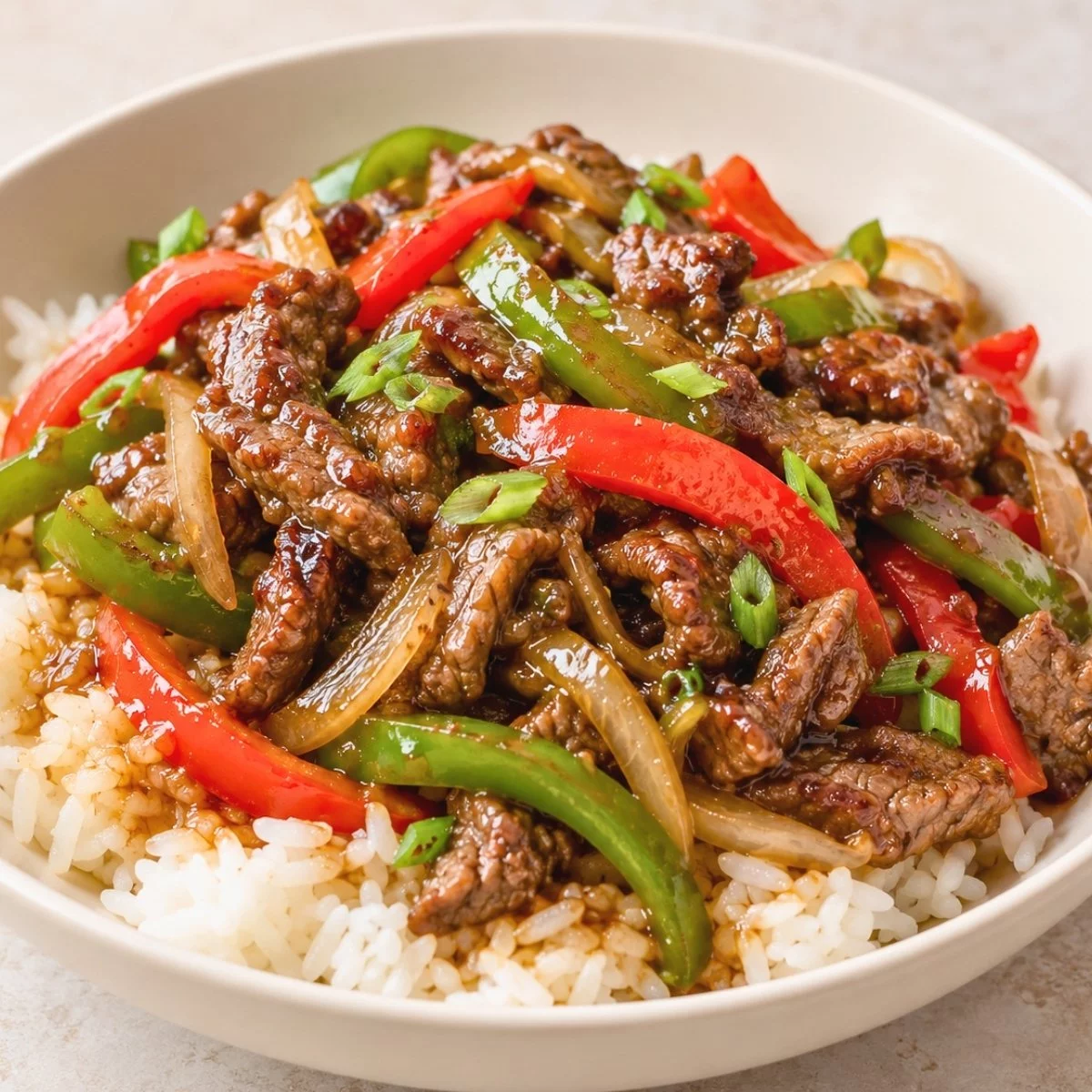
This pepper steak recipe leans on three moves more than any sauce ratio: a thin slice across the grain, a cornstarch coat that holds moisture, and a pan hot enough to sear instead of steam. The beef stays soft, the peppers keep a snap, and the sauce comes out glossy enough to coat rice without pooling underneath it. Most of the 25 minutes is slicing and stirring, and the actual cooking is under ten. I serve it straight from the wok, with a plate of beef and broccoli alongside when I want the full takeout spread.
If your last attempt turned out soupy, the pan was not hot enough or the beef went in wet and crowded. A slurry added at the end will fix the sauce, but nothing fixes beef that steamed for five minutes, so keep the batches small and give the wok 30 seconds to recover between them.
Ingredients
- 1½ pounds (680 g) flank or skirt steak, sliced ¼ inch thick against the grain
- 3 tablespoons soy sauce, divided
- 2 tablespoons Shaoxing wine or dry sherry, divided
- 2 teaspoons plus 1 tablespoon cornstarch, divided
- 3 tablespoons neutral oil, divided
- 2 large bell peppers, cut into 1-inch pieces
- 1 medium onion, cut into 1-inch wedges
- 3 cloves garlic, minced
- 1 tablespoon grated fresh ginger
- 1 tablespoon oyster sauce
- 1 teaspoon dark soy sauce
- 1 teaspoon sugar
- 1 teaspoon sesame oil
- ½ teaspoon freshly ground black pepper
- ⅓ cup cold water
- 2 scallions, sliced
- Cooked jasmine rice, for serving
Instructions
- Chill and slice the beef: Put the steak in the freezer for 15 minutes so the surface firms up and the knife tracks straight. Slice it ¼ inch thick across the grain, then cut the long slices into 2-inch lengths. If you can see long lines running the length of each piece, your knife went the wrong way and those pieces will chew tough.
- Marinate for ten minutes: Toss the beef with 1 tablespoon of the soy sauce, 1 tablespoon of the wine, 2 teaspoons of the cornstarch, and 1 tablespoon of the oil. Work it with your hands until every slice is coated and no dry starch sits at the bottom of the bowl. Leave it on the counter for 10 minutes while you cut the vegetables.
- Build the sauce: Stir the remaining 2 tablespoons soy sauce, 1 tablespoon wine, oyster sauce, dark soy sauce, sugar, sesame oil, and black pepper together in a small bowl. Whisk the remaining 1 tablespoon cornstarch with the cold water in a cup and keep it separate, because a slurry left sitting turns into a hard lump at the bottom.
- Sear the beef in batches: Heat a wok over the highest flame until a drop of water evaporates on contact, then add 1 tablespoon of the oil. Spread half the beef in a single layer and leave it alone for 60 seconds before tossing for another 30 seconds, then pull it out while the center is still slightly pink. Repeat with the second batch, and wipe the wok if the cornstarch left a film that starts to scorch.
- Cook the peppers and onion: Add the last tablespoon of oil, then the peppers and onion, and toss over high heat for 2 minutes until the edges blister but the pieces still snap when you press one with tongs. Push them to the side, add the garlic and ginger to the bare spot, and stir for 20 seconds until fragrant before mixing everything together.
- Finish with the sauce: Return the beef and any juices from its bowl to the wok and pour in the sauce mixture. Stir the cornstarch slurry once more, add it, and toss for 60 to 90 seconds until the sauce coats the back of a spoon and slides off slowly. Turn off the heat, fold in the scallions, and finish with more black pepper.
Why the beef stays soft
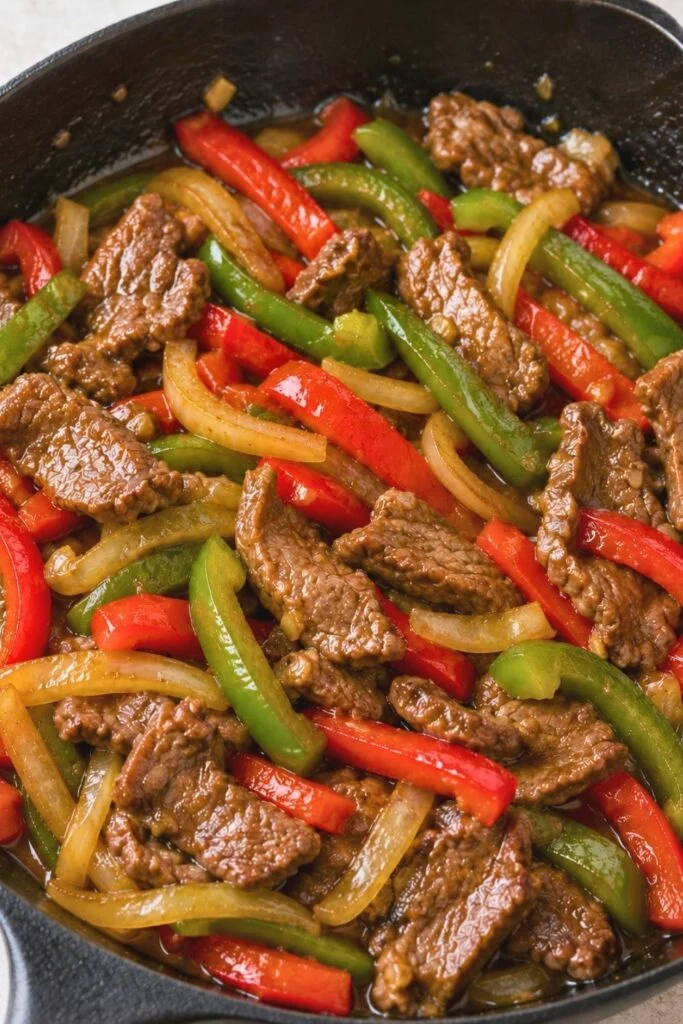
The cornstarch is doing real work here rather than just thickening. It holds a film of moisture against the surface of the meat, so the inside steams while the outside browns, and the slices stay tender even when the wok is screaming hot. Ten minutes in the marinade is enough because the beef is already thin. Any longer and the salt starts pulling water out of the meat, which is why the slices go into the pan looking wet but never sit in a puddle.
Variations that still work
- Chicken pepper steak: use 1½ pounds of boneless thighs cut into strips and give them an extra minute in the pan before you pull them out.
- Mushroom version: sear 8 ounces of quartered cremini in a dry pan first, then fold them in with the beef at the very end.
- More heat: swap one bell pepper for a Fresno or jalapeño, or add ½ teaspoon of coarsely cracked pepper to the sauce for a sharper bite.
- Gluten-free: use tamari instead of soy sauce, choose a gluten-free oyster sauce, and read the wine label before you pour.
- Noodles instead of rice: toss the finished stir-fry with mushroom garlic noodles and loosen everything with a splash of the pasta water.
- Old-fashioned gravy style: replace the water in the slurry with ⅔ cup of beef broth and serve it over mashed potatoes instead of rice.
Keep leftovers in an airtight container in the refrigerator for up to 3 days. Reheat in a skillet over medium-high heat with a spoonful of water for 2 to 3 minutes, which brings the sauce back without turning the peppers to mush. I skip the microwave here because it steams the beef and the texture goes flat. The peppers lose their snap before the meat does, so reheat only the portion you plan to eat.
FAQ
What cut of beef is best for pepper steak?
Flank and skirt steak are the easiest choices because they slice thin and stay tender over high heat. Sirloin works too if you trim the fat cap, and it holds a nicer crust than flank because the surface is denser. Tenderloin is what the Chinese original uses, and it needs no help at all, but it costs far more than the dish is worth on a weeknight. If you only have chuck, add ¼ teaspoon of baking soda to the marinade and give it 20 minutes instead of 10, then rinse and pat the slices dry before they hit the pan.
Why did my pepper steak turn out tough?
Three things cause it: slicing with the grain instead of across it, crowding the pan so the beef steams, and leaving it in the wok after it has cooked through. Slice cold meat, cook it in two batches, and pull each batch while the center is still pink. It finishes cooking when it goes back in with the sauce, which is the part most people miss. A marinade cannot rescue beef that spent five minutes in a cool pan.
Can I make pepper steak without a wok?
Yes, and the pan matters far less than the heat you give it. A 12-inch skillet or a cast iron pan works as long as you get it properly hot before the beef goes in. The wider surface actually helps the slices brown, though you may need to cook the beef in three batches instead of two because the pan holds less. Let the pan heat for a full 3 minutes over high heat first, and open a window or run the hood, because the cornstarch will smoke slightly at the edges.
Is pepper steak spicy?
Not with bell peppers, which is what most American versions use. The heat in the name comes from black pepper, and ½ teaspoon across four servings is mild enough for a child to eat. Long hot peppers or a Fresno chile will push it hotter, and the seeds carry most of that heat if you leave them in. Crack the pepper fresh at the end rather than using the pre-ground jar, since the oils fade fast.
What can I use instead of Shaoxing wine?
Dry sherry is the closest match and the usual substitute. Dry white wine with a splash of soy sauce also works in a pinch, though it brings more acidity to the sauce. Avoid the salted cooking wines sold near the vinegar, since they add sodium you did not plan for and the sauce turns harsh. If you want no alcohol at all, use unsweetened apple juice with 1 teaspoon of rice vinegar.
Can I prep pepper steak ahead of time?
Slice the beef and cut the vegetables up to a day ahead, and keep them in separate containers in the fridge. Mix the sauce up to 2 days ahead, but whisk the cornstarch slurry fresh right before cooking, because it settles into a solid layer once it sits. Marinate the beef no more than 30 minutes ahead, since the salt in the soy sauce keeps drawing moisture out and the slices start to weep. Everything else takes about 8 minutes at the stove, so the dish is still a weeknight option.