
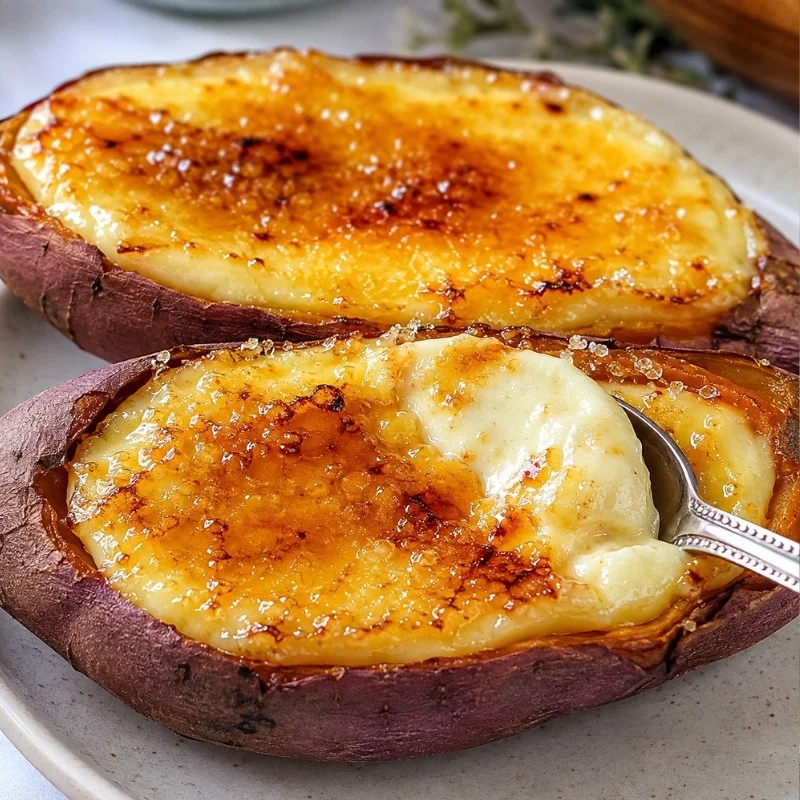
Some desserts don’t need a special occasion — they just need you to have two sweet potatoes and a little patience. This Japanese sweet potato crème brûlée is one of those “wait…why is this so good?” recipes: fluffy, roasted satsumaimo split open like a little dessert boat, filled with silky vanilla custard, then finished with a thin sugar crust that cracks the second your spoon hits it.
What I love most is how it looks fancy without being fussy. The oven does the heavy lifting, the custard comes together on the stove in a few minutes, and the torch (or broiler) turns the top into that glossy, glassy shell everyone fights over. If you’ve ever wanted a brûlée moment at home without ramekins, water baths, or any stress, this is the one.
Ingredients
-
2 medium to large Japanese sweet potatoes (satsumaimo)
-
Olive oil (for the skins)
-
2 egg yolks
-
2 1/2 tablespoons granulated sugar (plus extra for brûlée topping)
-
2 teaspoons cornstarch
-
1/2 teaspoon vanilla extract
-
1 1/4 cups heavy cream
Step-by-step instructions (clear + foolproof)
1) Roast the sweet potatoes
-
Heat oven to 425°F (220°C).
-
Scrub the sweet potatoes and dry them well.
-
Lightly rub the skins with a bit of olive oil.
-
Poke 6–8 holes all over each potato with a fork (don’t skip this—they’ll steam inside).
-
Place on a foil-lined baking sheet and roast for 40–55 minutes, depending on size, until a fork slides in easily.
Tip: If they’re very thick, they may take closer to 55–60 minutes. You want them fully soft inside.
2) Make the custard base
While the potatoes roast:
-
In a mixing bowl, whisk together the egg yolks, sugar, cornstarch, and vanilla until smooth and slightly lighter in color.
-
Slowly pour in the heavy cream a little at a time, whisking constantly, until fully combined.
This slow-pour step helps keep the mixture silky and lump-free.
3) Thicken the custard on the stove
-
Pour the mixture into a small saucepan.
-
Set over low heat and stir constantly with a silicone spatula or wooden spoon, making sure you scrape the bottom and corners.
-
After 5–10 minutes, it will start to thicken. Keep stirring until it looks like a pourable pudding that coats the back of a spoon.
Important: Don’t crank the heat. Low and steady prevents scrambled eggs.
-
Immediately scrape the custard into a clean bowl.
4) Chill the custard (so it sets)
-
Press plastic wrap directly onto the surface of the custard (touching it prevents a skin).
-
Refrigerate for 30–45 minutes, until cooled and thickened (cool is fine—doesn’t need to be exactly room temp).
5) Split the sweet potatoes (without cutting through)
-
When the potatoes are done, let them cool 10–15 minutes so you can handle them.
-
Slice a slit lengthwise across the top of each potato—don’t cut all the way through.
-
Gently press the ends to open the potato a bit, like a little boat.
6) Fill and brûlée the tops
-
Spoon custard into each potato until generously filled.
-
Sprinkle a thin, even layer of granulated sugar over the custard (about 1–2 teaspoons per potato, depending on size).
If using a kitchen torch:
-
Torch the sugar in small circles until it melts, bubbles, and turns deep golden.
If using a broiler:
-
Move an oven rack to the highest position.
-
Place filled potatoes on a baking sheet.
-
Broil for 1–3 minutes, watching constantly, until the sugar melts and browns.
Broiler tip: It can go from perfect to burnt fast—don’t walk away.
Save this to your Pinterest board so you don’t lose it—because you will want that crackly top again.
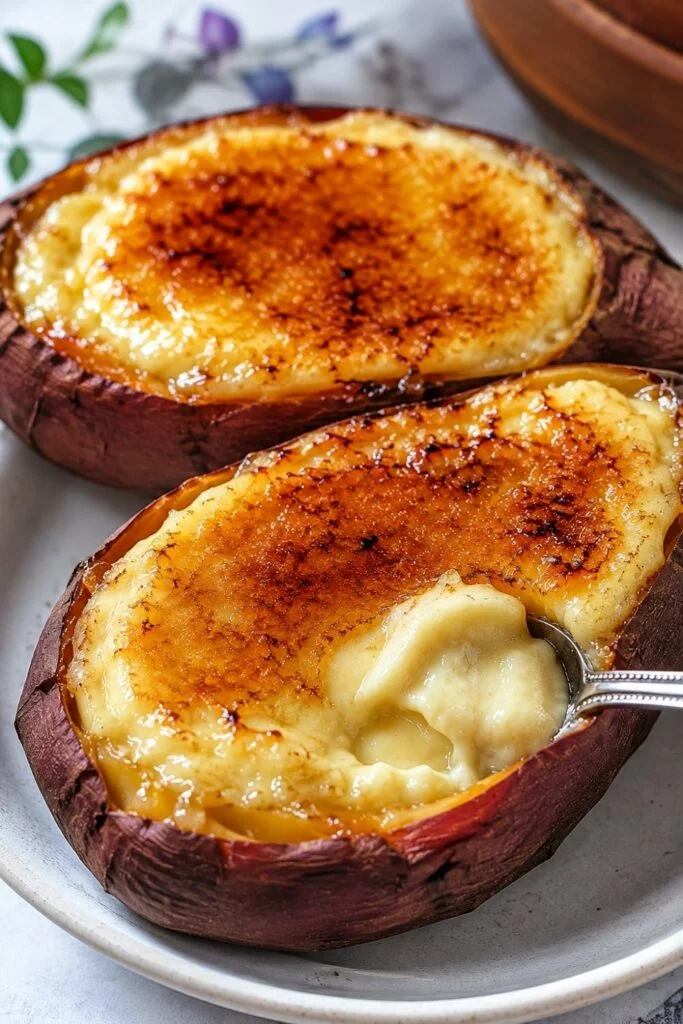
Tips that make it come out better
-
Roast until truly soft. Undercooked potatoes taste starchy and won’t mash slightly when opened.
-
Keep custard heat low. If it thickens too fast, it can turn grainy.
-
Go light on the sugar layer. A thin layer brûlées into a crisp shell; a thick layer can taste bitter.
-
No torch? Broiler works—just stay glued to the oven door.
Storage
This dessert is best right after brûléeing (that crackly top is the whole point).
If you want to prep ahead:
-
Make custard up to 2 days ahead and refrigerate.
-
Roast potatoes up to 1 day ahead, rewarm slightly, fill, then brûlée right before serving.