
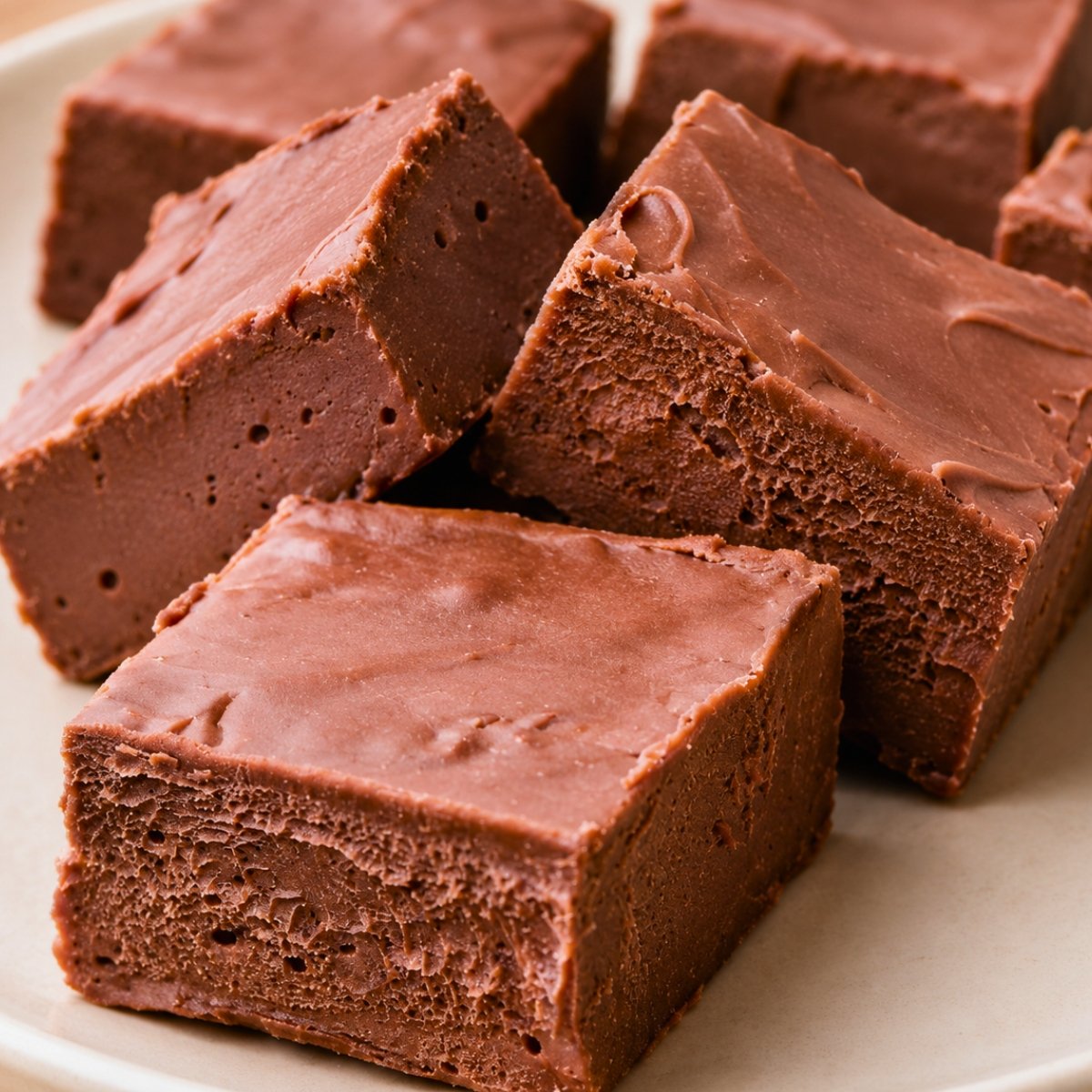
This chocolate fudge recipe cooks sugar and evaporated milk to the soft-ball stage, then beats the slab until it turns thick and matte. That last step is what separates smooth fudge from a grainy brick. It takes about 30 minutes of active work, mostly watching a thermometer and then working your arm.
Most failures happen for one of two reasons. Either sugar crystals form on the side of the pan and seed the whole batch, or the fudge gets beaten before it has cooled far enough. Both are easy to avoid once you know what to look for. If you want a chocolate project with a lower risk curve, my fudgy brown butter brownies use the same chocolate and never need a thermometer.
Ingredients
- 3 cups (600 g) granulated sugar
- 1 can (5 fl oz / 150 ml) evaporated milk
- ½ cup (1 stick / 113 g) unsalted butter cut into cubes plus extra for the pan
- 4 oz (113 g) unsweetened chocolate finely chopped
- 1 teaspoon vanilla extract
- ½ teaspoon fine sea salt
Instructions
- Line the pan and chop the chocolate: Butter an 8-inch square pan, then press a sheet of parchment into the bottom with an overhang on two sides so you can lift the slab later. Chop the unsweetened chocolate fine enough that no piece is bigger than a pea, because large chunks cool the syrup unevenly.
- Dissolve the sugar slowly: Put the sugar, evaporated milk, butter, chopped chocolate, and salt in a heavy 3-quart saucepan over medium-low heat. Stir constantly with a wooden spoon until the chocolate melts and the sugar dissolves, about 4 to 5 minutes, scraping the corners of the pan as you go.
- Boil to the soft-ball stage: Raise the heat to medium and bring the mixture to a full rolling boil that cannot be stirred down. Stop stirring, clip a candy thermometer to the side, and cook until it reads 234 to 238°F, which takes roughly 8 to 10 minutes. If sugar splashes onto the pan walls, wash it down with a pastry brush dipped in water.
- Cool without touching it: Pull the pan off the heat and add the vanilla, but leave it sitting on top without stirring it in. Let the pan sit undisturbed until the syrup drops to 110°F, about 30 to 40 minutes, because moving or stirring it now starts crystals too early.
- Beat until the gloss goes: Stir the vanilla in, then beat the fudge with a wooden spoon or sturdy spatula. Keep going for 5 to 10 minutes until the mixture thickens, loses its shine, and starts to pull away from the sides of the pan.
- Spread, score, and set: Scrape the fudge into the lined pan and smooth the top with the back of the spoon. Score it into 36 squares while it is still warm, then leave it at room temperature for 2 to 3 hours until the surface is firm and dry to the touch.
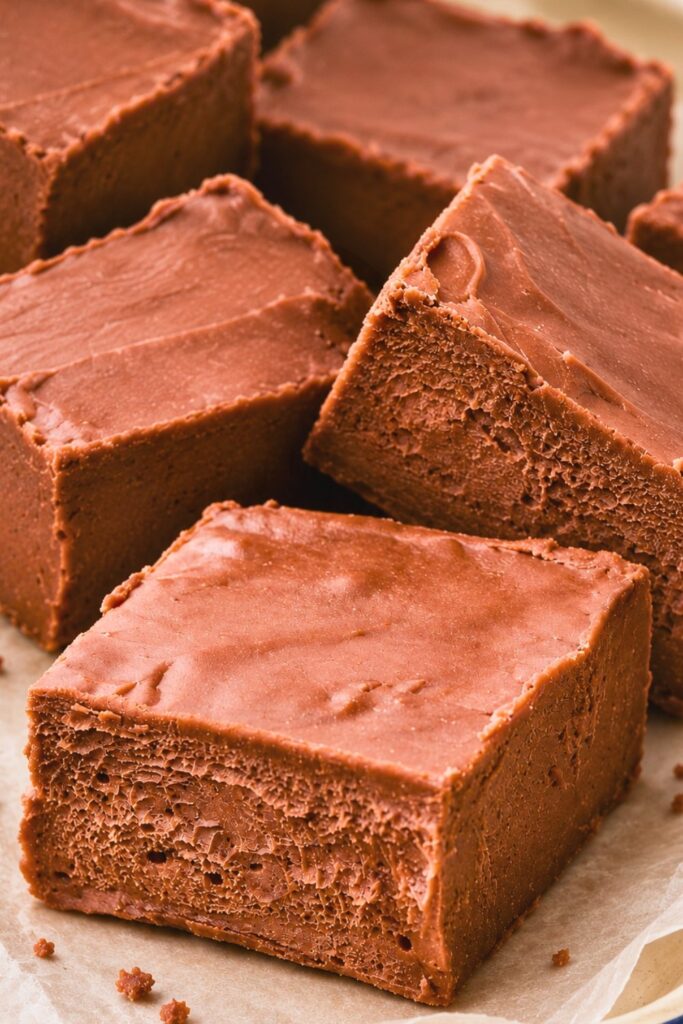
Why the Batch Turns Grainy
- Sugar that splashes onto the pan walls during the boil dries into crystals and seeds the whole batch, so brush the sides down before the syrup starts rolling.
- Stirring after the boil begins does the same thing, which is why the spoon comes out the moment the mixture reaches a full boil.
- Beating the fudge above 110°F makes large crystals, so let the pan cool on the counter instead of rushing it into the refrigerator.
- Stopping the beat too early leaves a shiny, soft slab, so keep working until the surface dulls and the fudge holds a ridge from the spoon.
- Scraping the crusty sides of the pan into the fudge adds seed crystals, so pour from the center and leave those scrapings behind.
- Rainy, humid days slow the set, so cook to the higher end of the range at 238°F and give the pan an extra hour before cutting.
Ways to Flavor the Same Base
- Peppermint: swap the vanilla for 1 teaspoon of peppermint extract and fold in ½ cup of crushed candy canes just before spreading.
- Rocky road: fold 1 cup of mini marshmallows and ½ cup of toasted walnuts into the fudge during the last 30 seconds of beating.
- Peanut butter swirl: warm ⅓ cup of creamy peanut butter until pourable, drizzle it over the surface, and drag a knife through it once or twice.
- Toasted nuts: fold in 1 cup of pecans or walnuts that spent 8 minutes in a 350°F oven, and add them late so they stay crisp.
- Espresso: stir 1 teaspoon of instant espresso powder into the evaporated milk before it goes on the heat, and the fudge keeps a darker, less sweet edge.
- Serving: cut the squares small and pile them next to caramel apples or chocolate truffle tart on a holiday tray.
Storage
Keep the fudge in an airtight container with parchment between the layers, and it stays fresh for about 2 weeks at room temperature or 3 weeks in the refrigerator. Let chilled pieces sit out for 10 minutes before serving so the texture softens. For longer storage, wrap each square in plastic wrap, freeze for up to 3 months, and thaw overnight in the refrigerator.
FAQ
Why did my fudge turn out grainy?
Grainy fudge means sugar crystallized before the batch set. The usual causes are stirring once the syrup started boiling, sugar left on the pan walls, or beating the fudge while it was still hot. It is still safe to eat, but the texture will stay sandy no matter how long it sits.
Why is my fudge still soft after several hours?
The syrup most likely stopped below the soft-ball stage, which happens with a thermometer that reads low or a batch cooked on too high a flame. Give it overnight at room temperature before you judge it. If it stays soft, next time cook to 238°F and check the thermometer in boiling water first.
Can I make chocolate fudge without a candy thermometer?
Yes, use the cold water test. Drop about ½ teaspoon of the hot syrup into a cup of cold water, then pick it up with your fingers. At the right stage it forms a soft ball that flattens when you press it, which matches 234 to 238°F.
Can I freeze chocolate fudge?
Yes, this chocolate fudge freezes well. Cut it into squares, wrap each one tightly in plastic wrap, and store them in a freezer bag for up to 3 months. Thaw the pieces overnight in the refrigerator so they do not sweat, then bring them to room temperature before serving.
Can I double the recipe in one pot?
Doubling the batch in the same pan changes how deep the syrup sits and how fast it heats, and the fudge often turns out soft or grainy. Make two separate batches back to back, or use a wider pan and cook to the same temperature while stirring less.
Why is my fudge crumbly instead of creamy?
Crumbly fudge has been beaten past the point where it wants to stop. Once the mixture loses its gloss and starts to tighten against the spoon, stop and press it into the pan while it is still warm. Dry, cool air in winter can push the same batch toward crumbling a minute earlier.
Can I use semisweet chocolate instead of unsweetened?
Yes, but adjust the sugar or the fudge will be too soft. Four ounces of semisweet chocolate already contains roughly ¼ cup of sugar, so cut the granulated sugar in the recipe by ¼ cup and keep everything else the same.
Do I have to use evaporated milk?
Evaporated milk gives the most reliable set because it carries less water than fresh milk. Whole milk works in a pinch if you use ⅔ cup and cook to the higher end of the temperature range, though the finished fudge comes out slightly softer.
How long does fudge take to set?
The slab firms up in about 2 to 3 hours at room temperature once it has been beaten and spread. If the center still feels tacky after 4 hours, leave it uncovered overnight, because covering warm fudge traps steam and keeps the top sticky.