
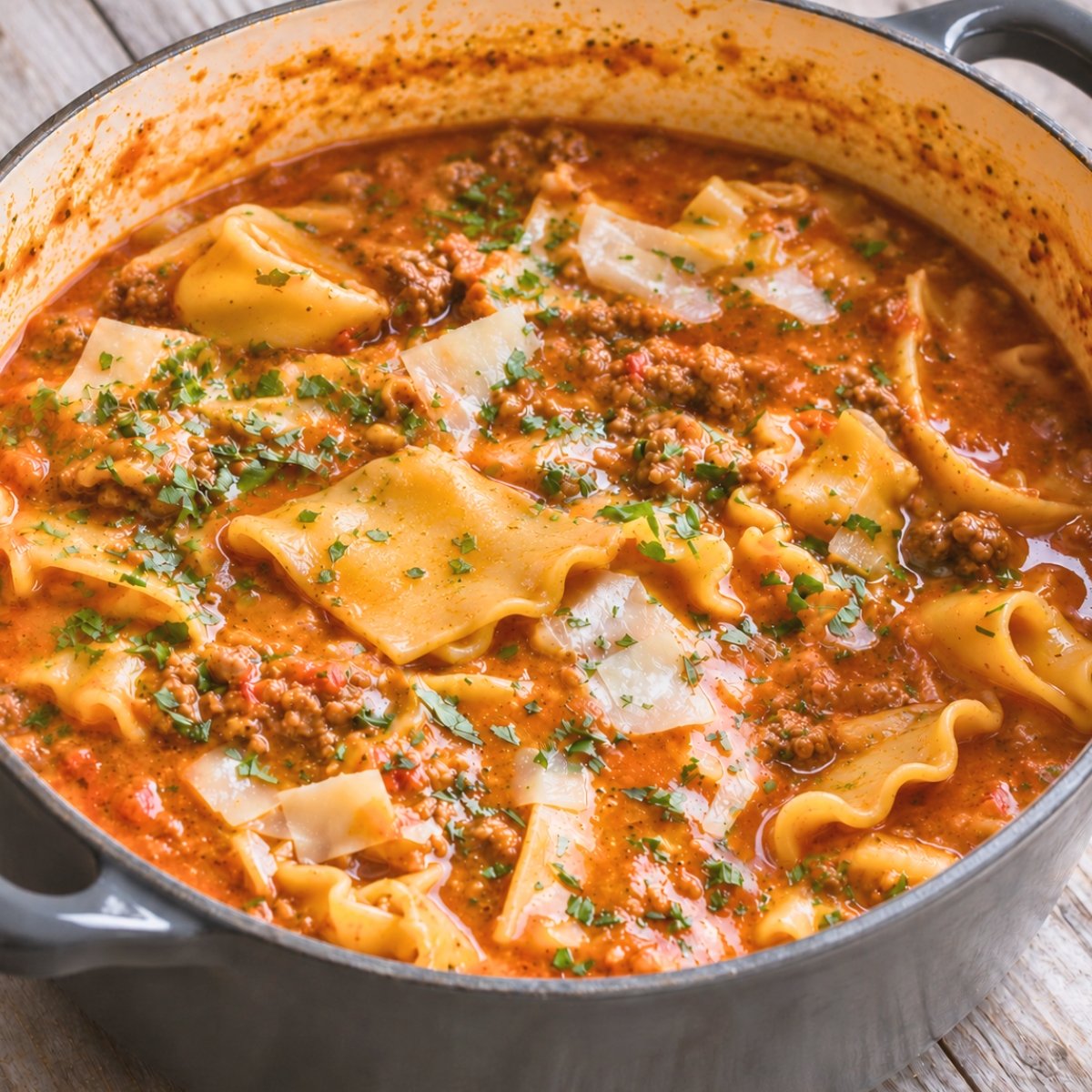
This lasagna soup gives you the tomato, beef, and cheese flavor of a baked lasagna without the layering, and it comes together in one pot on a weeknight. The trick is treating the noodles like pasta for soup rather than pasta for a casserole, so the broth stays loose instead of tightening into a starchy paste by the second bowl.
I tested the noodles three ways before settling on this method: dry noodles simmered in the pot, no-boil sheets, and noodles cooked in a separate pot. The dry noodles win for flavor and cleanup as long as you pull them while they still have a bite and keep extra broth on hand for the finish.
Ingredients
- 1 pound (450 g) ground beef, 80/20
- 1 medium yellow onion, finely diced
- 4 garlic cloves, minced
- ½ teaspoon red pepper flakes
- 2 tablespoons tomato paste
- 1 jar (24 oz / 680 g) marinara sauce
- 1 can (28 oz / 800 g) diced tomatoes, undrained
- 6 cups low-sodium chicken broth, plus up to 2 cups more
- 1 teaspoon dried oregano
- 1 teaspoon dried basil
- 1 teaspoon kosher salt, plus more for the pasta water
- ½ teaspoon black pepper
- 1 bay leaf
- 12 regular lasagna noodles, broken into 2-inch pieces
- ½ cup heavy cream
- 1 cup shredded mozzarella
- ½ cup grated Parmesan
- ½ cup ricotta
- ¼ cup torn fresh basil
Instructions
- Brown the beef and onion: Heat a large Dutch oven over medium-high heat and add the ground beef and diced onion. Cook for 6 to 8 minutes, breaking the beef into small pieces, until the meat is browned and the onion is soft. Add the garlic and red pepper flakes and stir for 30 seconds, just until the garlic smells sweet.
- Bloom the tomato paste: Push the beef to one side, add the tomato paste to the cleared spot, and cook it for about 1 minute until it darkens to a brick red color. Stir it into the beef along with the oregano, dried basil, salt, and pepper. This short step removes the raw, tinny taste that makes some tomato soups fall flat.
- Build the broth: Pour in the marinara, diced tomatoes with their juice, and 6 cups of chicken broth, then add the bay leaf. Scrape the browned bits off the bottom of the pot with a wooden spoon and bring the liquid to a boil. Lower the heat and simmer uncovered for 10 minutes so the tomatoes soften and the broth tastes like something before the noodles go in.
- Cook the noodles in the pot: Stir in the broken lasagna noodles and keep the pot at a steady simmer. Cook for 12 to 15 minutes, stirring every 3 minutes so the pieces do not stick together or settle on the bottom, until the noodles are tender but still have a slight bite. Start checking at 10 minutes, because thin noodles can go from firm to mushy quickly.
- Finish with cream and cheese: Remove the bay leaf, lower the heat, and stir in the heavy cream. Add the extra broth a splash at a time until the soup looks loose enough to ladle, since the noodles will keep drinking it. Turn off the heat and stir in the Parmesan and half the mozzarella until they melt into the broth.
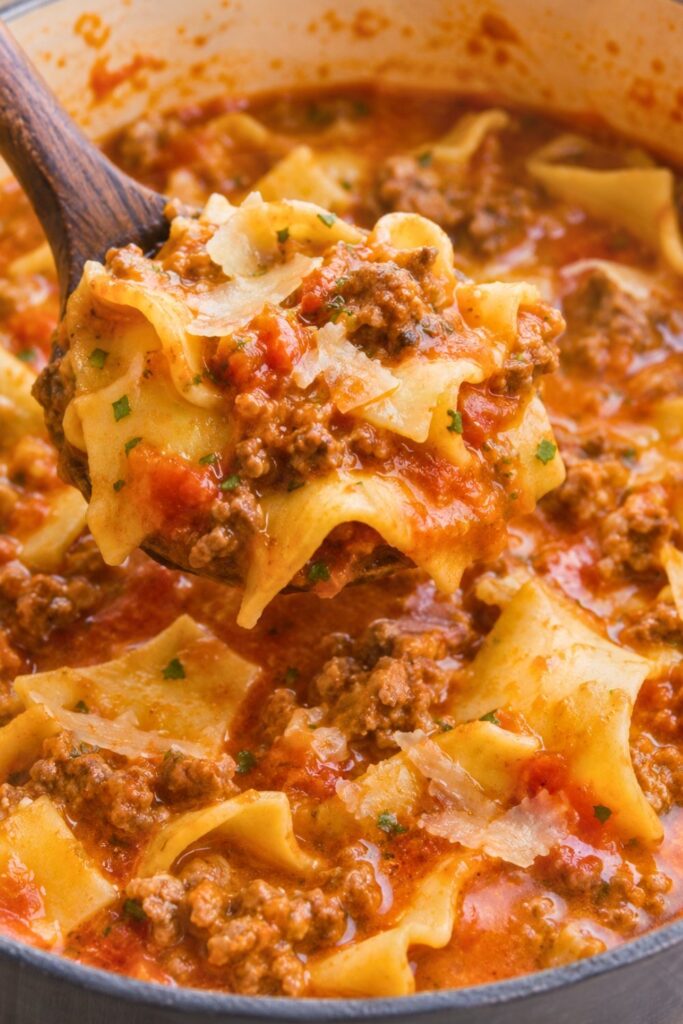
- Serve with ricotta: Ladle the soup into bowls and add a spoonful of ricotta to each one, followed by the remaining mozzarella and a pinch of torn basil. Serve right away while the cheese is still soft, with bread on the side for the last of the broth.
What I tried and skipped
- No-boil lasagna sheets soaked unevenly in the hot broth, turning chalky in the middle while the edges went soft, and they released more starch than regular noodles. They work in a baked pan where the oven heat is even, but a simmering pot exposes the difference.
- Cooking the noodles fully in a separate pot gave the most reliable texture, but the soup lost the starch that gives it body and I had a second pot to wash. If you want the cleanest noodles and do not mind the extra pan, that method still works.
- Breaking the noodles smaller than 2 inches made them disappear into the broth within minutes, so I keep the pieces closer to 2 inches for a texture you can actually chew. A clean break with your hands is enough, and you do not need a knife.
- Adding all 8 cups of broth at the start made the soup taste thin before the noodles had a chance to absorb anything, so I now hold back 2 cups and add them at the end. The noodles take up roughly 2 cups as they cook, and the extra broth is what keeps the pot from turning into a casserole.
- Stirring constantly broke the sheets into a paste, while stirring every 3 minutes keeps them separate without turning the broth cloudy. A wooden spoon dragged along the bottom is enough to stop sticking without crushing the pasta.
- Using pre-shredded mozzarella left a grainy film on top, so I grate a block fresh and stir it in off the heat where it melts smoothly. The anti-caking starch on bagged cheese is what causes that texture, not the cheese itself.
What to serve with lasagna soup
- Warm garlic bread is the obvious choice because it soaks up the tomato broth and turns the bowl into a full meal. Tear it into pieces rather than slicing thin rounds, so each piece has a soft center to dip.
- A crisp green salad with a sharp vinaigrette cuts through the beef and cheese, and it takes less time than the soup needs to simmer. Keep the dressing light so the soup does not feel heavy by the end of the bowl.
- For a lighter plate, keep the bowls smaller and add a side of roasted broccoli or green beans instead of bread. The vegetables also give you something to mop with if you are skipping the carbs.
- If you want the flavors of a baked dinner, serve chicken parmesan on the side for a crowd, though the soup already covers the lasagna craving on its own.
- A spoonful of ricotta on top is not optional for me, because it cools the hot broth and gives each bite the creamy layer you expect from the center of a lasagna.
- If you have broccoli cheddar soup fans at the table, keep the bowls small and let people add their own cheese at the end, since this pot is richer than a vegetable soup.
Storage
Keep leftovers in an airtight container in the refrigerator for up to 4 days. The noodles keep absorbing broth as it sits, so reheat gently on the stovetop with a splash of chicken broth and stir until the soup loosens again. For longer storage, freeze only the base without the noodles or cream for up to 3 months, then cook fresh noodles when you reheat it.
FAQ
Why did my lasagna soup turn thick and starchy?
The noodles kept absorbing broth after they were cooked, and starch from the pasta thickened what was left. Cook the noodles just to al dente, hold back 2 cups of broth to add at the end, and store leftover soup with the noodles in a separate container if you can. Reheating with a splash of broth brings it back to a soupy texture.
Can you freeze lasagna soup?
You can freeze the base, but leave out the noodles and the cream. Ladle the cooled base into containers and freeze for up to 3 months. Thaw overnight in the refrigerator, reheat on the stovetop, then cook fresh lasagna noodles and stir in the cream so the pasta does not turn to mush.
Can I use a different pasta instead of lasagna noodles?
Penne, rotini, and bowtie pasta all work, and they are easier to eat with a spoon. Use about 10 ounces of dry pasta and start checking for doneness 2 minutes earlier than the package says, because the pasta keeps cooking in the hot broth after you take the pot off the heat.
Do I have to use ground beef?
Italian sausage gives the soup more seasoning and a little heat, and ground turkey or chicken works if you add an extra tablespoon of olive oil while browning. Taste the broth before adding the salt, since sausage and some marinara brands are already salty.
Can I make lasagna soup in a slow cooker?
Brown the beef, onion, and garlic on the stovetop first, because a slow cooker will not give them the same color. Add the browned meat, marinara, tomatoes, broth, and seasonings to the slow cooker and cook on low for 4 hours or high for 2 hours. Stir in the broken noodles for the last 30 to 40 minutes on high, then add the cream and cheese once the pot is off the heat so the dairy does not separate.